Department of Medicine, University of Washington, Seattle, WA, United States.
Vaccine and Infectious Disease Division, Fred Hutchinson Cancer Research Center, Seattle, WA, United States.
Front Immunol. 2022 Mar 30;13:834757. doi: 10.3389/fimmu.2022.834757. eCollection 2022.
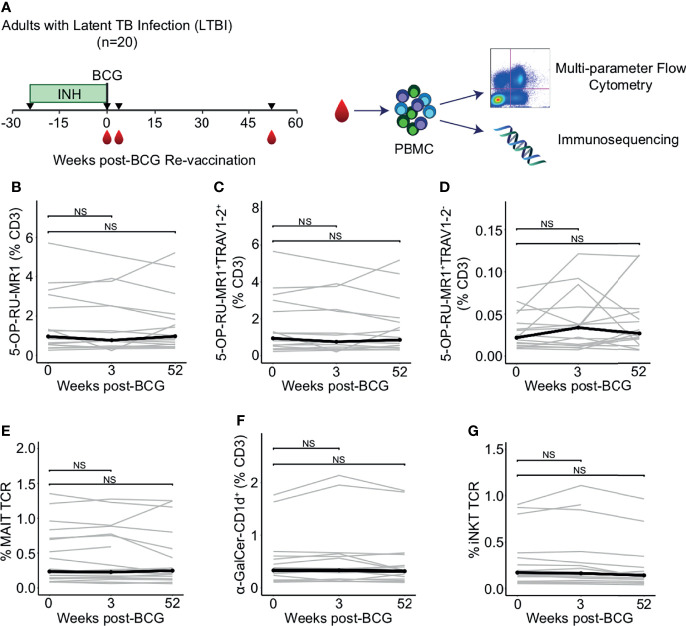
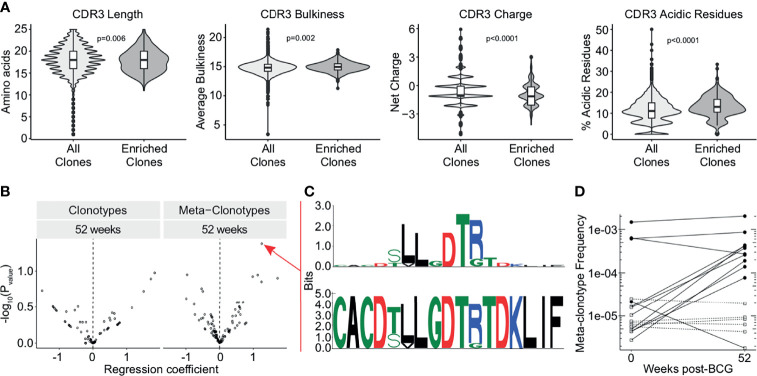
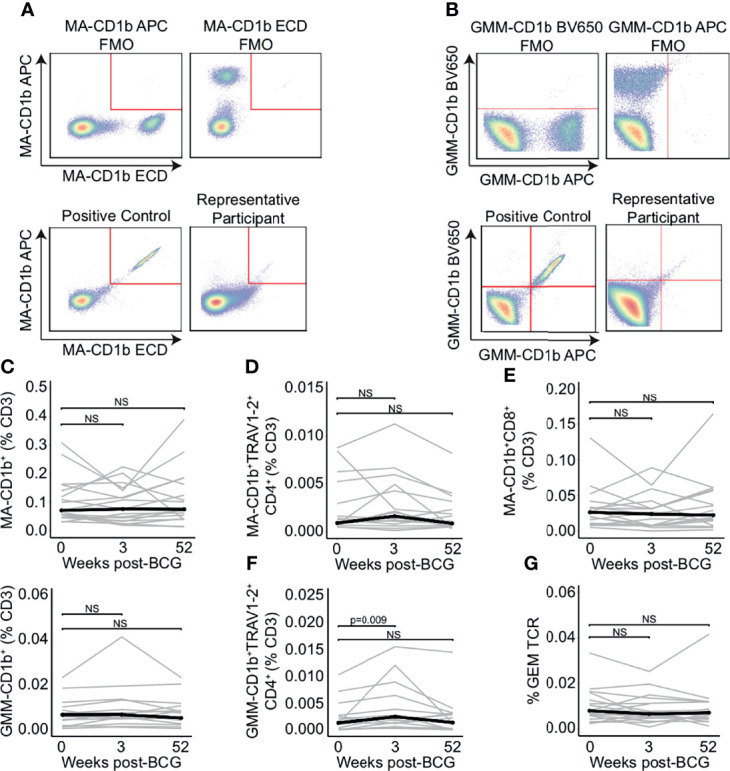
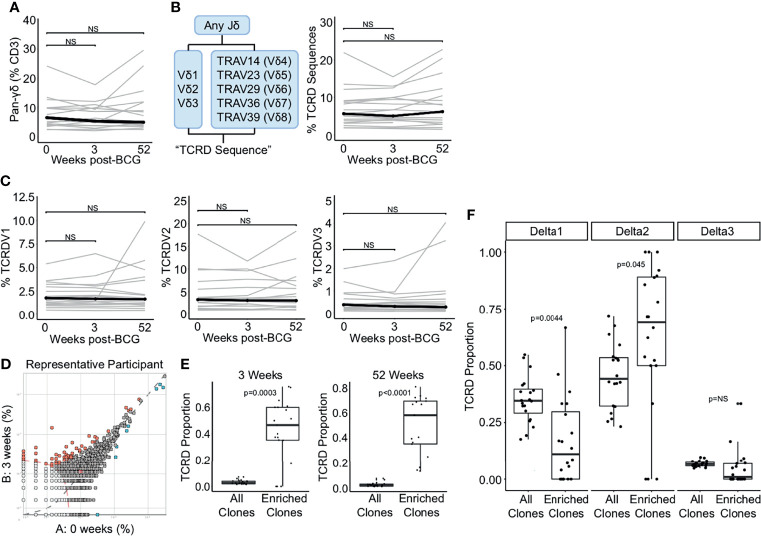
bacille Calmette-Guérin (BCG) has been used for 100 years and prevents disseminated tuberculosis and death in young children. However, it shows only partial efficacy against pulmonary tuberculosis (TB) in adults, so new vaccines are urgently needed. The protective efficacy of BCG depends on T cells, which are typically activated by pathogen-derived protein antigens that bind to highly polymorphic major histocompatibility complex (MHC) molecules. Some T cells recognize non-protein antigens antigen presenting systems that are independent of genetic background, leading to their designation as donor-unrestricted T (DURT) cells. Whether live whole cell vaccines, like BCG, can induce durable expansions of DURT cells in humans is not known. We used combinatorial tetramer staining, multi-parameter flow cytometry, and immunosequencing to comprehensively characterize the effect of BCG on activation and expansion of DURT cell subsets. We examined peripheral blood mononuclear cells (PBMC) derived from a Phase I study of South African adults in which samples were archived at baseline, 3 weeks, and 52 weeks post-BCG revaccination. We did not observe a change in the frequency of total mucosal-associated invariant T (MAIT) cells, invariant natural killer T (iNKT) cells, germline encoded mycolyl-reactive (GEM) T cells, or γδ T cells at 52 weeks post-BCG. However, immunosequencing revealed a set of TCR-δ clonotypes that were expanded at 52 weeks post-BCG revaccination. These expanded clones expressed the Vδ2 gene segment and could be further defined on the basis of biochemical similarity into several 'meta-clonotypes' that likely recognize similar epitopes. Our data reveal that BCG vaccination leads to durable expansion of DURT cell clonotypes despite a limited effect on total circulating frequencies in the blood and have implications for defining the immunogenicity of candidate whole cell TB vaccines.
卡介苗(BCG)已使用了 100 年,可预防幼儿发生播散性结核病和死亡。然而,它在成人中对肺结核(TB)仅显示部分疗效,因此急需新的疫苗。BCG 的保护效力取决于 T 细胞,T 细胞通常被与高度多态性主要组织相容性复合体(MHC)分子结合的病原体衍生蛋白抗原激活。一些 T 细胞识别非蛋白抗原——抗原呈递系统,这些系统独立于遗传背景,因此被指定为供体不受限制的 T(DURT)细胞。活全细胞疫苗,如 BCG,是否能在人体内诱导持久的 DURT 细胞扩增尚不清楚。我们使用组合四聚体染色、多参数流式细胞术和免疫测序来全面描述 BCG 对 DURT 细胞亚群激活和扩增的影响。我们检查了南非成年人 I 期研究中的外周血单核细胞(PBMC),这些样本在基线、3 周和 BCG 复种后 52 周时被存档。我们没有观察到总黏膜相关不变 T(MAIT)细胞、不变自然杀伤 T(iNKT)细胞、种系编码分枝菌反应性(GEM)T 细胞或 γδ T 细胞在 BCG 复种后 52 周时的频率发生变化。然而,免疫测序揭示了一组在 BCG 复种后 52 周时扩增的 TCR-δ 克隆型。这些扩增的克隆表达 Vδ2 基因片段,并可根据生化相似性进一步定义为几个“元克隆型”,这些元克隆型可能识别相似的表位。我们的数据表明,尽管 BCG 接种对血液中的总循环频率影响有限,但仍能导致 DURT 细胞克隆型的持久扩增,这对定义候选全细胞结核疫苗的免疫原性具有重要意义。