Department of Psychology, University of Amsterdam, Amsterdam, the Netherlands.
Sci Rep. 2022 Apr 20;12(1):6490. doi: 10.1038/s41598-022-10100-7.
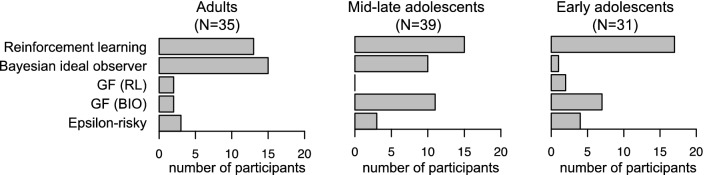
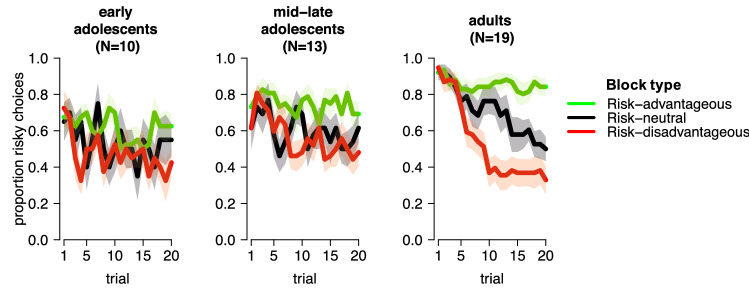
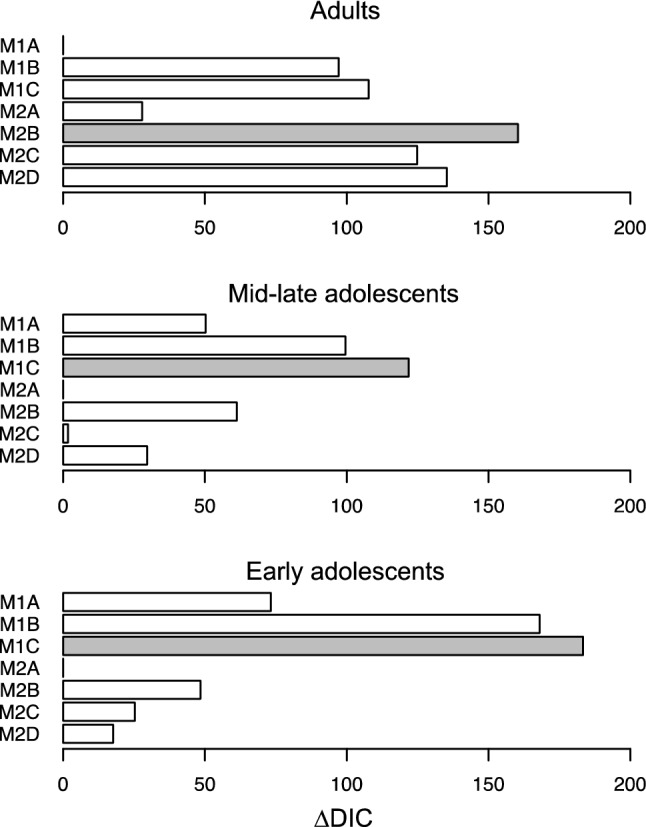
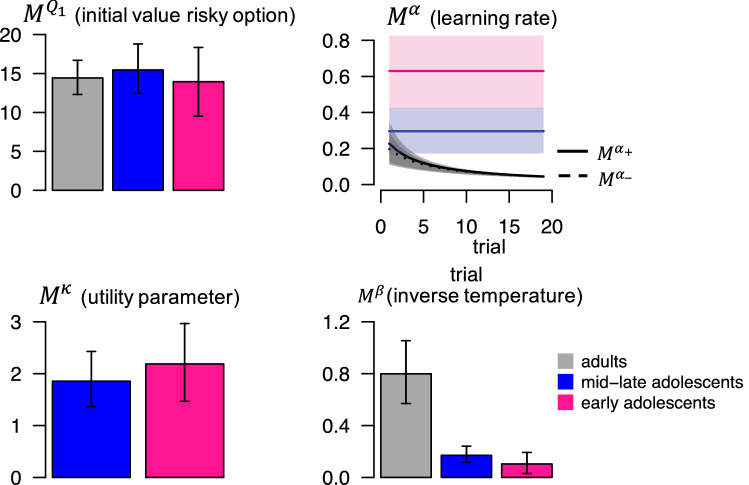
Adolescence is characterized by a surge in maladaptive risk-taking behaviors, but whether and how this relates to developmental changes in experience-based learning is largely unknown. In this preregistered study, we addressed this issue using a novel task that allowed us to separate the learning-driven optimization of risky choice behavior over time from overall risk-taking tendencies. Adolescents (12-17 years old) learned to dissociate advantageous from disadvantageous risky choices less well than adults (20-35 years old), and this impairment was stronger in early than mid-late adolescents. Computational modeling revealed that adolescents' suboptimal performance was largely due to an inefficiency in core learning and choice processes. Specifically, adolescents used a simpler, suboptimal, expectation-updating process and a more stochastic choice policy. In addition, the modeling results suggested that adolescents, but not adults, overvalued the highest rewards. Finally, an exploratory latent-mixture model analysis indicated that a substantial proportion of the participants in each age group did not engage in experience-based learning but used a gambler's fallacy strategy, stressing the importance of analyzing individual differences. Our results help understand why adolescents tend to make more, and more persistent, maladaptive risky decisions than adults when the values of these decisions have to be learned from experience.
青春期的特点是冒险行为失调的激增,但这种情况与基于经验的学习的发展变化有何关联,在很大程度上尚不清楚。在这项预先注册的研究中,我们使用了一种新的任务来解决这个问题,该任务使我们能够将风险选择行为随时间的学习驱动优化与整体冒险倾向分开。与成年人(20-35 岁)相比,青少年(12-17 岁)学习将有利与不利的风险选择区分开来的能力较差,而且这种损害在早期比中期晚期更为严重。计算模型表明,青少年的表现不佳主要是由于核心学习和选择过程的效率低下。具体来说,青少年使用了一种更简单、次优的期望更新过程和更随机的选择策略。此外,建模结果表明,青少年,而不是成年人,高估了最高奖励的价值。最后,一项探索性潜在混合模型分析表明,每个年龄组的相当一部分参与者没有进行基于经验的学习,而是使用了赌徒谬误策略,这强调了分析个体差异的重要性。我们的研究结果有助于理解为什么当必须从经验中学习这些决策的价值时,青少年往往比成年人做出更多且更持久的不良适应风险决策。