Guangdong Provincial Key Laboratory of Tumour Interventional Diagnosis and Treatment, Zhuhai Institute of Translational Medicine, Zhuhai People's Hospital Affiliated with Jinan University, Jinan University, Zhuhai, China.
Microbiology and Immunology Department, School of Medicine, Faculty of Medical Science, Jinan University, Guangzhou, China.
Front Immunol. 2022 Apr 4;13:845974. doi: 10.3389/fimmu.2022.845974. eCollection 2022.
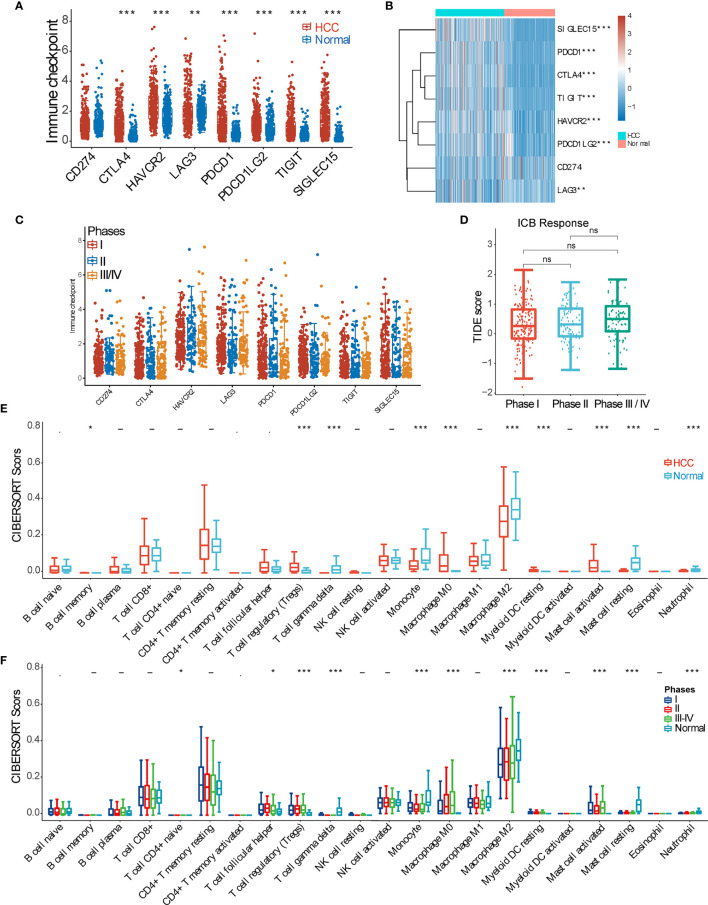
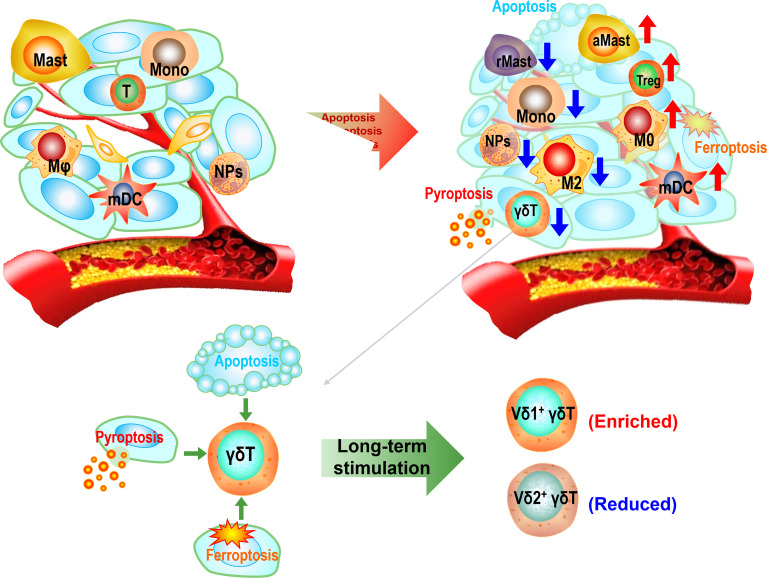
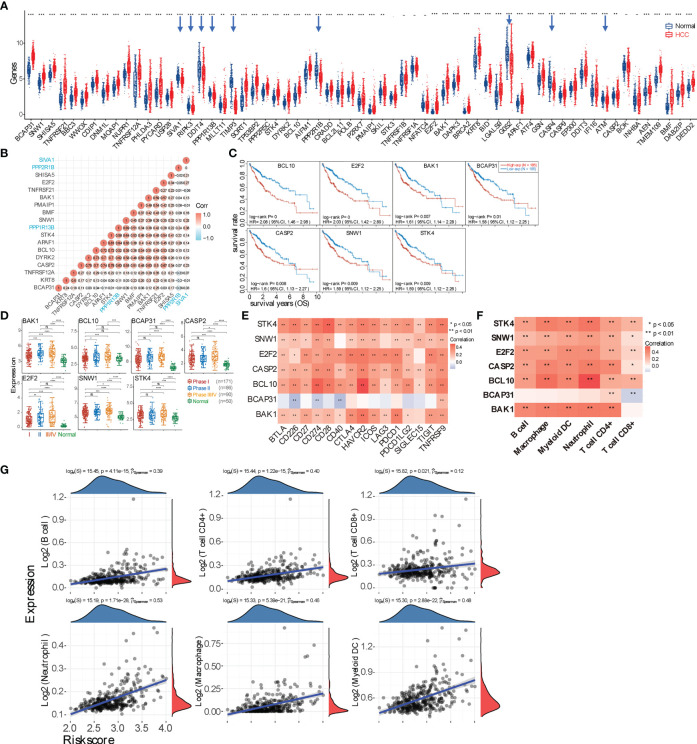
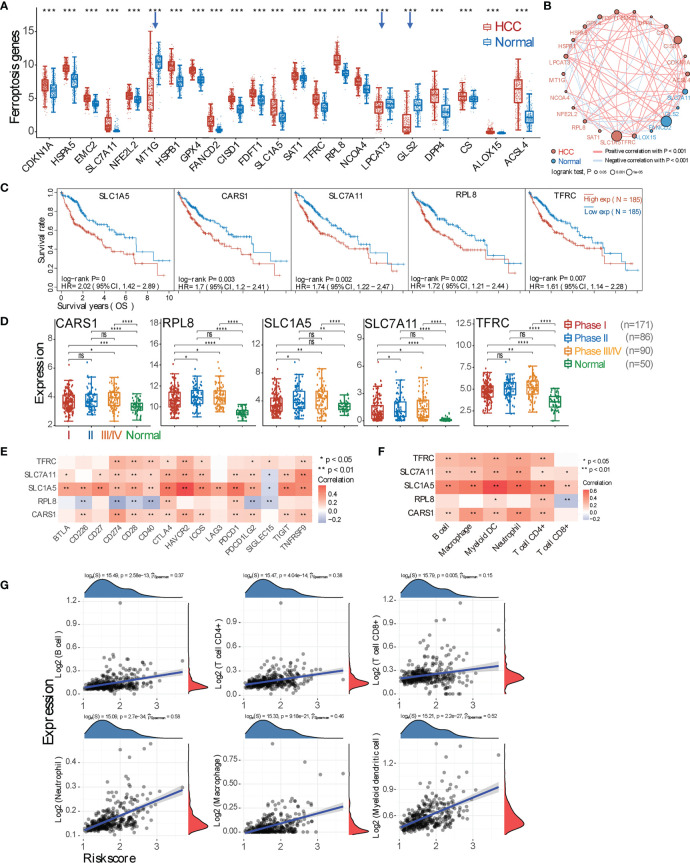
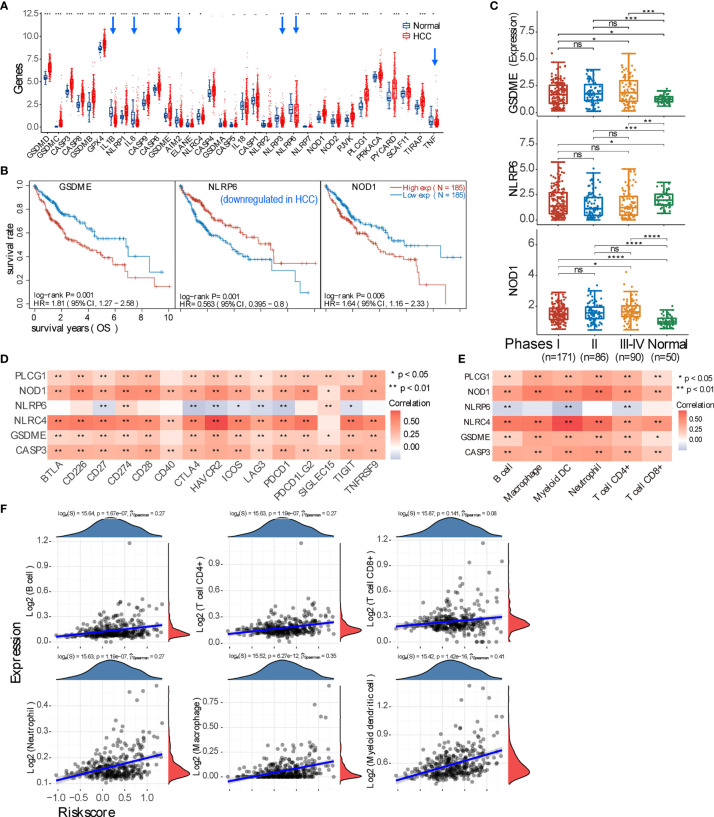
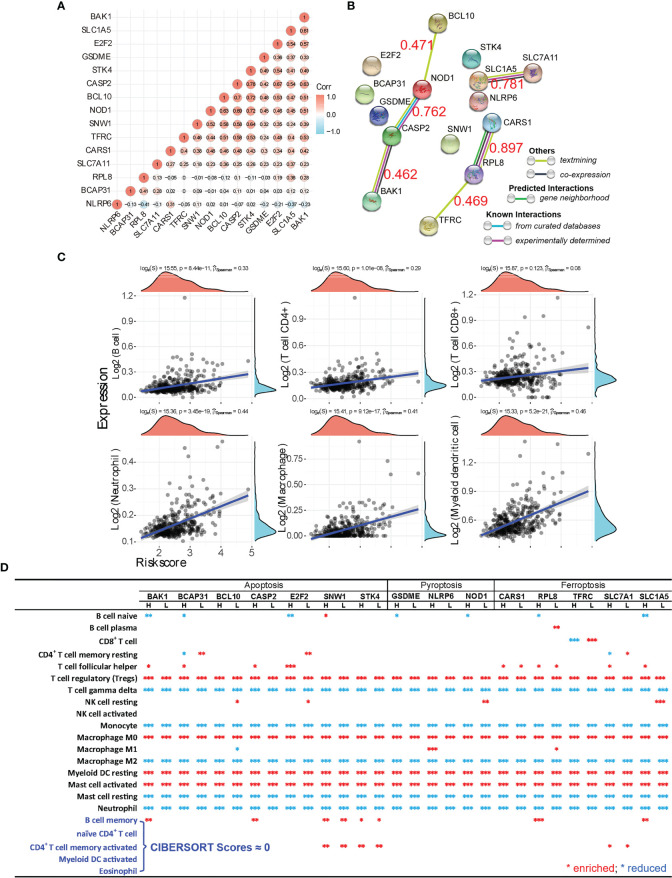
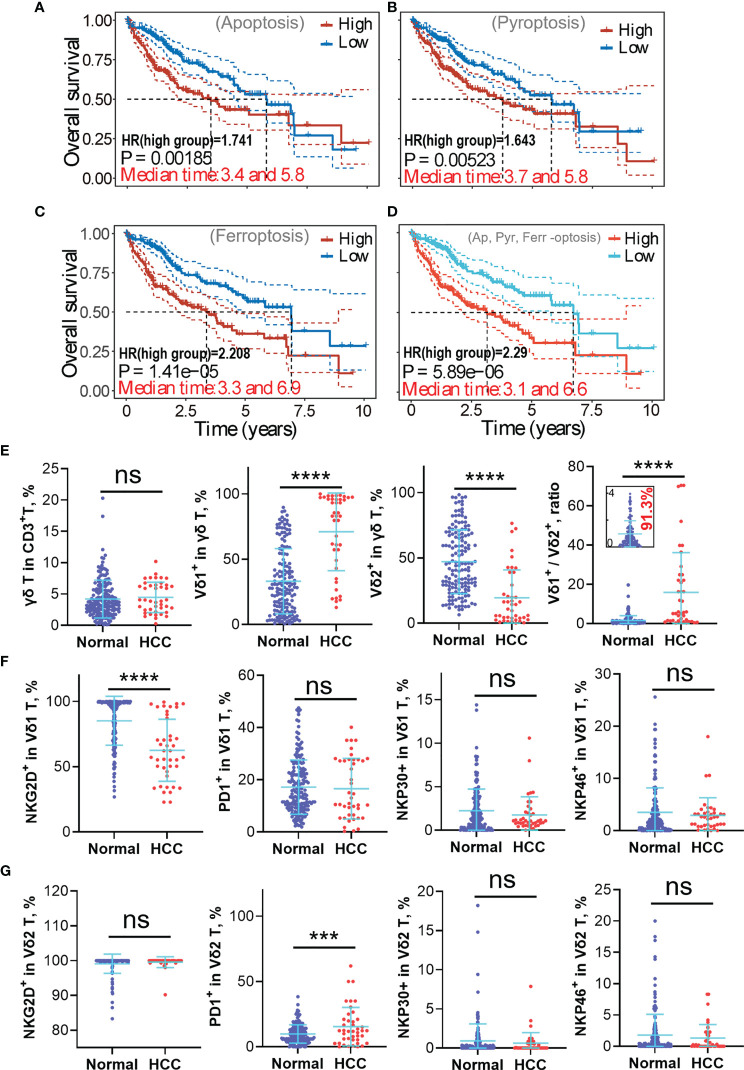
Hepatocellular carcinoma (HCC) is highly malignant and prone to metastasize due to the heterogeneous and immunosuppressive tumor microenvironment (TME). Programmed cell deaths (PCDs) including apoptosis, ferroptosis, and pyroptosis routinely occur in the HCC TME and participate in tumorigenesis. However, how apoptosis, ferroptosis, and pyroptosis are involved in constructions of the immunosuppressive TME and their underlying cross-talk remains to be further unveiled. In this work, we deciphered the immunosuppressive landscape of HCC TME, which demonstrated high expressions of inhibitory checkpoint molecules and infiltration of protumor immune cells but low infiltration of antitumor effector immune cells. Further investigations unequivocally revealed that marker genes of apoptosis, ferroptosis, and pyroptosis are closely correlated with expressions and infiltrations of inhibitory checkpoint molecules and immune cells and that higher "-optosis" links to poorer patient prognosis. Notably, such three types of "-optosis" interact with each other at both the gene and protein levels, suggesting that they conspiringly induce the establishment of the immunosuppressive HCC TME. Interestingly, examinations of circulating γδ T cells in HCC patients revealed a noticeable dysfunction phenotype. The strikingly elevated ratio of the Vδ1 versus the Vδ2 subset suggested that the Vδ1/Vδ2 ratio would be a potential biomarker for the diagnosis and prognosis in HCC patients. Altogether, this work thoroughly decrypted the underlying correlations between apoptosis, ferroptosis, and pyroptosis and the formation of immunosuppressive HCC TME and, meanwhile, indicated that allogeneic Vδ2 γδ T-cell transfer would be a promising adjuvant strategy for renormalizing circulating γδ T cell and thus achieving sound clinical efficacy against HCC.
肝细胞癌 (HCC) 由于异质性和免疫抑制性肿瘤微环境 (TME) 而高度恶性且易于转移。程序性细胞死亡 (PCD) 包括细胞凋亡、铁死亡和细胞焦亡,经常发生在 HCC TME 中,并参与肿瘤发生。然而,细胞凋亡、铁死亡和细胞焦亡如何参与免疫抑制性 TME 的构建及其潜在的串扰仍有待进一步揭示。在这项工作中,我们破译了 HCC TME 的免疫抑制景观,该景观表现出抑制性检查点分子的高表达和促肿瘤免疫细胞的浸润,但抗肿瘤效应免疫细胞的浸润较低。进一步的研究明确揭示了细胞凋亡、铁死亡和细胞焦亡的标志物基因与抑制性检查点分子和免疫细胞的表达和浸润密切相关,较高的“-optosis”与较差的患者预后相关。值得注意的是,这三种类型的“-optosis”在基因和蛋白质水平上相互作用,表明它们协同诱导免疫抑制性 HCC TME 的建立。有趣的是,对 HCC 患者循环 γδ T 细胞的检查显示出明显的功能障碍表型。Vδ1 与 Vδ2 亚群的比例显著升高表明,Vδ1/Vδ2 比值可能是 HCC 患者诊断和预后的潜在生物标志物。总的来说,这项工作彻底破译了细胞凋亡、铁死亡和细胞焦亡与免疫抑制性 HCC TME 形成之间的潜在相关性,同时表明同种异体 Vδ2 γδ T 细胞转移将是一种有前途的辅助策略,可用于重塑循环 γδ T 细胞,从而实现对 HCC 的良好临床疗效。