Department of Nephrology and Critical Care Medicine, Charité - Universitätsmedizin Berlin, Freie Universität Berlin, Humboldt-Universität zu Berlin, Berlin Institute of Health, Berlin, Germany.
Nieren- und Dialysezentrum Schöneberg-Tempelhof, Berlin, Germany.
PLoS One. 2022 Apr 21;17(4):e0266319. doi: 10.1371/journal.pone.0266319. eCollection 2022.
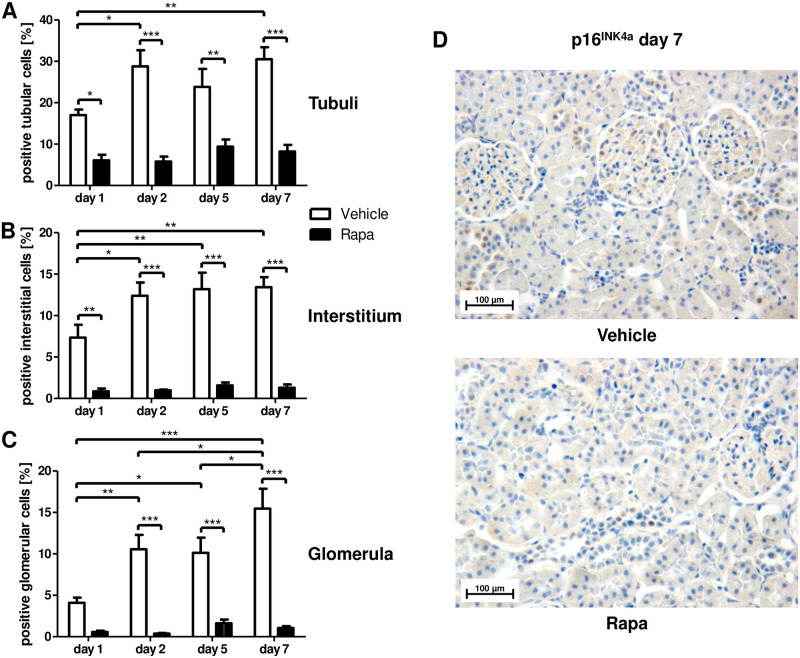
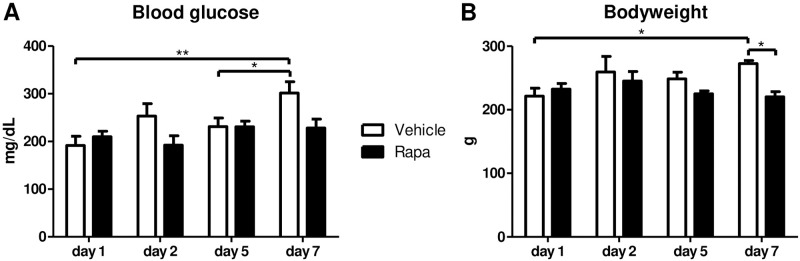
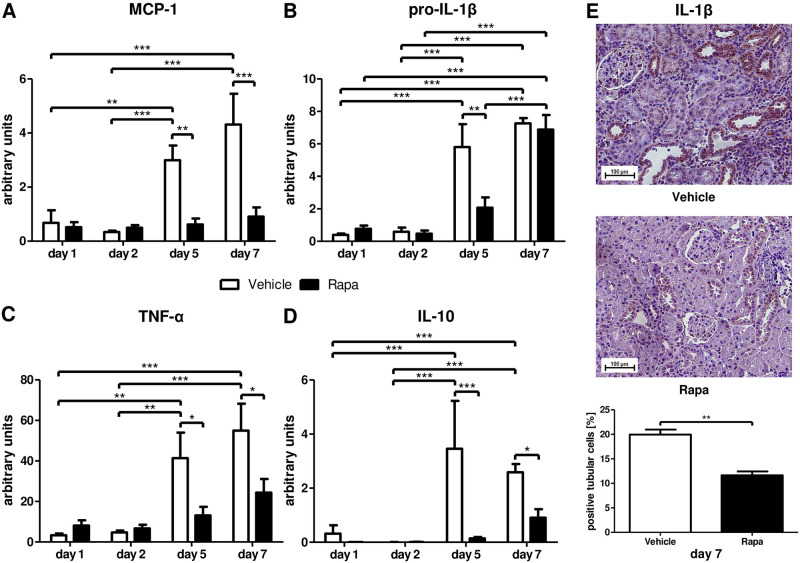
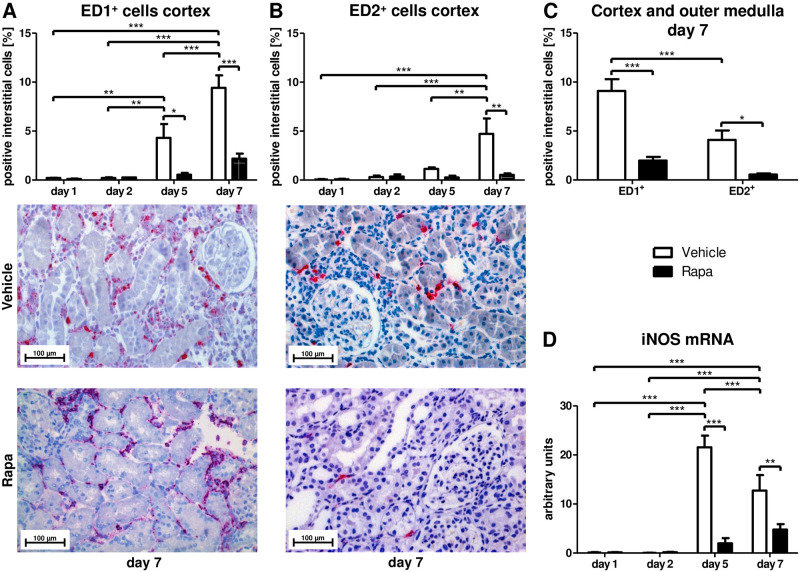
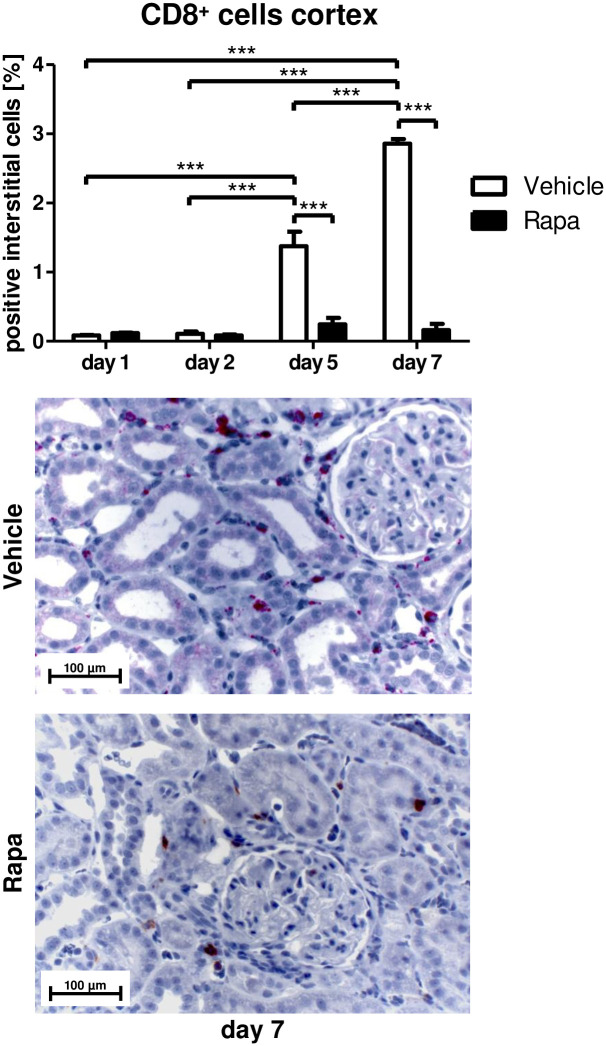
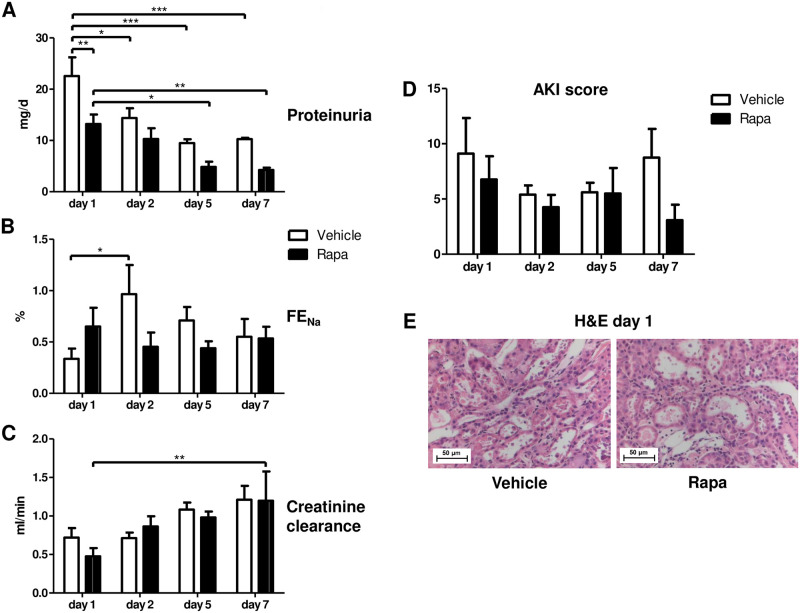
Interstitial fibrosis and tubular atrophy, a major cause of kidney allograft dysfunction, has been linked to premature cellular senescence. The mTOR inhibitor Rapamycin protects from senescence in experimental models, but its antiproliferative properties have raised concern early after transplantation particularly at higher doses. Its effect on senescence has not been studied in kidney transplantation, yet. Rapamycin was applied to a rat kidney transplantation model (3 mg/kg bodyweight loading dose, 1.5 mg/kg bodyweight daily dose) for 7 days. Low Rapamycin trough levels (2.1-6.8 ng/mL) prevented the accumulation of p16INK4a positive cells in tubules, interstitium, and glomerula. Expression of the cytokines MCP-1, IL-1β, and TNF-α, defining the proinflammatory senescence-associated secretory phenotype, was abrogated. Infiltration with monocytes/macrophages and CD8+ T-lymphocytes was reduced and tubular function was preserved by Rapamycin. Inhibition of mTOR was not associated with impaired structural recovery, higher glucose levels, or weight loss. mTOR inhibition with low-dose Rapamycin in the immediate posttransplant period protected from premature cellular senescence without negative effects on structural and functional recovery from preservation/reperfusion damage, glucose homeostasis, and growth in a rat kidney transplantation model. Reduced senescence might maintain the renal regenerative capacity rendering resilience to future injuries resulting in protection from interstitial fibrosis and tubular atrophy.
间质纤维化和肾小管萎缩是导致肾移植功能障碍的主要原因,与过早的细胞衰老有关。雷帕霉素(mTOR 抑制剂)可防止实验模型中的衰老,但它的抗增殖特性在移植后早期,尤其是在较高剂量时引起了人们的关注。其在肾移植中的抗衰老作用尚未得到研究。雷帕霉素应用于大鼠肾移植模型(3mg/kg 体重负荷剂量,1.5mg/kg 体重日剂量)7 天。低雷帕霉素谷浓度(2.1-6.8ng/mL)可防止肾小管、间质和肾小球中 p16INK4a 阳性细胞的积累。细胞因子 MCP-1、IL-1β 和 TNF-α 的表达,定义了促炎衰老相关分泌表型,被阻断。单核细胞/巨噬细胞和 CD8+T 淋巴细胞的浸润减少,雷帕霉素保留了肾小管功能。mTOR 抑制与结构恢复不良、高血糖水平或体重减轻无关。在移植后即刻应用低剂量雷帕霉素抑制 mTOR 可防止过早的细胞衰老,而不会对保存/再灌注损伤的结构和功能恢复、葡萄糖稳态以及大鼠肾移植模型中的生长产生负面影响。减少衰老可能会保持肾脏的再生能力,使肾脏对未来的损伤具有弹性,从而防止间质纤维化和肾小管萎缩。