Varzideh Fahimeh, Mone Pasquale, Santulli Gaetano
Department of Medicine, Wilf Family Cardiovascular Research Institute, Einstein-Mount Sinai Diabetes Research Center (ES-DRC), Einstein Institute for Aging Research, Albert Einstein College of Medicine, New York, NY 10461, USA.
Department of Molecular Pharmacology, Fleischer Institute for Diabetes and Metabolism (FIDAM), Einstein Institute for Neuroimmunology and Inflammation (INI), Albert Einstein College of Medicine, New York, NY 10461, USA.
Bioengineering (Basel). 2022 Apr 10;9(4):168. doi: 10.3390/bioengineering9040168.
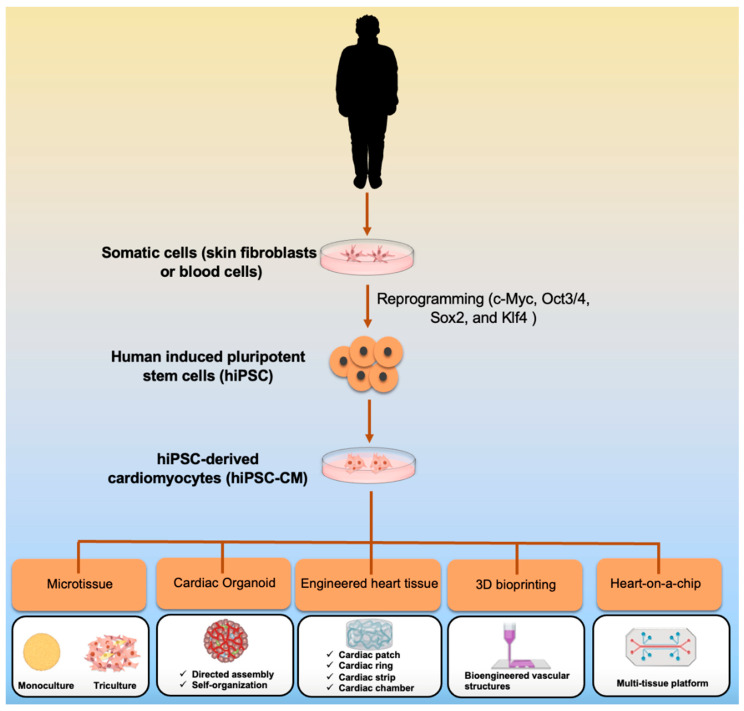
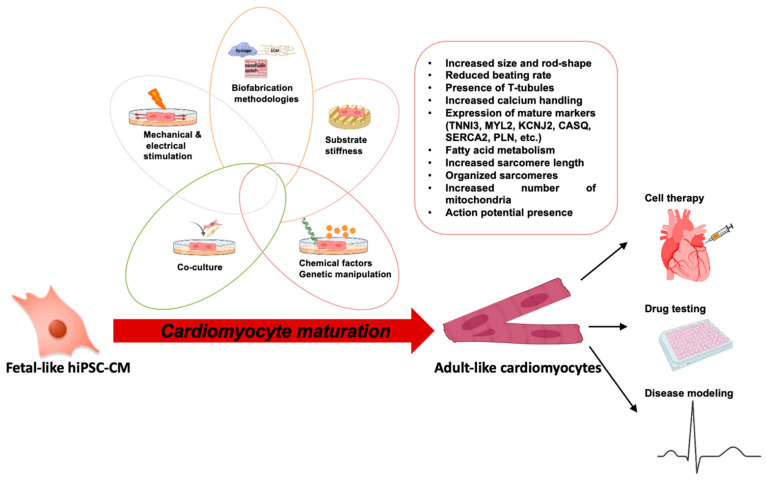
Human induced pluripotent stem cells (hiPSCs) can be used to generate various cell types in the human body. Hence, hiPSC-derived cardiomyocytes (hiPSC-CMs) represent a significant cell source for disease modeling, drug testing, and regenerative medicine. The immaturity of hiPSC-CMs in two-dimensional (2D) culture limit their applications. Cardiac tissue engineering provides a new promise for both basic and clinical research. Advanced bioengineered cardiac models can create contractile structures that serve as exquisite heart microtissues for drug testing and disease modeling, thereby promoting the identification of better treatments for cardiovascular disorders. In this review, we will introduce recent advances of bioengineering technologies to produce cardiac tissues derived from hiPSCs.
人诱导多能干细胞(hiPSC)可用于生成人体中的各种细胞类型。因此,hiPSC衍生的心肌细胞(hiPSC-CM)是疾病建模、药物测试和再生医学的重要细胞来源。二维(2D)培养中hiPSC-CM的不成熟限制了它们的应用。心脏组织工程为基础研究和临床研究都带来了新的希望。先进的生物工程心脏模型可以创建收缩结构,作为用于药物测试和疾病建模的精密心脏微组织,从而促进心血管疾病更好治疗方法的识别。在这篇综述中,我们将介绍生物工程技术在生产源自hiPSC的心脏组织方面的最新进展。