State Key Laboratory of Systematic and Evolutionary Botany, Institute of Botany, Chinese Academy of Sciences, Beijing, 100093, China.
University of Chinese Academy of Sciences, Beijing, 100049, China.
BMC Biol. 2022 Apr 21;20(1):89. doi: 10.1186/s12915-022-01285-4.
Medicinal plants have always played an important role in the history of human health. However, the populations and sustainable use of medicinal plants have been severely affected by human activities and climate change. Little is known about the current conservation status and distribution pattern of medicinal plants. In this study, based on accurate geographical distribution information of 9756 medicinal plants, we identified diversity hotspots and conservation gaps, evaluated conservation effectiveness of nature reserves, and predicted suitable habitat areas for medicinal plants in China to provide scientific guidance for their long-term conservation and sustainable use.
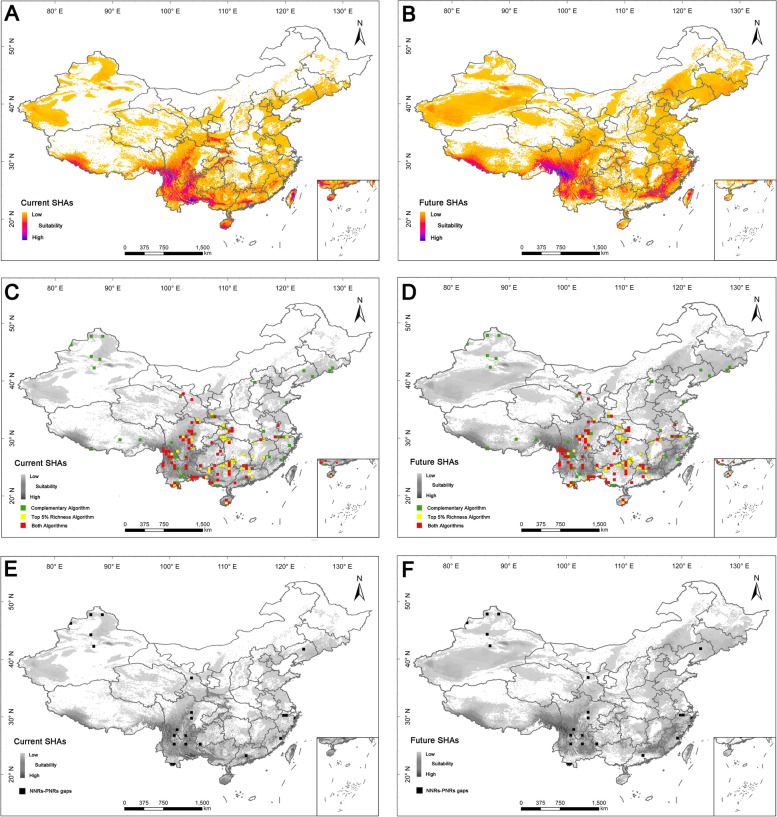
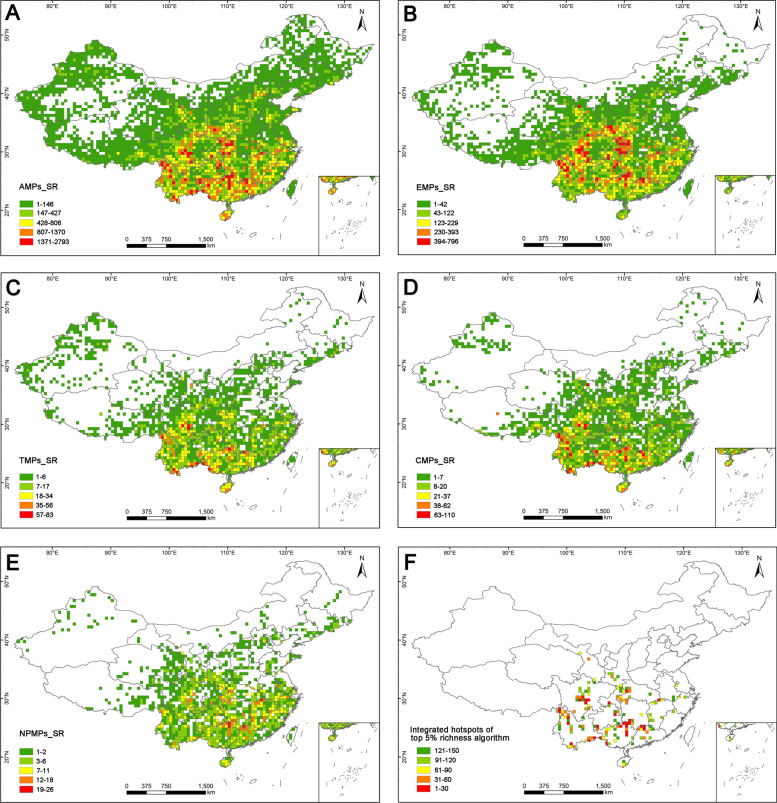
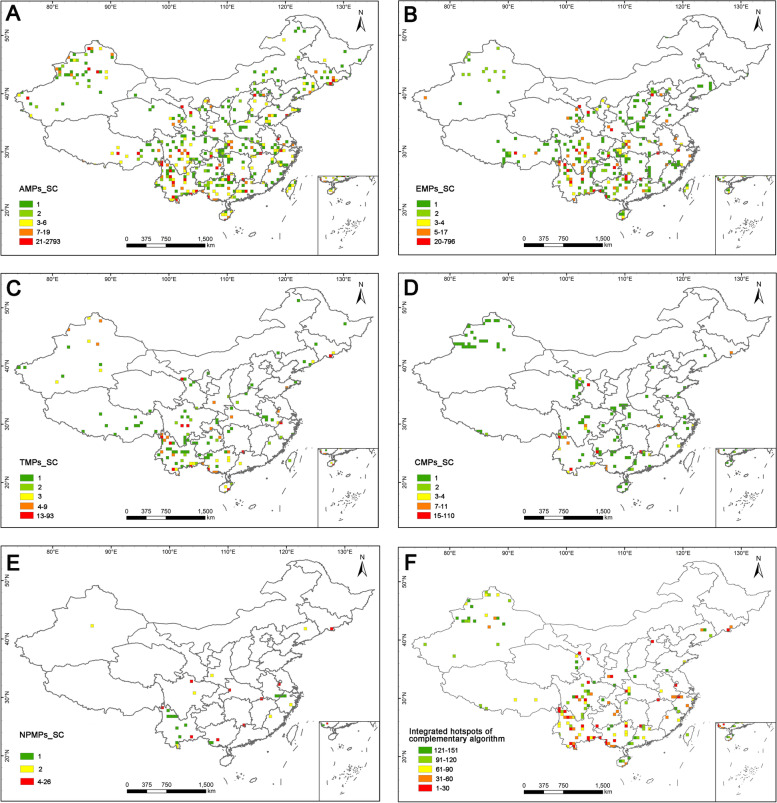
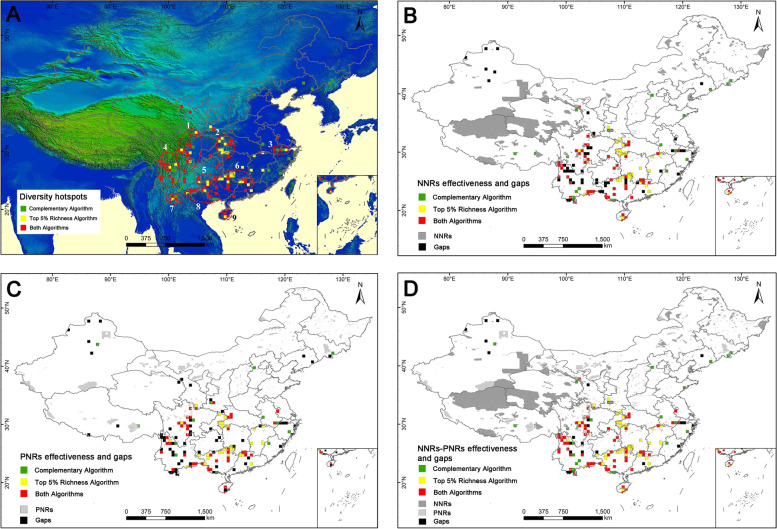
A total of 150 diversity hotspot grid cells, mainly concentrated in central and southern China, were identified. These only accounted for 5% of the total distribution area but contained 96% of the medicinal plants of the country. The hotspot grid cells included all traditional hotspot areas, but we also detected three new hotspots, namely Mufu-Lushan Mountains, Tianshan-Altai Mountains, and Changbai Mountains. The current national and provincial nature reserves protect 125 hotspot grid cells, which harbor 94% of all medicinal plants. However, 25 hotspot grid cells, distributed in the Tianshan-Altai Mountains and Hengduan Mountains, are located outside the national and provincial nature reserves. An analysis of the predicted effects of climate change indicated that the suitable habitat areas will shift from southern to northern China, and that southern China will face a considerable loss of suitable habitat areas, while the east and west parts of China will encompass remarkably more suitable habitat areas in the future.
The current conservation networks have achieved high conservation effectiveness with regard to medicinal plants; however, the conservation gaps we identified should not be neglected, and conservation planning needs to take into account the predicted shifts of some hotspots of medicinal plants due to climate change.
药用植物在人类健康史上一直发挥着重要作用。然而,药用植物的种群和可持续利用受到人类活动和气候变化的严重影响。目前,人们对药用植物的保护现状和分布格局知之甚少。本研究基于 9756 种药用植物的精确地理分布信息,确定了多样性热点和保护缺口,评估了自然保护区的保护效果,并预测了中国药用植物适宜生境的分布区,为其长期保护和可持续利用提供了科学指导。
共确定了 150 个多样性热点网格单元,主要集中在中国中部和南部。这些热点网格单元仅占总分布面积的 5%,但包含了全国 96%的药用植物。热点网格单元包括所有传统的热点地区,但我们还检测到三个新的热点,即幕府-庐山、天山-阿尔泰山和长白山。目前,国家和省级自然保护区保护了 125 个热点网格单元,这些网格单元中栖息着全国 94%的药用植物。然而,25 个热点网格单元,分布在天山-阿尔泰山和横断山脉,位于国家和省级自然保护区之外。气候变化预测效果的分析表明,适宜生境面积将从南方转移到北方,南方将面临适宜生境面积的大量丧失,而中国的东部和西部将在未来拥有更多的适宜生境面积。
目前的保护网络在药用植物保护方面取得了较高的保护效果;然而,我们确定的保护缺口不容忽视,保护规划需要考虑到一些药用植物热点因气候变化而发生的预测性转移。