Elmas Ezgi, Saljoughian Noushin, de Souza Fernandes Pereira Marcelo, Tullius Brian P, Sorathia Kinnari, Nakkula Robin J, Lee Dean A, Naeimi Kararoudi Meisam
Molecular, Cellular and Developmental Biology Graduate Program, The Ohio State University, Columbus, OH, United States.
Center for Childhood Cancer and Blood Diseases, Abigail Wexner Research Institute at Nationwide Children's Hospital, Columbus, OH, United States.
Front Oncol. 2022 Apr 5;12:834002. doi: 10.3389/fonc.2022.834002. eCollection 2022.
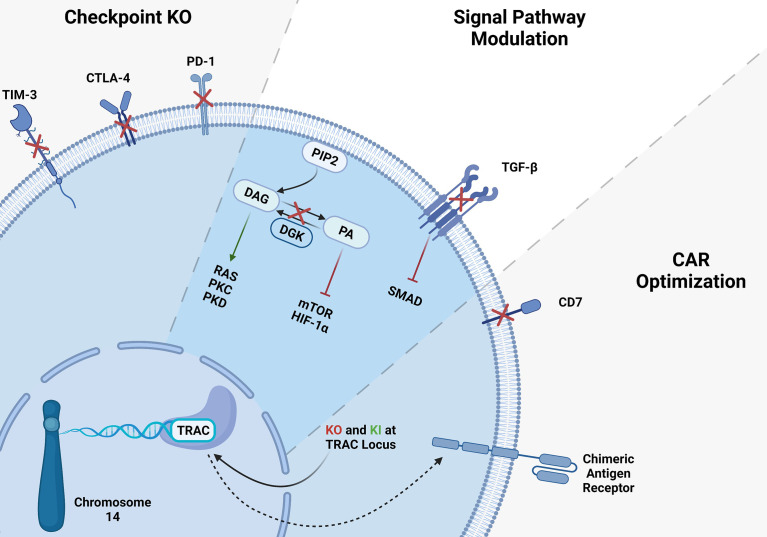
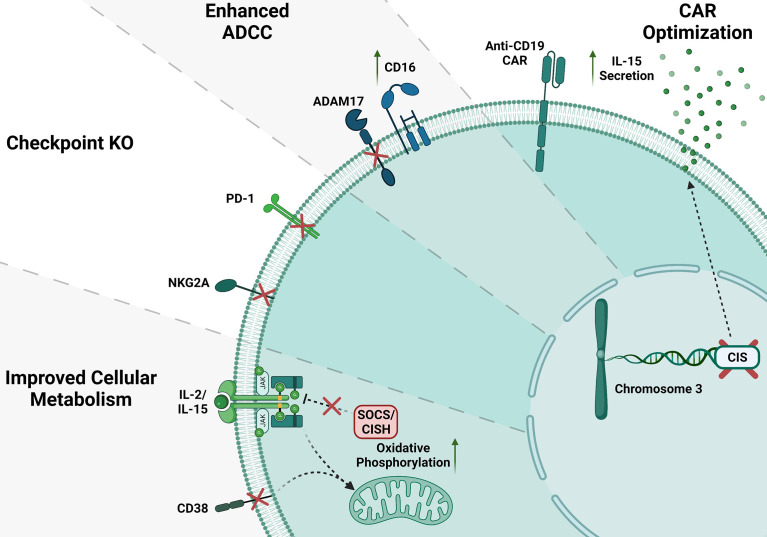
Antitumor activity of immune cells such as T cells and NK cells has made them auspicious therapeutic regimens for adaptive cancer immunotherapy. Enhancing their cytotoxic effects against malignancies and overcoming their suppression in tumor microenvironment (TME) may improve their efficacy to treat cancers. Clustered, regularly interspaced short palindromic repeats (CRISPR) genome editing has become one of the most popular tools to enhance immune cell antitumor activity. In this review we highlight applications and practicability of CRISPR/Cas9 gene editing and engineering strategies for cancer immunotherapy. In addition, we have reviewed several approaches to study CRISPR off-target effects.
诸如T细胞和NK细胞等免疫细胞的抗肿瘤活性使其成为适应性癌症免疫治疗的理想治疗方案。增强它们对恶性肿瘤的细胞毒性作用并克服它们在肿瘤微环境(TME)中的抑制作用,可能会提高它们治疗癌症的疗效。成簇规律间隔短回文重复序列(CRISPR)基因组编辑已成为增强免疫细胞抗肿瘤活性的最流行工具之一。在本综述中,我们重点介绍了CRISPR/Cas9基因编辑及癌症免疫治疗工程策略的应用和实用性。此外,我们还综述了几种研究CRISPR脱靶效应的方法。