Department of Anatomy, Department of Pathology, Helen Diller Family Comprehensive Cancer Center, University of California, San Francisco, San Francisco, CA 94143, USA.
Department of Anatomy, Department of Pathology, Helen Diller Family Comprehensive Cancer Center, University of California, San Francisco, San Francisco, CA 94143, USA.
Mol Cell. 2022 Apr 21;82(8):1514-1527. doi: 10.1016/j.molcel.2022.03.023.
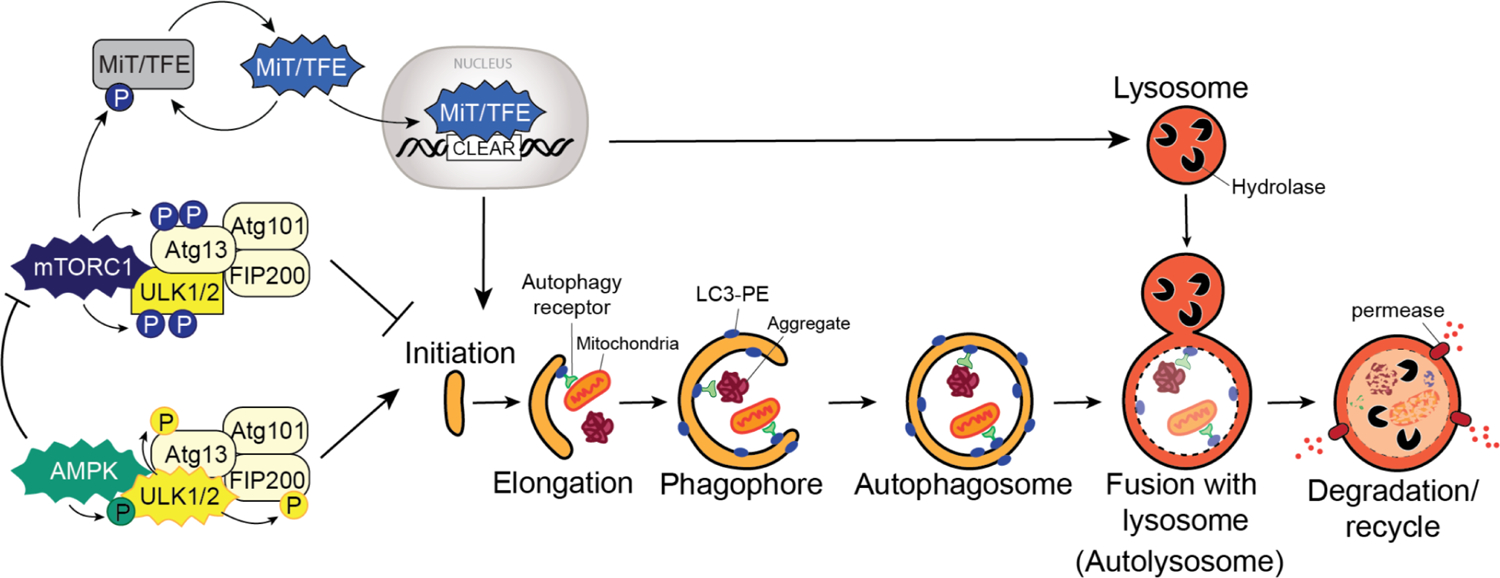
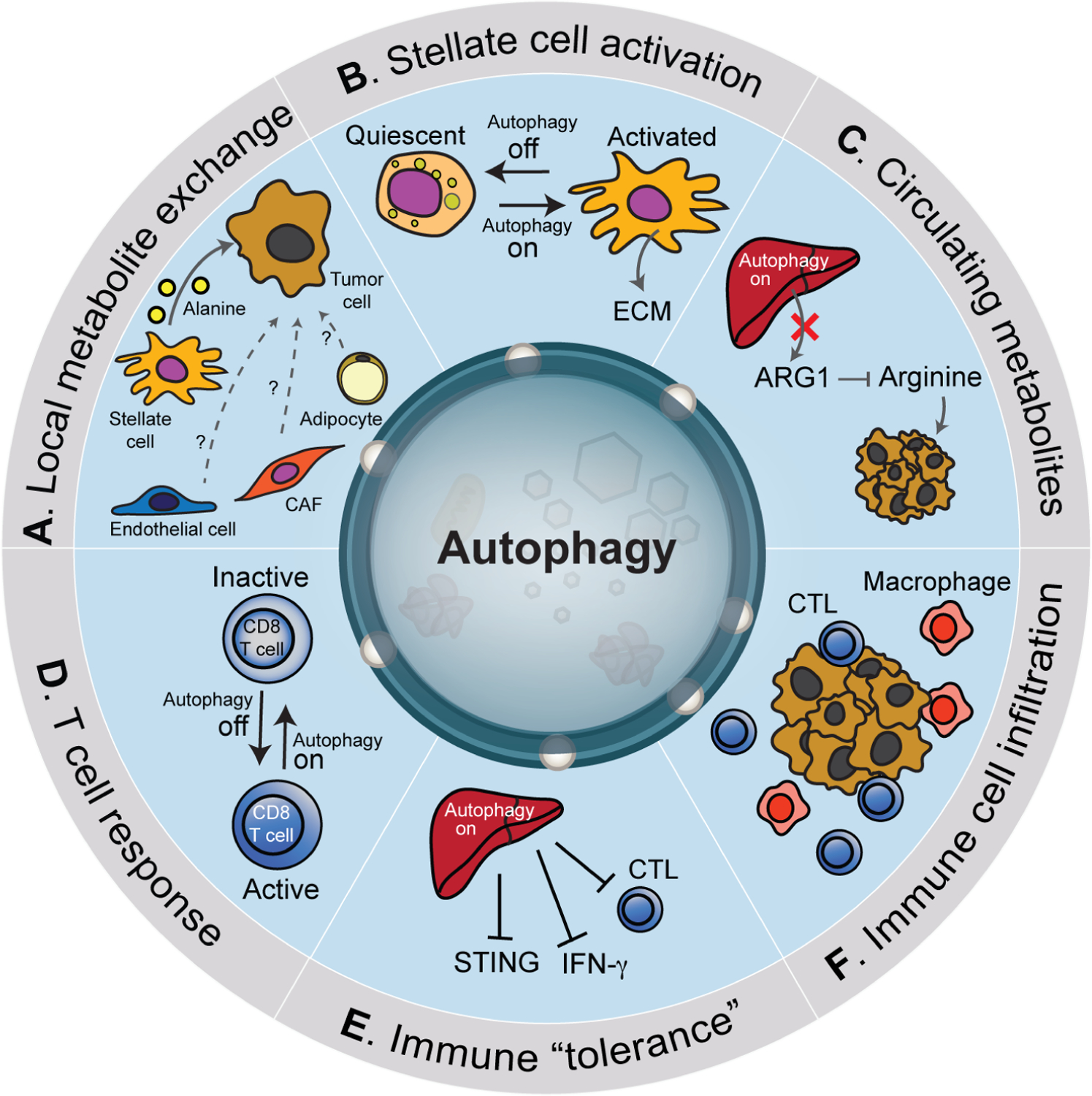
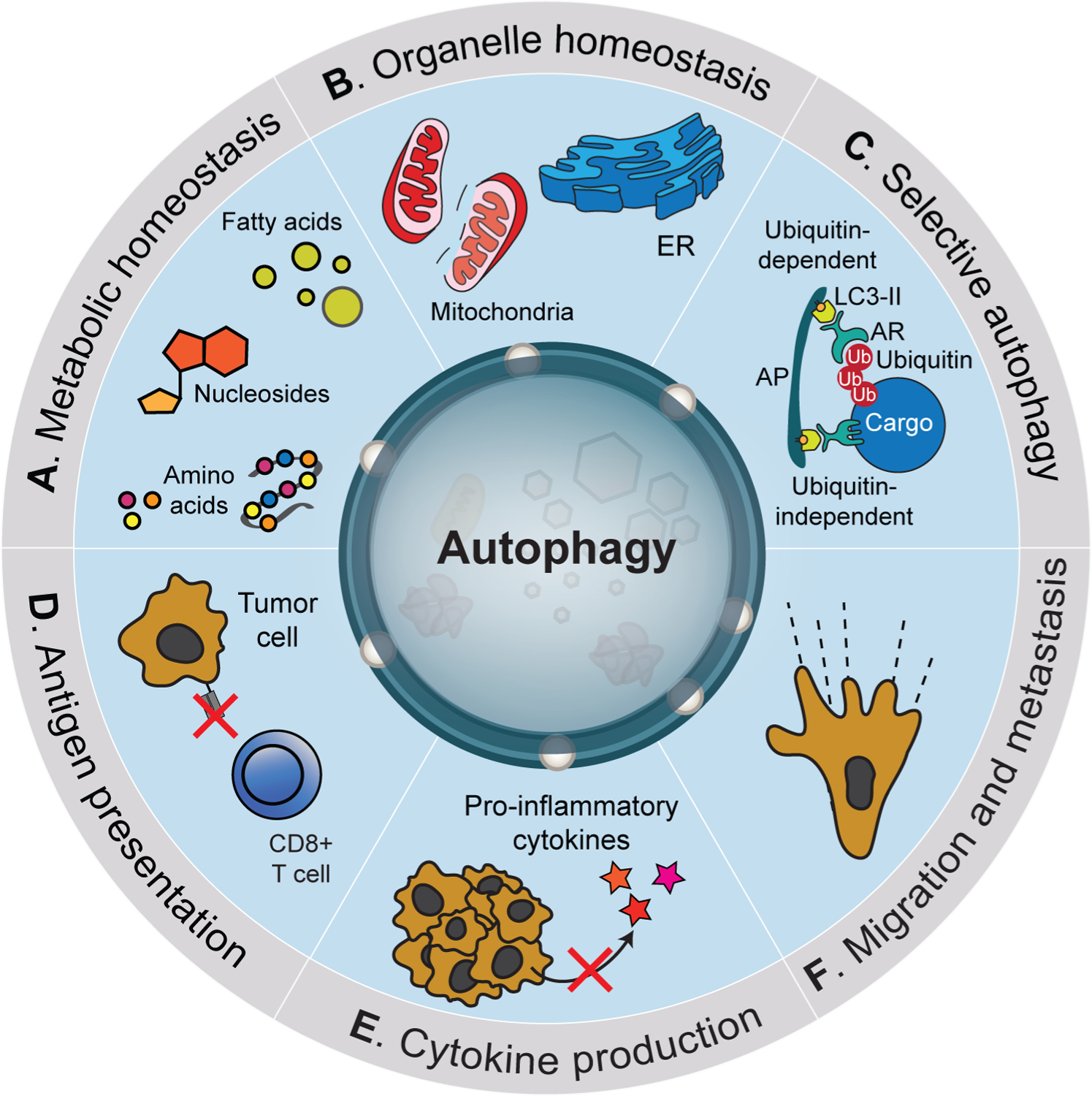
As one of the two highly conserved cellular degradation systems, autophagy plays a critical role in regulation of protein, lipid, and organelle quality control and cellular homeostasis. This evolutionarily conserved pathway singles out intracellular substrates for elimination via encapsulation within a double-membrane vesicle and delivery to the lysosome for degradation. Multiple cancers disrupt normal regulation of autophagy and hijack its degradative ability to remodel their proteome, reprogram their metabolism, and adapt to environmental challenges, making the autophagy-lysosome system a prime target for anti-cancer interventions. Here, we discuss the roles of autophagy in tumor progression, including cancer-specific mechanisms of autophagy regulation and the contribution of tumor and host autophagy in metabolic regulation, immune evasion, and malignancy. We further discuss emerging proteomics-based approaches for systematic profiling of autophagosome-lysosome composition and contents. Together, these approaches are uncovering new features and functions of autophagy, leading to more effective strategies for targeting this pathway in cancer.
自噬作为两种高度保守的细胞降解系统之一,在调节蛋白质、脂质和细胞器的质量控制以及细胞内稳态方面发挥着关键作用。这条在进化上保守的途径通过将细胞内底物包裹在双层膜囊泡中并递送至溶酶体进行降解,从而将其选择性地清除。多种癌症会破坏自噬的正常调节,并利用其降解能力重塑其蛋白质组、重新编程其代谢并适应环境挑战,从而使自噬-溶酶体系统成为抗癌干预的主要靶点。在这里,我们讨论了自噬在肿瘤进展中的作用,包括自噬调节的癌症特异性机制以及肿瘤和宿主自噬在代谢调节、免疫逃逸和恶性肿瘤中的贡献。我们还进一步讨论了新兴的基于蛋白质组学的方法,用于系统分析自噬体-溶酶体的组成和内容。这些方法共同揭示了自噬的新特征和功能,为靶向该途径治疗癌症提供了更有效的策略。