Molecular and Cell Biology Laboratory, The Salk Institute for Biological Studies, La Jolla, CA 92037, USA.
Molecular and Cell Biology Laboratory, The Salk Institute for Biological Studies, La Jolla, CA 92037, USA.
Mol Cell. 2021 Sep 16;81(18):3677-3690. doi: 10.1016/j.molcel.2021.08.015.
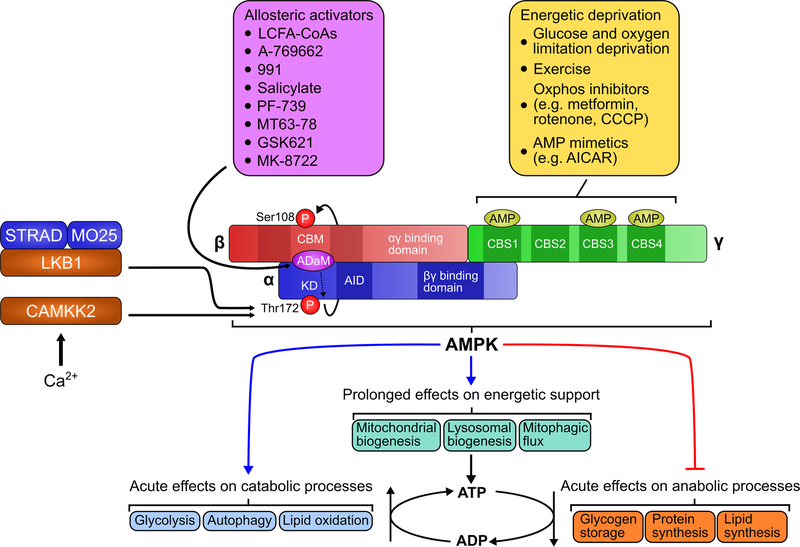
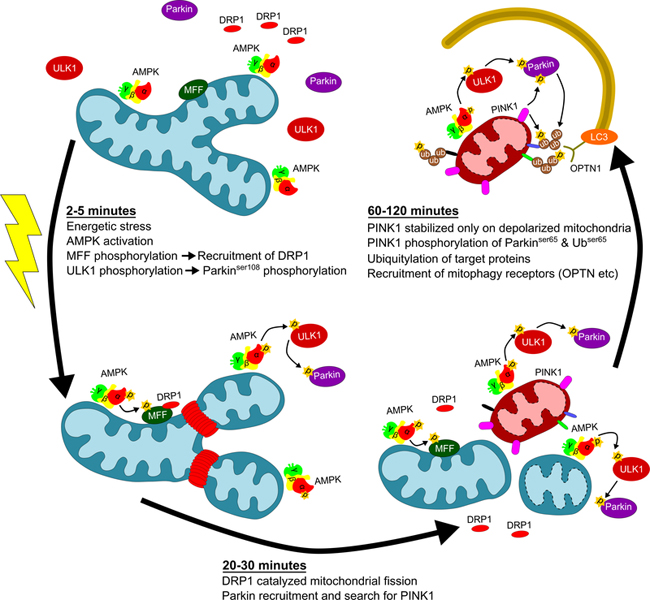
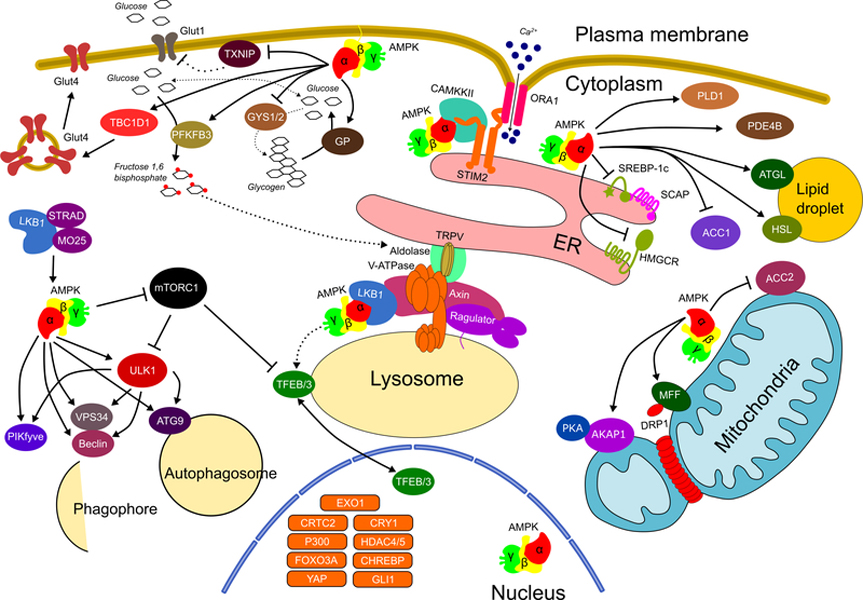
The evolution of AMPK and its homologs enabled exquisite responsivity and control of cellular energetic homeostasis. Recent work has been critical in establishing the mechanisms that determine AMPK activity, novel targets of AMPK action, and the distribution of AMPK-mediated control networks across the cellular landscape. The role of AMPK as a hub of metabolic control has led to intense interest in pharmacologic activation as a therapeutic avenue for a number of disease states, including obesity, diabetes, and cancer. As such, critical work on the compartmentalization of AMPK, its downstream targets, and the systems it influences has progressed in recent years. The variegated distribution of AMPK-mediated control of metabolic homeostasis has revealed key insights into AMPK in normal biology and future directions for AMPK-based therapeutic strategies.
AMPK 及其同源物的进化使细胞能量平衡的反应和控制变得非常精细。最近的工作对于确定 AMPK 活性的机制、AMPK 作用的新靶点以及 AMPK 介导的控制网络在细胞景观中的分布具有重要意义。AMPK 作为代谢控制的枢纽,其作为许多疾病状态(包括肥胖、糖尿病和癌症)的治疗途径的药理学激活引起了极大的兴趣。因此,近年来,关于 AMPK 的区室化、其下游靶点以及受其影响的系统的关键工作取得了进展。AMPK 对代谢稳态的控制的多样化分布揭示了 AMPK 在正常生物学中的关键见解,以及基于 AMPK 的治疗策略的未来方向。