Holzer-Geissler Judith C J, Schwingenschuh Simon, Zacharias Martin, Einsiedler Johanna, Kainz Sonja, Reisenegger Peter, Holecek Christian, Hofmann Elisabeth, Wolff-Winiski Barbara, Fahrngruber Hermann, Birngruber Thomas, Kamolz Lars-Peter, Kotzbeck Petra
Research Unit for Tissue Regeneration, Repair and Reconstruction, Division of Plastic, Aesthetic and Reconstructive Surgery, Department of Surgery, Medical University of Graz, 8036 Graz, Austria.
COREMED-Cooperative Centre for Regenerative Medicine, Joanneum Research Forschungsgesellschaft mbH, 8010 Graz, Austria.
Biomedicines. 2022 Apr 6;10(4):856. doi: 10.3390/biomedicines10040856.
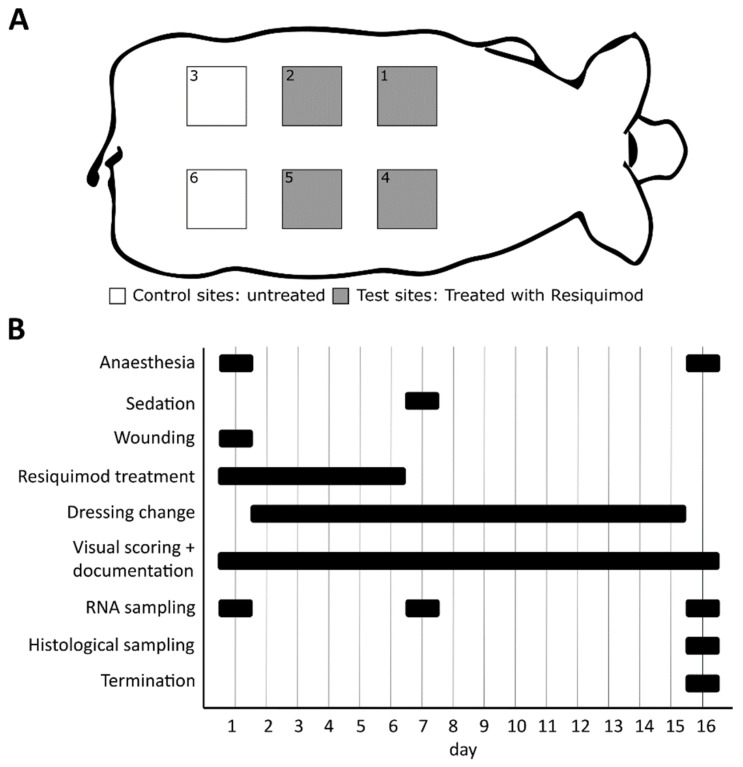
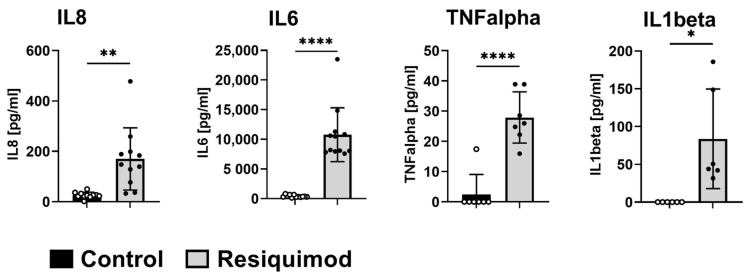
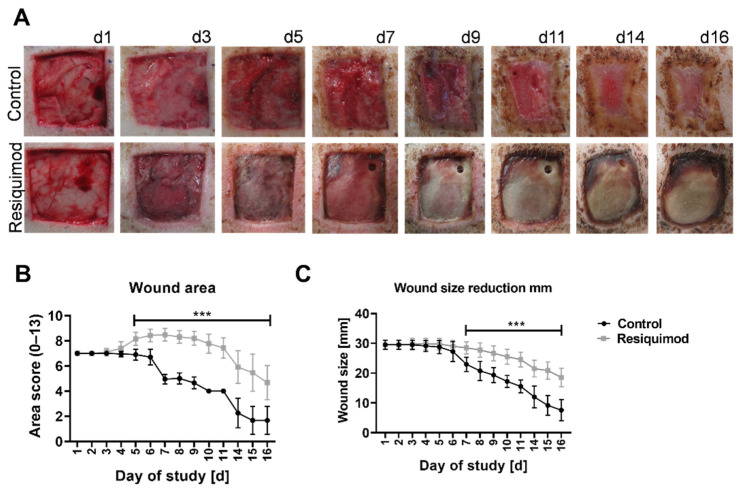
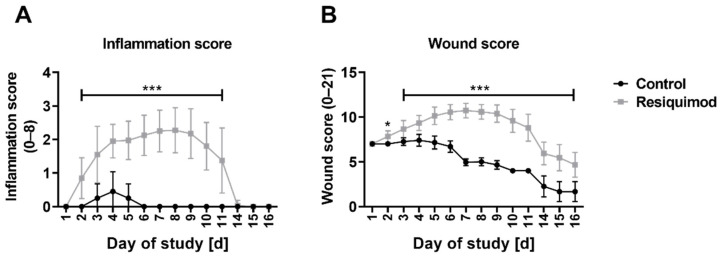
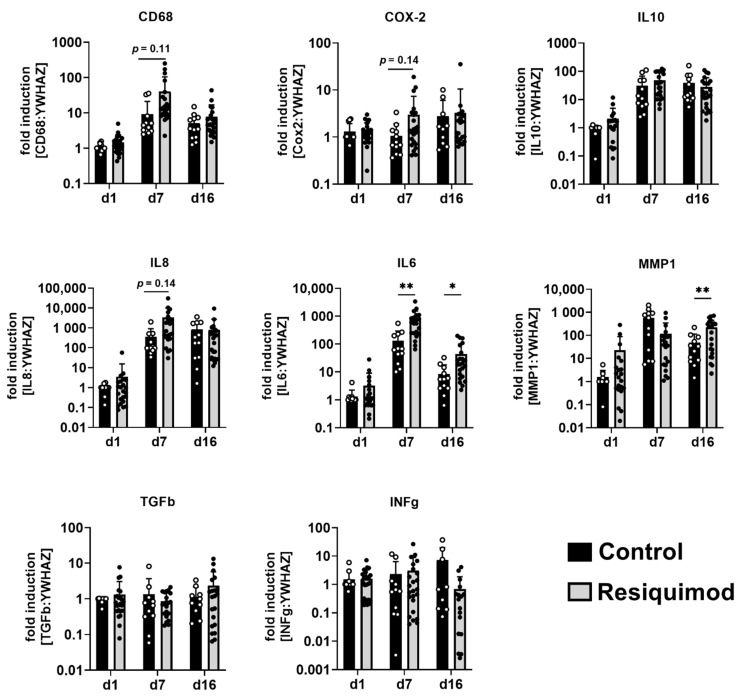
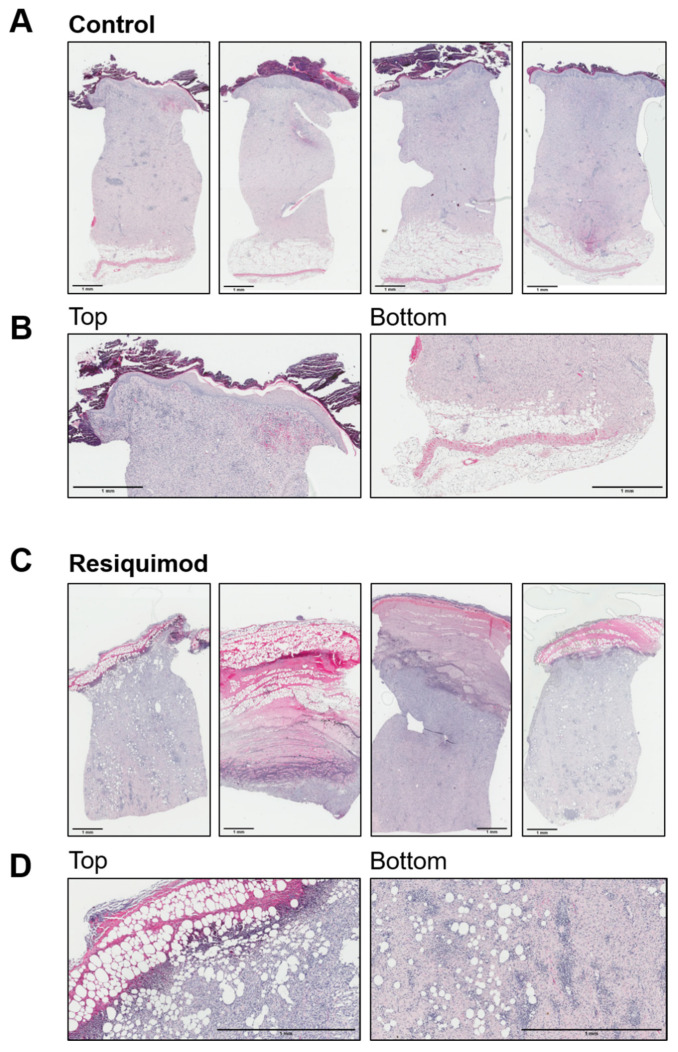
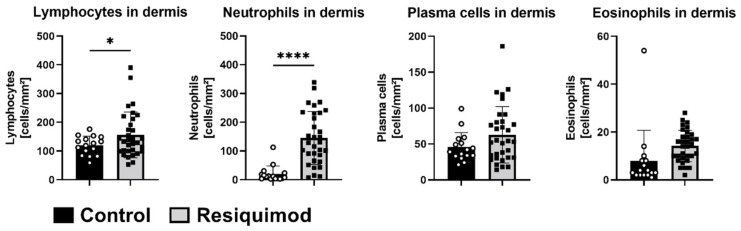
The treatment of chronic wounds still challenges modern medicine because of these wounds' heterogenic pathophysiology. Processes such as inflammation, ischemia and bacterial infection play major roles in the progression of a chronic wound. In recent years, preclinical wound models have been used to understand the underlying processes of chronic wound formation. However, the wound models used to investigate chronic wounds often lack translatability from preclinical models to patients, and often do not take exaggerated inflammation into consideration. Therefore, we aimed to investigate prolonged inflammation in a porcine wound model by using resiquimod, a TLR7 and TLR8 agonist. Pigs received full thickness excisional wounds, where resiquimod was applied daily for 6 days, and untreated wounds served as controls. Dressing change, visual documentation and wound scoring were performed daily. Biopsies were collected for histological as well as gene expression analysis. Resiquimod application on full thickness wounds induced a visible inflammation of wounds, resulting in delayed wound healing compared to non-treated control wounds. Gene expression analysis revealed high levels of IL6, MMP1 and CD68 expression after resiquimod application, and histological analysis showed increased immune cell infiltration. By using resiquimod, we were able to show that prolonged inflammation delayed wound healing, which is often observed in chronic wounds in patients. The model we used shows the importance of inflammation in wound healing and gives an insight into the progression of chronic wounds.
由于慢性伤口具有异质性病理生理学特征,其治疗仍是现代医学面临的挑战。炎症、缺血和细菌感染等过程在慢性伤口的进展中起主要作用。近年来,临床前伤口模型已被用于了解慢性伤口形成的潜在过程。然而,用于研究慢性伤口的伤口模型往往缺乏从临床前模型到患者的可转化性,并且常常没有考虑到过度炎症。因此,我们旨在通过使用瑞喹莫德(一种TLR7和TLR8激动剂)在猪伤口模型中研究持续性炎症。猪接受全层切除伤口,每天应用瑞喹莫德,持续6天,未处理的伤口作为对照。每天进行换药、视觉记录和伤口评分。采集活检组织进行组织学和基因表达分析。在全层伤口上应用瑞喹莫德会引起伤口明显炎症,与未处理的对照伤口相比,导致伤口愈合延迟。基因表达分析显示,应用瑞喹莫德后IL6、MMP1和CD68表达水平升高,组织学分析显示免疫细胞浸润增加。通过使用瑞喹莫德,我们能够证明持续性炎症会延迟伤口愈合,这在患者的慢性伤口中经常观察到。我们使用的模型显示了炎症在伤口愈合中的重要性,并深入了解了慢性伤口的进展。