Maj Małgorzata, Kaźmierski Łukasz, Balik Karolina, Kowalska Karolina, Gackowska Lidia, Bajek Anna, Drewa Tomasz
Department of Tissue Engineering, Chair of Urology and Andrology, Collegium Medicum, Nicolaus Copernicus University, Karłowicza 24, 85-092 Bydgoszcz, Poland.
Department of Immunology, Collegium Medicum, Nicolaus Copernicus University, Sklodowskiej-Curie 9, 85-094 Bydgoszcz, Poland.
Life (Basel). 2022 Apr 7;12(4):549. doi: 10.3390/life12040549.
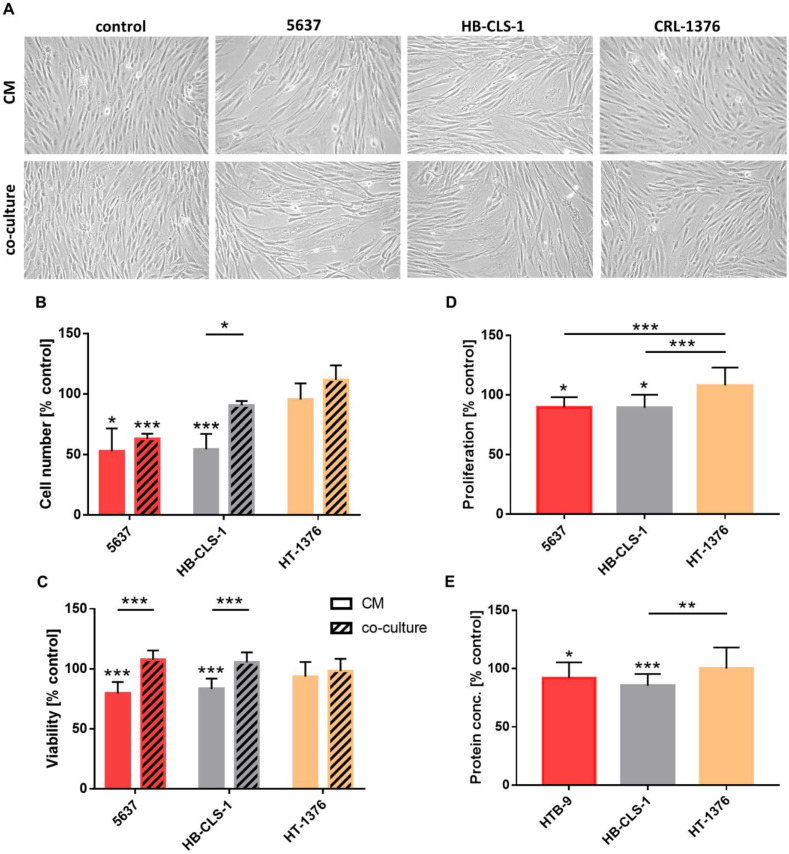
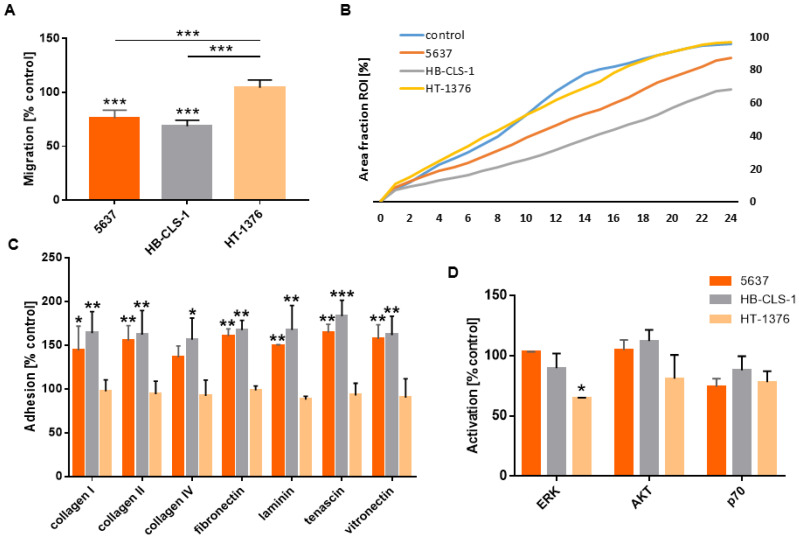
Stem cell-based therapies are considered one of the most promising disciplines in biomedicine. Bladder cancer patients could benefit from therapies directed to promote healing after invasive surgeries or to lessen urinary incontinence, a common side effect of both cancer itself and the treatment. However, the local delivery of cells producing large amounts of paracrine factors may alter interactions within the microenvironment. For this reason, reconstructive cellular therapies for patients with a history of cancer carry a potential risk of tumor reactivation. We used an indirect co-culture model to characterize the interplay between adipose-derived stem cells and bladder cancer cells. Incubation with ASCs increased MCP-1 secretion by bladder cancer cells (from 2.1-fold to 8.1-fold, depending on the cell line). Cancer cell-derived factors altered ASC morphology. Cells with atypical shapes and significantly enlarged volumes appeared within the monolayer. Incubation in a conditioned medium (CM) containing soluble mediators secreted by 5637 and HB-CLS-1 bladder cancer cell lines decreased ASC numbers by 47.5% and 45.7%. A significant increase in adhesion to ECM components, accompanied by reduced motility and sheet migration, was also observed after incubation in CM from 5637 and HB-CLS-1 cells. No differences were observed when ASCs were co-cultured with HT-1376 cells. Our previous and present results indicate that soluble mediators secreted by ASCs and bladder cancer cells induce opposite effects influencing cells that represent the non-muscle-invasive urinary bladder.
基于干细胞的疗法被认为是生物医学中最有前景的学科之一。膀胱癌患者可从旨在促进侵入性手术后愈合或减轻尿失禁(癌症本身及其治疗的常见副作用)的疗法中获益。然而,大量分泌旁分泌因子的细胞的局部递送可能会改变微环境中的相互作用。因此,对于有癌症病史的患者,重建性细胞疗法存在肿瘤重新激活的潜在风险。我们使用间接共培养模型来表征脂肪干细胞与膀胱癌细胞之间的相互作用。与脂肪干细胞共同孵育会增加膀胱癌细胞的MCP - 1分泌(根据细胞系不同,从2.1倍增加到8.1倍)。癌细胞衍生的因子改变了脂肪干细胞的形态。单层内出现了形状异常且体积显著增大的细胞。在含有由5637和HB - CLS - 1膀胱癌细胞系分泌的可溶性介质的条件培养基(CM)中孵育后,脂肪干细胞数量分别减少了47.5%和45.7%。在5637和HB - CLS - 1细胞的条件培养基中孵育后,还观察到对细胞外基质成分的粘附显著增加,同时运动性和片状迁移减少。当脂肪干细胞与HT - 1376细胞共培养时未观察到差异。我们之前和现在的结果表明,脂肪干细胞和膀胱癌细胞分泌的可溶性介质诱导了相反的效应,影响代表非肌肉浸润性膀胱的细胞。