Istituto per la Sintesi Organica e la Fotoreattività, Consiglio Nazionale delle Ricerche, Via P. Gobetti 101, 40129 Bologna, Italy.
Institute of Nanoscience and Nanotechnology, N.C.S.R. "Demokritos", Agia Paraskevi Attikis, Athens 15310, Greece.
Cells. 2022 Apr 10;11(8):1286. doi: 10.3390/cells11081286.
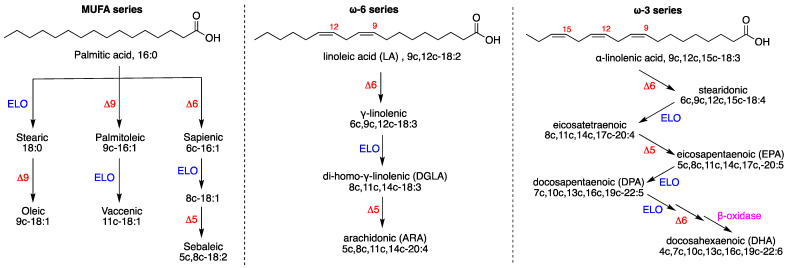
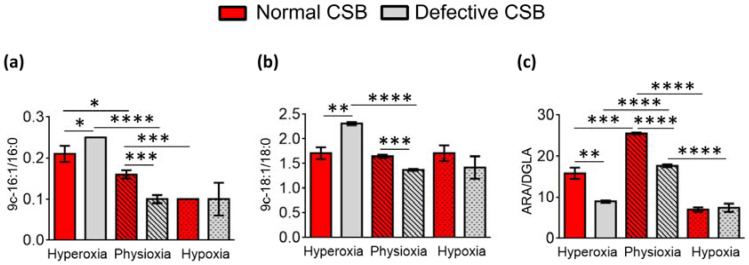
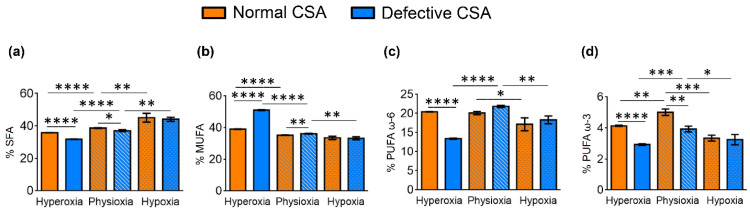
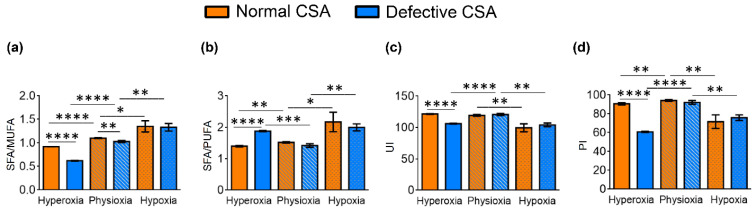
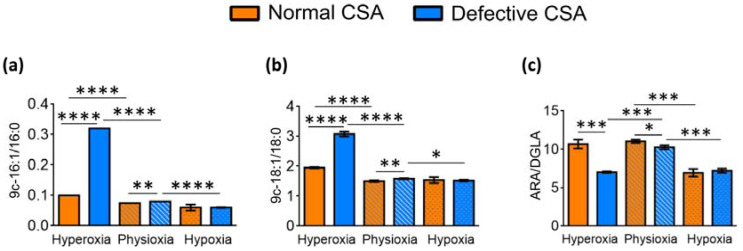
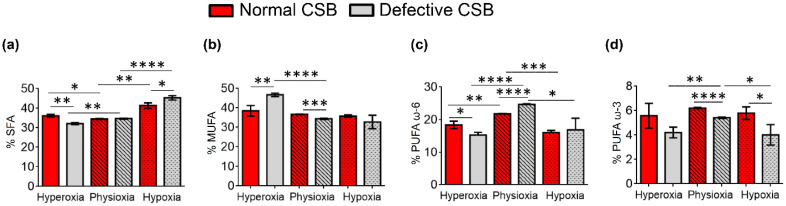
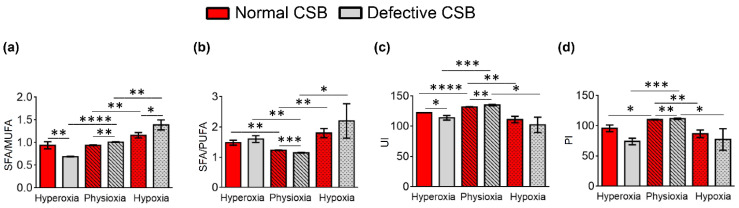
Oxygen is important for lipid metabolism, being involved in both enzymatic transformations and oxidative reactivity, and is particularly influent when genetic diseases impair the repair machinery of the cells, such as described for Cockayne syndrome (CS). We used two cellular models of transformed fibroblasts defective for CSA and CSB genes and their normal counterparts, grown for 24 h under various oxygen tensions (hyperoxic 21%, physioxic 5% and hypoxic 1%) to examine the fatty acid-based membrane remodeling by GC analysis of fatty acid methyl esters derived from membrane phospholipids. Overall, we first distinguished differences due to oxygen tensions: (a) hyperoxia induced a general boost of desaturase enzymatic activity in both normal and defective CSA and CSB cell lines, increasing monounsaturated fatty acids (MUFA), whereas polyunsaturated fatty acids (PUFA) did not undergo oxidative consumption; (b) hypoxia slowed down desaturase activities, mostly in CSA cell lines and defective CSB, causing saturated fatty acids (SFA) to increase, whereas PUFA levels diminished, suggesting their involvement in hypoxia-related signaling. CSB-deprived cells are the most sensitive to oxidation and CSA-deprived cells are the most sensitive to the radical-based formation of trans fatty acids (TFA). The results point to the need to finely differentiate biological targets connected to genetic impairments and, consequently, suggest the better definition of cell protection and treatments through accurate molecular profiling that includes membrane lipidomes.
氧气对脂质代谢很重要,它参与了酶转化和氧化反应,当遗传疾病损害细胞的修复机制时,氧气尤其重要,例如 Cockayne 综合征 (CS)。我们使用两种转化成纤维细胞的细胞模型,这些细胞在 CSA 和 CSB 基因缺陷,以及它们的正常对应物中生长 24 小时,在不同的氧张力(高氧 21%、生理氧 5%和低氧 1%)下,通过衍生自膜磷脂的脂肪酸甲酯的 GC 分析来检查基于脂肪酸的膜重塑。总的来说,我们首先区分了由于氧张力引起的差异:(a) 高氧在正常和缺陷的 CSA 和 CSB 细胞系中普遍促进了去饱和酶的活性,增加了单不饱和脂肪酸 (MUFA),而多不饱和脂肪酸 (PUFA) 没有发生氧化消耗;(b) 缺氧减缓了去饱和酶的活性,主要在 CSA 细胞系和缺陷的 CSB 中,导致饱和脂肪酸 (SFA) 增加,而 PUFA 水平减少,表明它们参与了与缺氧相关的信号转导。CSB 缺乏的细胞对氧化最敏感,CSA 缺乏的细胞对反式脂肪酸 (TFA) 的自由基形成最敏感。这些结果表明需要精细地区分与遗传缺陷相关的生物靶标,因此,建议通过包括膜脂质组学在内的准确分子分析来更好地定义细胞保护和治疗。