Istituto per la Sintesi Organica e la Fotoreattività, Consiglio Nazionale delle Ricerche, Via Piero Gobetti 101, 40129 Bologna, Italy.
Institute of Nanoscience and Nanotechnology, National Center for Scientific Research "Demokritos", 15310 Athens, Greece.
Biomolecules. 2022 Aug 4;12(8):1075. doi: 10.3390/biom12081075.
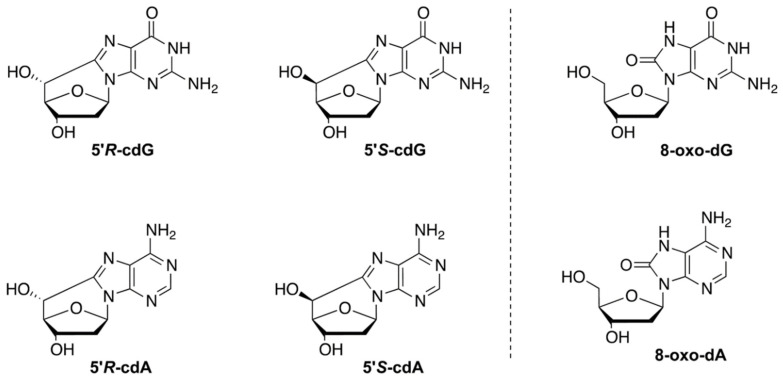
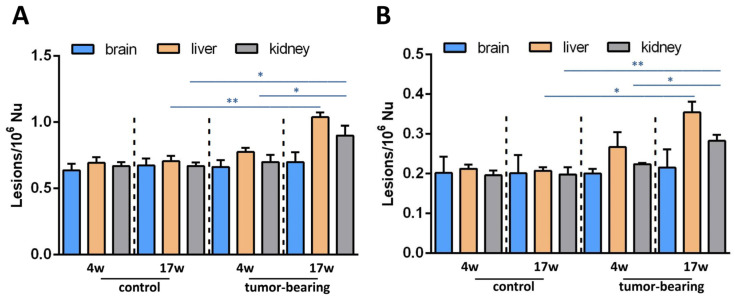
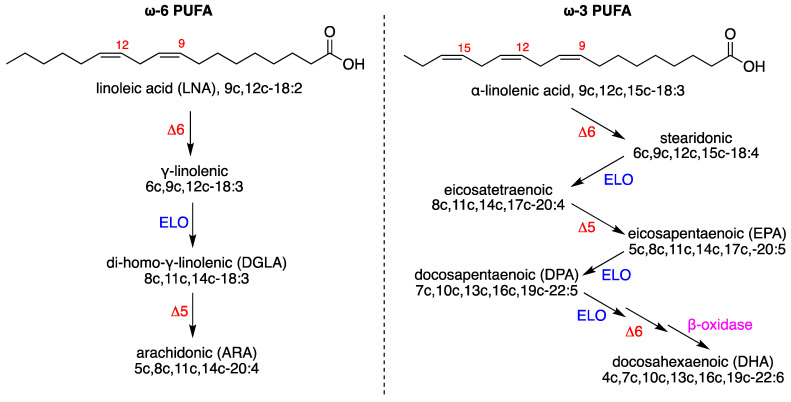
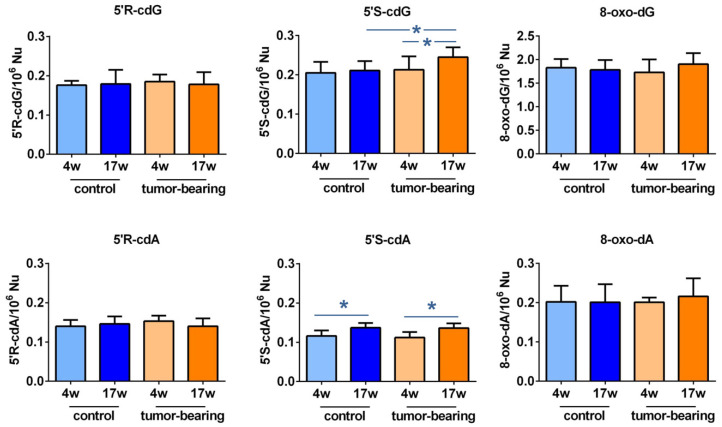
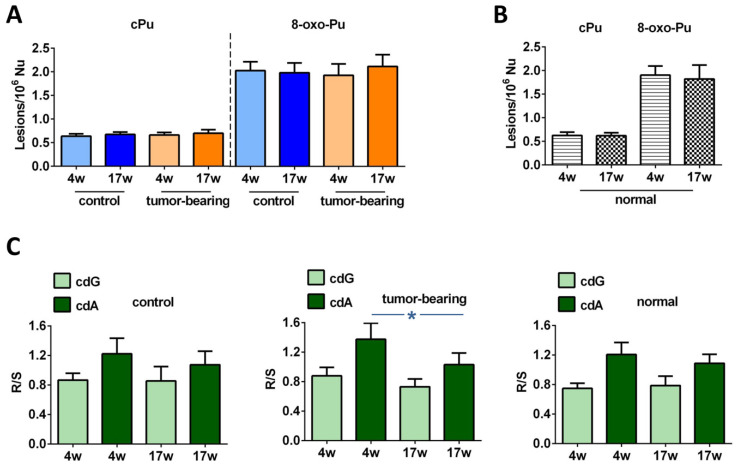
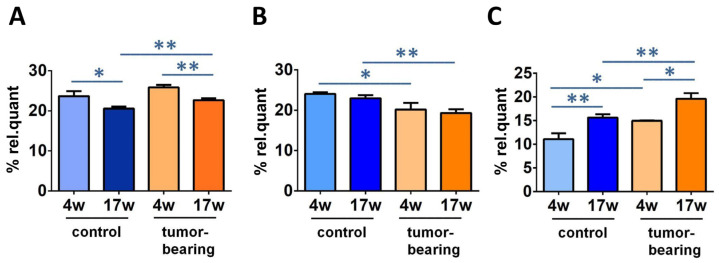
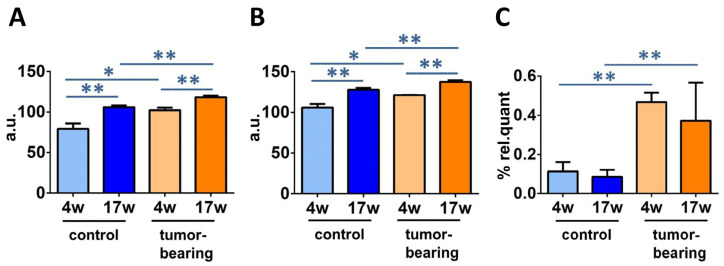
The consequences of aging and disease conditions in tissues involve reactive oxygen species (ROS) and related molecular alterations of different cellular compartments. We compared a murine model of immunodeficient (SCID) xenografted young (4 weeks old) and old (17 weeks old) mice with corresponding controls without tumor implantation and carried out a compositional evaluation of brain tissue for changes in parallel DNA and lipids compartments. DNA damage was measured by four purine 5',8-cyclo-2'-deoxynucleosides, 8-oxo-7,8-dihydro-2'-deoxyguanosine (8-oxo-dG), and 8-oxo-7,8-dihydro-2'-deoxyadenosine (8-oxo-dA). In brain lipids, the twelve most representative fatty acid levels, which were mostly obtained from the transformation of glycerophospholipids, were followed up during the aging and disease progressions. The progressive DNA damage due to age and tumoral conditions was confirmed by raised levels of 5'-cdG and 5'-cdA. In the brain, the remodeling involved a diminution of palmitic acid accompanied by an increase in arachidonic acid, along both age and tumor progressions, causing increases in the unsaturation index, the peroxidation index, and total TFA as indicators of increased oxidative and free radical reactivity. Our results contribute to the ongoing debate on the central role of DNA and genome instability in the aging process, and on the need for a holistic vision, which implies choosing the best biomarkers for such monitoring. Furthermore, our data highlight brain tissue for its lipid remodeling response and inflammatory signaling, which seem to prevail over the effects of DNA damage.
组织中衰老和疾病状况的后果涉及活性氧(ROS)和不同细胞区室的相关分子改变。我们比较了免疫缺陷(SCID)异种移植的年轻(4 周龄)和年老(17 周龄)小鼠与未植入肿瘤的相应对照小鼠,并对脑组织进行了成分评估,以研究 DNA 和脂质区室的平行变化。通过四种嘌呤 5',8-环-2'-脱氧核苷、8-氧代-7,8-二氢-2'-脱氧鸟苷(8-oxo-dG)和 8-氧代-7,8-二氢-2'-脱氧腺苷(8-oxo-dA)来测量 DNA 损伤。在脑脂质中,我们跟踪了 12 种最具代表性的脂肪酸水平的变化,这些脂肪酸主要来自甘油磷脂的转化。随着年龄和疾病的进展,由于年龄和肿瘤条件导致的 DNA 损伤逐渐增加,这一点得到了证实,这是通过升高的 5'-cdG 和 5'-cdA 水平得到证实的。在大脑中,重塑涉及棕榈酸的减少,同时伴随着花生四烯酸的增加,这两种情况都伴随着年龄和肿瘤的进展,导致不饱和指数、过氧化指数和总 TFA 增加,这表明氧化和自由基反应性增加。我们的结果有助于正在进行的关于 DNA 和基因组不稳定性在衰老过程中的核心作用的争论,以及需要有整体观的争论,这意味着需要选择最佳的生物标志物来进行这种监测。此外,我们的数据突出了脑组织的脂质重塑反应和炎症信号,这些反应似乎超过了 DNA 损伤的影响。