Rathod Nikheel Bhojraj, Nirmal Nilesh Prakash, Pagarkar Asif, Özogul Fatih, Rocha João Miguel
Department of Post Harvest Management of Meat, Poultry and Fish, PG Institute of Postharvest Management, Dr. Balasaheb Sawant Konkan Krishi Vidyapeeth, Roha, Raigad 402116, Maharashtra, India.
Institute of Nutrition, Mahidol University, 999 Phutthamonthon 4 Road, Salaya, Nakhon Pathom 73170, Thailand.
Microorganisms. 2022 Apr 3;10(4):773. doi: 10.3390/microorganisms10040773.
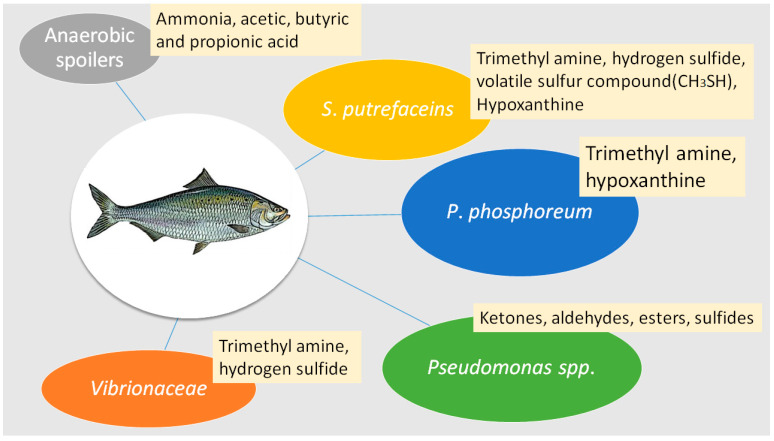
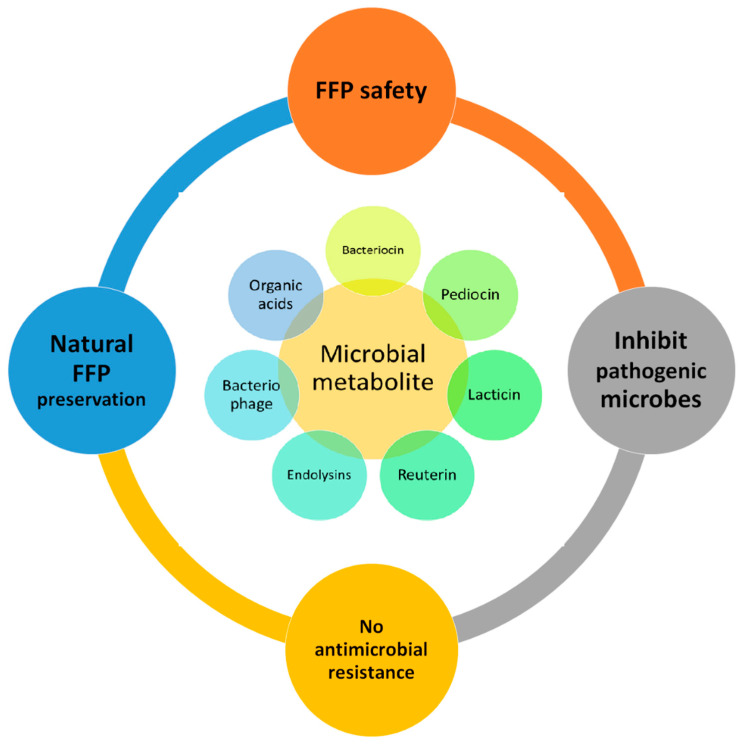
Microbial metabolites have proven effects to inhibit food spoilage microbiota, without any development of antimicrobial resistance. This review provides a recent literature update on the preservative action of metabolites derived from microorganisms on seafood. Fish and fishery products are regarded as a myriad of nutrition, while being highly prone to spoilage. Several proven controversies (antimicrobial resistance and health issues) related to the use of synthetic preservatives have caused an imminent problem. The demand for minimally processed and naturally preserved clean-label fish and fishery products is on rise. Metabolites derived from microorganisms have exhibited diverse preservation capacities on fish and fishery products' spoilage. Inclusions with other preservation techniques, such as hurdle technology, for the shelf-life extension of fish and fishery products are also summarized.
微生物代谢产物已被证明具有抑制食品腐败微生物的作用,且不会产生任何抗微生物耐药性。本综述提供了关于微生物来源的代谢产物对海鲜的防腐作用的最新文献更新。鱼类和渔业产品被认为富含多种营养,但极易腐败。与使用合成防腐剂相关的几个已证实的争议(抗微生物耐药性和健康问题)引发了一个紧迫的问题。对最少加工和天然保存的清洁标签鱼类和渔业产品的需求正在上升。微生物来源的代谢产物对鱼类和渔业产品的腐败表现出了多种防腐能力。还总结了与其他保存技术(如栅栏技术)相结合以延长鱼类和渔业产品保质期的情况。