Department of Nursing, Kang-Ning University, Taipei 11485, Taiwan.
School of Nursing, National Yang Ming Chiao Tung University, Taipei 112304, Taiwan.
Molecules. 2022 Apr 13;27(8):2507. doi: 10.3390/molecules27082507.
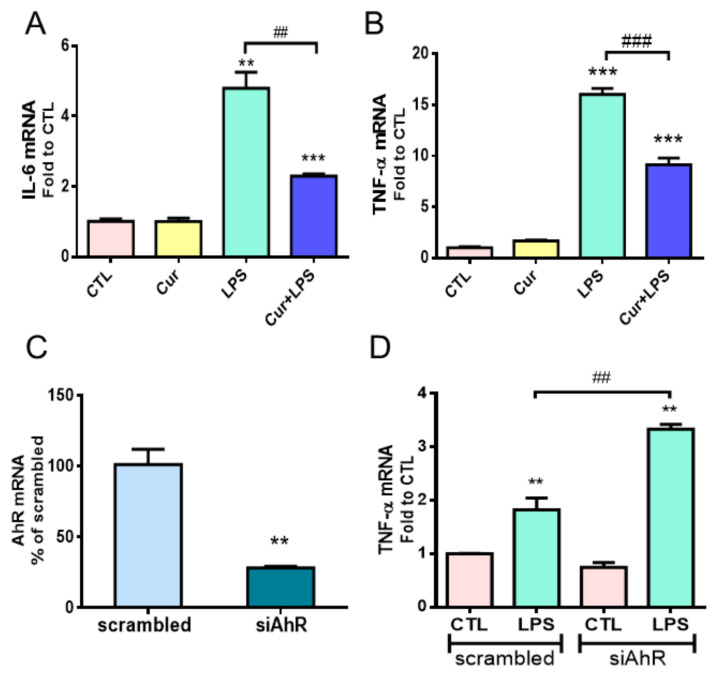
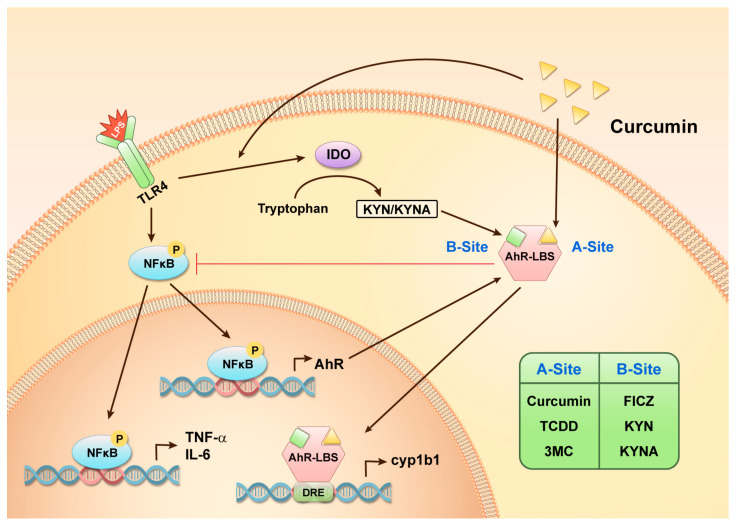
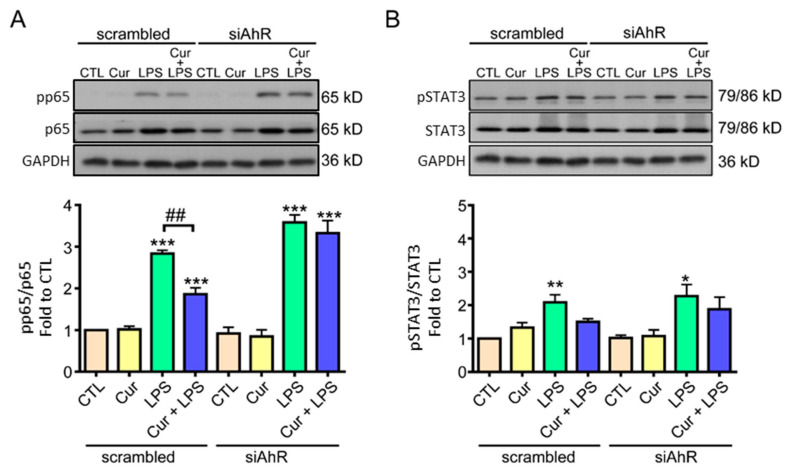
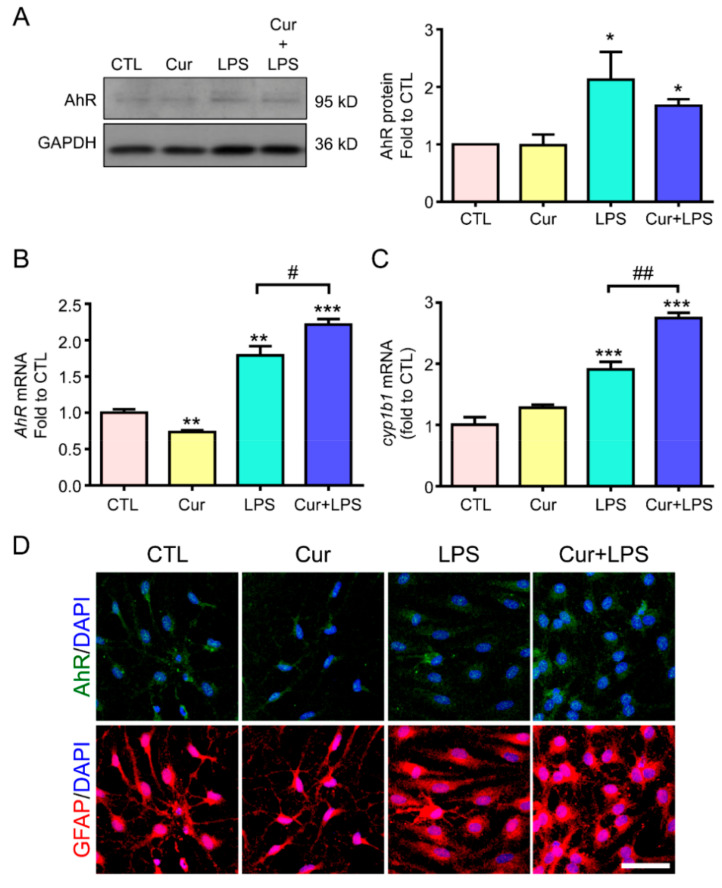
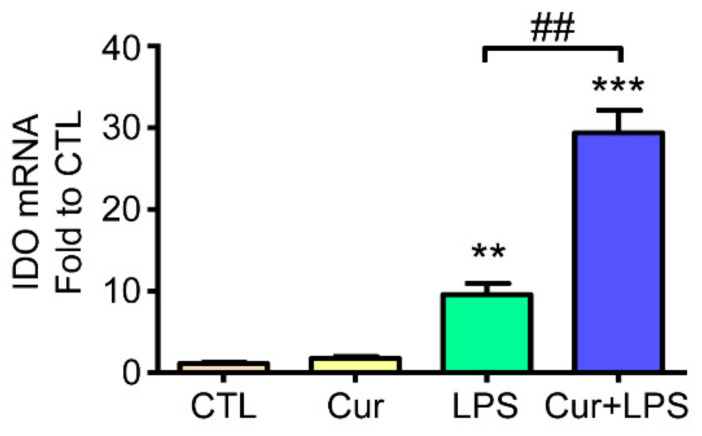
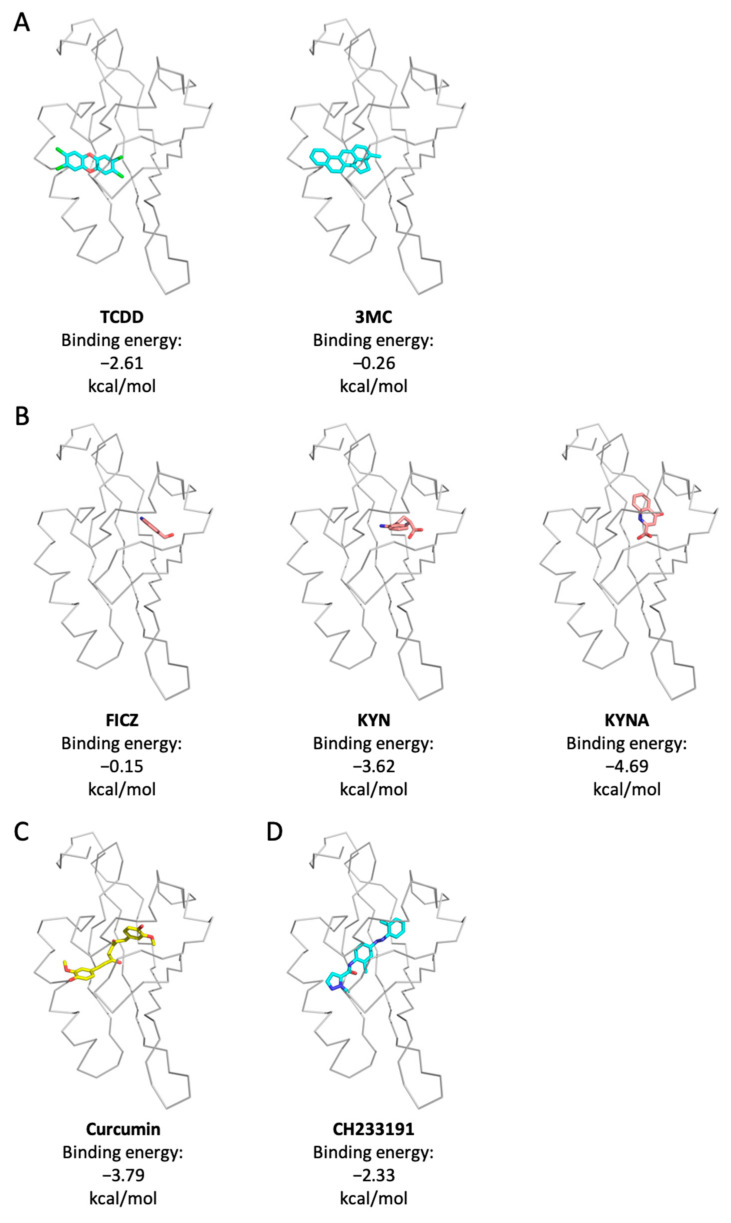
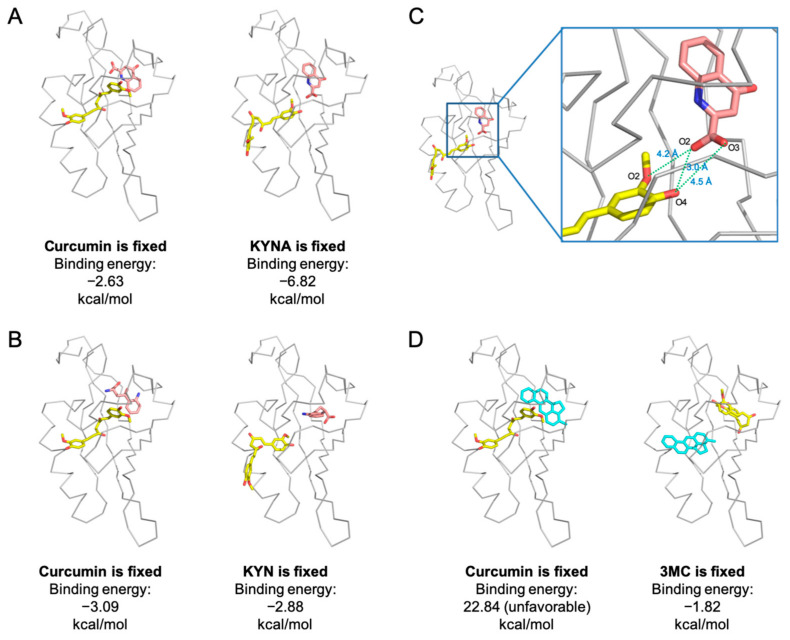
Curcumin is an anti-inflammatory and neuroprotective compound in turmeric. It is a potential ligand of the aryl hydrocarbon receptor (AhR) that mediates anti-inflammatory signaling. However, the AhR-mediated anti-inflammatory effect of curcumin within the brain remains unclear. We investigated the role of AhR on the curcumin effect in inflammatory astrogliosis. Curcumin attenuated lipopolysaccharide (LPS)-induced proinflammatory IL-6 and TNF-α gene expression in primary cultured rat astrocytes. When AhR was knocked down, LPS-induced IL-6 and TNF-α were increased and curcumin-decreased activation of the inflammation mediator NF-κB p65 by LPS was abolished. Although LPS increased AhR and its target gene CYP1B1, curcumin further enhanced LPS-induced CYP1B1 and indoleamine 2,3-dioxygenase (IDO), which metabolizes tryptophan to AhR ligands kynurenine (KYN) and kynurenic acid (KYNA). Potential interactions between curcumin and human AhR analyzed by molecular modeling of ligand-receptor docking. We identified a new ligand binding site on AhR different from the classical 2,3,7,8-tetrachlorodibenzo-p-dioxin site. Curcumin docked onto the classical binding site, whereas KYN and KYNA occupied the novel one. Moreover, curcumin and KYNA collaboratively bound onto AhR during molecular docking, potentially resulting in synergistic effects influencing AhR activation. Curcumin may enhance the inflammation-induced IDO/KYN axis and allosterically regulate endogenous ligand binding to AhR, facilitating AhR activation to regulate inflammatory astrogliosis.
姜黄素是姜黄中的一种抗炎和神经保护化合物。它是一种潜在的芳香烃受体(AhR)配体,介导抗炎信号。然而,姜黄素在大脑中的 AhR 介导的抗炎作用尚不清楚。我们研究了 AhR 在姜黄素对炎症性星形胶质细胞的作用中的作用。姜黄素减弱了脂多糖(LPS)诱导的原代培养大鼠星形胶质细胞中促炎细胞因子白细胞介素 6(IL-6)和肿瘤坏死因子-α(TNF-α)的基因表达。当 AhR 被敲低时,LPS 诱导的 IL-6 和 TNF-α 增加,而姜黄素减弱了 LPS 对炎症介质 NF-κB p65 的激活。尽管 LPS 增加了 AhR 和其靶基因 CYP1B1,但姜黄素进一步增强了 LPS 诱导的 CYP1B1 和色氨酸 2,3-双加氧酶(IDO),IDO 将色氨酸代谢为 AhR 配体犬尿氨酸(KYN)和犬尿喹啉酸(KYNA)。通过配体-受体对接的分子建模分析了姜黄素与人类 AhR 之间的潜在相互作用。我们在 AhR 上鉴定了一个不同于经典 2,3,7,8-四氯二苯并-p-二恶英结合位点的新配体结合位点。姜黄素与经典结合位点结合,而 KYN 和 KYNA 占据新结合位点。此外,在分子对接过程中,姜黄素和 KYNA 协同结合到 AhR 上,可能导致协同影响 AhR 激活。姜黄素可能增强炎症诱导的 IDO/KYN 轴,并通过变构调节内源性配体与 AhR 的结合,促进 AhR 激活以调节炎症性星形胶质细胞。