
新型喹唑啉-4(3H)-酮酚衍生物的合成及其作为潜在抗氧化剂的体外评价和量子研究。
Synthesis of New Phenolic Derivatives of Quinazolin-4(3H)-One as Potential Antioxidant Agents-In Vitro Evaluation and Quantum Studies.
机构信息
Department of Pharmaceutical Chemistry, "Iuliu Hațieganu" University of Medicine and Pharmacy, 41 Victor Babeș Street, 400012 Cluj-Napoca, Romania.
Department of Pharmacognosy, "Iuliu Hațieganu" University of Medicine and Pharmacy, 12 Ion Creangă Street, 400010 Cluj-Napoca, Romania.
出版信息
Molecules. 2022 Apr 18;27(8):2599. doi: 10.3390/molecules27082599.
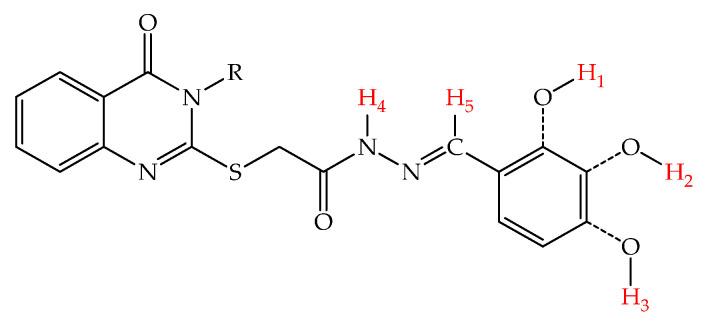
Considering the important damage caused by the reactive oxygen (ROS) and nitrogen (RNS) species in the human organism, the need for new therapeutic agents, with superior efficacy to the known natural and synthetic antioxidants, is crucial. Quinazolin-4-ones are known for their wide range of biological activities, and phenolic compounds display an important antioxidant effect. Linking the two active pharmacophores may lead to an increase of the antioxidant activity. Therefore, we synthesized four series of new hybrid molecules bearing the quinazolin-4-one and phenol scaffolds. Their antioxidant potential was evaluated in vitro, considering different possible mechanisms of action: hydrogen atom transfer, ability to donate electrons and metal ions chelation. Theoretical quantum and thermodynamical calculations were also performed. Some compounds, especially the diphenolic ones, exerted a stronger antioxidant effect than ascorbic acid and Trolox.
考虑到活性氧(ROS)和活性氮(RNS)物种在人体中造成的重要损害,需要新的治疗剂,其功效优于已知的天然和合成抗氧化剂,这一点至关重要。喹唑啉-4-酮以其广泛的生物活性而闻名,而酚类化合物则表现出重要的抗氧化作用。将这两个活性药效团连接起来可能会提高抗氧化活性。因此,我们合成了四个系列的新型杂合分子,它们含有喹唑啉-4-酮和酚骨架。考虑到不同的可能作用机制:氢原子转移、提供电子的能力和金属离子螯合,我们在体外评估了它们的抗氧化潜力。还进行了理论量子和热力学计算。一些化合物,特别是二酚类化合物,其抗氧化效果强于抗坏血酸和 Trolox。


 Zotero 插件