Department of Biosciences, Section for Genetics and Evolutionary Biology, University of Oslogrid.5510.1, Oslo, Norway.
Department of Immunology and Infectious Diseases, Harvard T. H. Chan School of Public Health, Boston, Massachusetts, USA.
mBio. 2022 Jun 28;13(3):e0379721. doi: 10.1128/mbio.03797-21. Epub 2022 Apr 26.
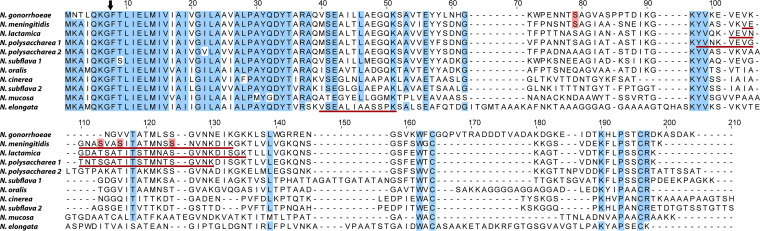
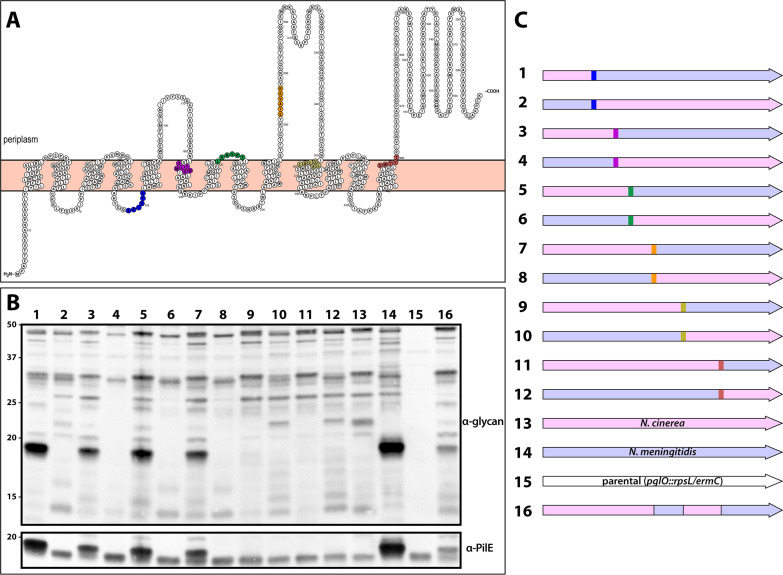
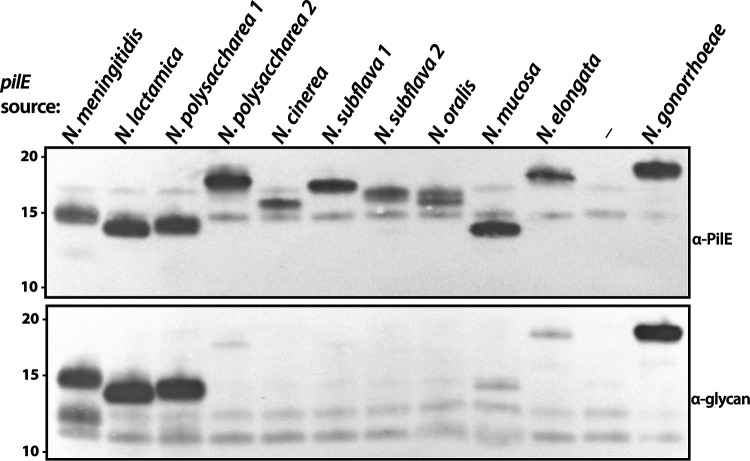
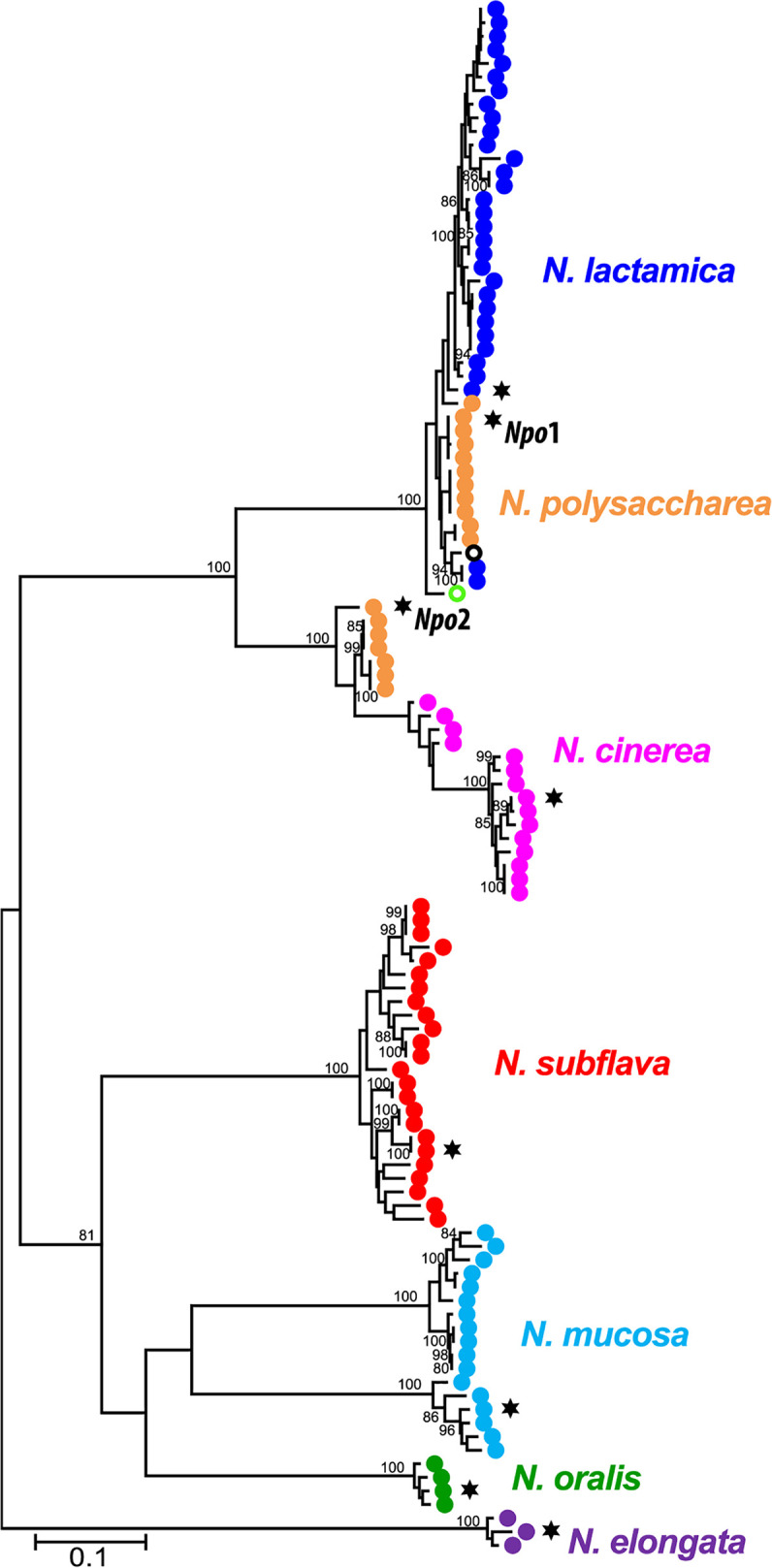
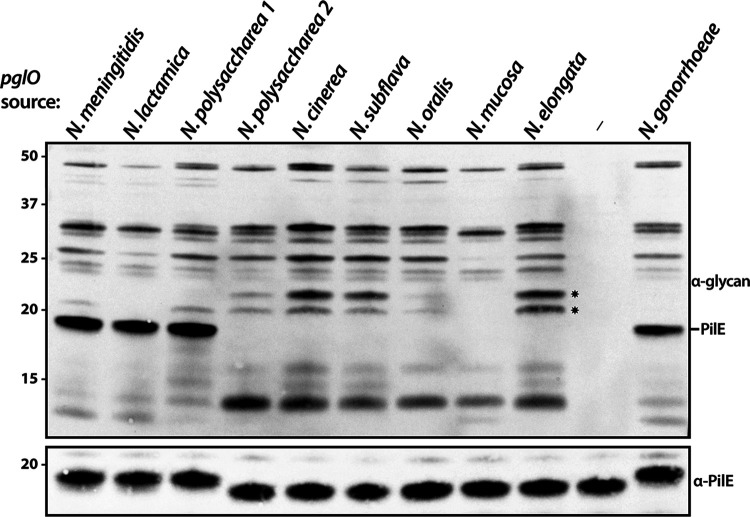
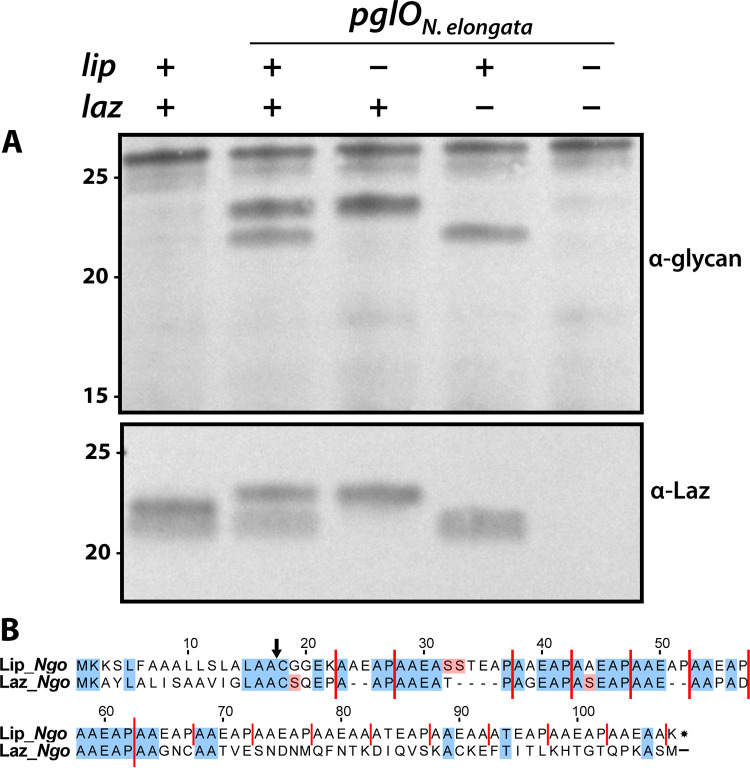
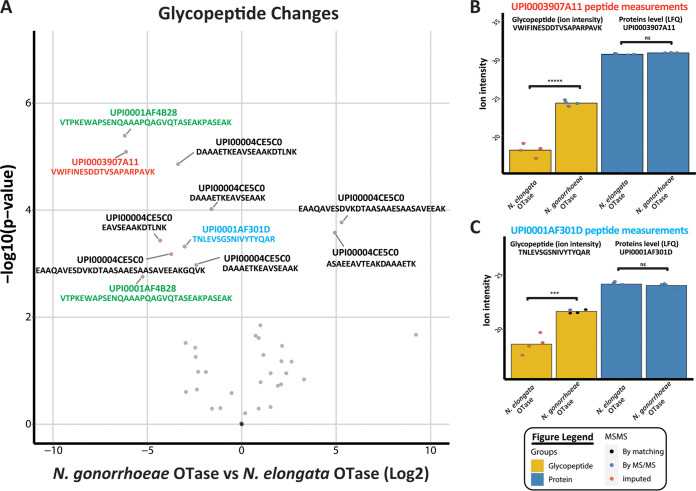
Protein glycosylation systems are widely recognized in bacteria, including members of the genus . In most bacterial species, the molecular mechanisms and evolutionary contexts underpinning target protein selection and the glycan repertoire remain poorly understood. Broad-spectrum -linked protein glycosylation occurs in all human-associated species groups within the genus , but knowledge of their individual glycoprotein repertoires is limited. Interestingly, PilE, the pilin subunit of the type IV pilus (Tfp) colonization factor, is glycosylated in Neisseria gonorrhoeae and Neisseria meningitidis but not in the deeply branching species subsp. . To examine this in more detail, we assessed PilE glycosylation status across the genus and found that PilEs of commensal clade species are not modified by the gonococcal PglO oligosaccharyltransferase. Experiments using PglO oligosaccharyltransferases from across the genus expressed in N. gonorrhoeae showed that although all were capable of broad-spectrum protein glycosylation, those from a deep-branching group of commensals were unable to support resident PilE glycosylation. Further glycoproteomic analyses of these strains using immunoblotting and mass spectrometry revealed other proteins differentially targeted by otherwise remarkably similar oligosaccharyltransferases. Finally, we generated allelic chimeras that begin to localize PglO protein domains associated with unique substrate targeting activities. These findings reveal previously unappreciated differences within the protein glycosylation systems of highly related bacterial species. We propose that the natural diversity manifest in the neisserial protein substrates and oligosaccharyltransferases has significant potential to inform the structure-function relationships operating in these and related bacterial protein glycosylation systems. Although general protein glycosylation systems have been well recognized in prokaryotes, the processes governing their distribution, function, and evolution remain poorly understood. Here, we have begun to address these gaps in knowledge by comparative analyses of broad-spectrum -linked protein glycosylation manifest in species within the genus that strictly colonize humans. Using N. gonorrhoeae as a well-defined model organism in conjunction with comparative genomics, intraspecies gene complementation, and glycoprotein phenotyping, we discovered clear differences in both glycosylation susceptibilities and enzymatic targeting activities of otherwise largely conserved proteins. These findings reveal previously unappreciated differences within the protein glycosylation systems of highly related bacterial species. We propose that the natural diversity manifest within species has significant potential to elucidate the structure-function relationships operating in these and related systems and to inform novel approaches to applied glycoengineering strategies.
蛋白质糖基化系统在细菌中广泛存在,包括 属的成员。在大多数细菌物种中,目标蛋白选择和聚糖库的分子机制和进化背景仍知之甚少。广谱 - 连接的蛋白质糖基化发生在属内所有与人类相关的物种群体中,但对其个体糖蛋白库的了解有限。有趣的是, PilE 是 IV 型菌毛(Tfp)定植因子的菌毛亚基,在淋病奈瑟菌和脑膜炎奈瑟菌中糖基化,但在深分支的 亚种中没有。为了更详细地研究这一点,我们评估了属内 PilE 糖基化状态,发现共生枝物种的 PilE 不受淋病奈瑟菌 PglO 寡糖基转移酶的修饰。使用属内表达的 PglO 寡糖基转移酶进行的实验表明,尽管所有酶都能够进行广谱蛋白质糖基化,但来自深分支共生群的酶无法支持常驻 PilE 糖基化。对这些菌株进行的进一步糖蛋白质组学分析使用免疫印迹和质谱法揭示了其他被 OTHERWISE 高度相似的寡糖基转移酶靶向的蛋白质。最后,我们生成了 等位基因嵌合体,开始定位与独特底物靶向活性相关的 PglO 蛋白结构域。这些发现揭示了高度相关的细菌物种中蛋白质糖基化系统以前未被重视的差异。我们提出,在奈瑟氏菌蛋白底物和寡糖基转移酶中表现出的天然多样性具有显著的潜力,可以为这些和相关细菌蛋白糖基化系统中的结构 - 功能关系提供信息。虽然一般的蛋白质糖基化系统在原核生物中得到了很好的认识,但控制其分布、功能和进化的过程仍知之甚少。在这里,我们通过比较严格定植于人类的 属内物种中的广谱 - 连接蛋白糖基化,开始解决这些知识空白。使用淋病奈瑟菌作为一个定义明确的模型生物,结合比较基因组学、种内基因互补和糖蛋白表型分析,我们发现了在糖基化易感性和酶靶向活性方面存在明显差异的 otherwise 大部分保守蛋白。这些发现揭示了高度相关的细菌物种中蛋白质糖基化系统以前未被重视的差异。我们提出, 种内表现出的天然多样性具有显著的潜力,可以阐明这些和相关系统中的结构 - 功能关系,并为应用糖工程策略提供新的方法。