Helmholtz-Zentrum Berlin für Materialien und Energie, Albert-Einstein-Str. 15, 12489 Berlin, Germany.
Dpto. Electricidad y Electrónica, Universidad del País Vasco - UPV/EHU, 48940 Leioa, Spain.
ACS Nano. 2022 May 24;16(5):7398-7408. doi: 10.1021/acsnano.1c09559. Epub 2022 Apr 26.
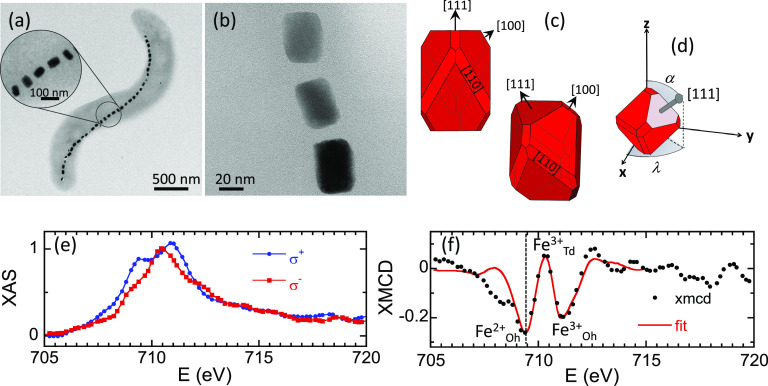
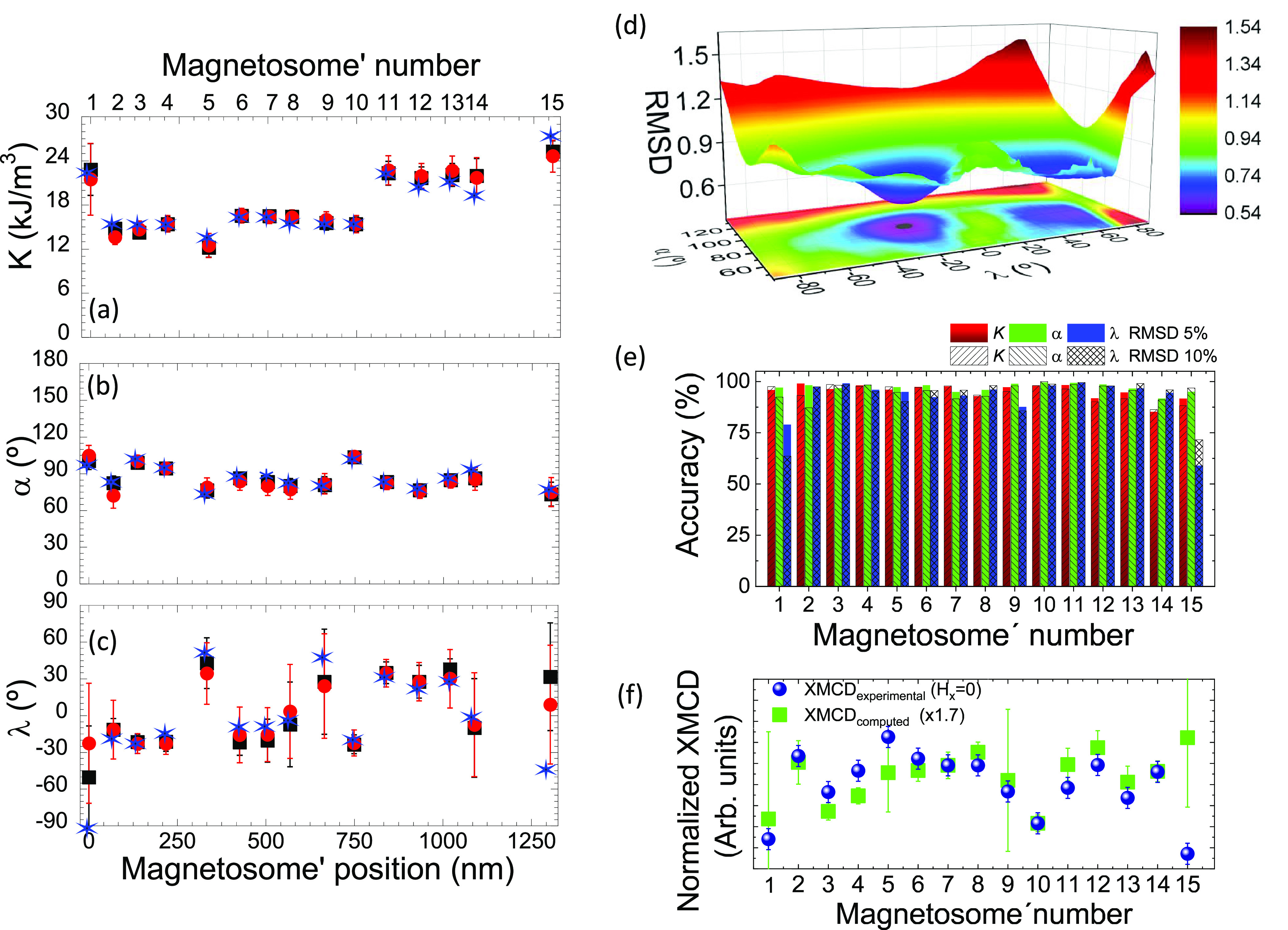
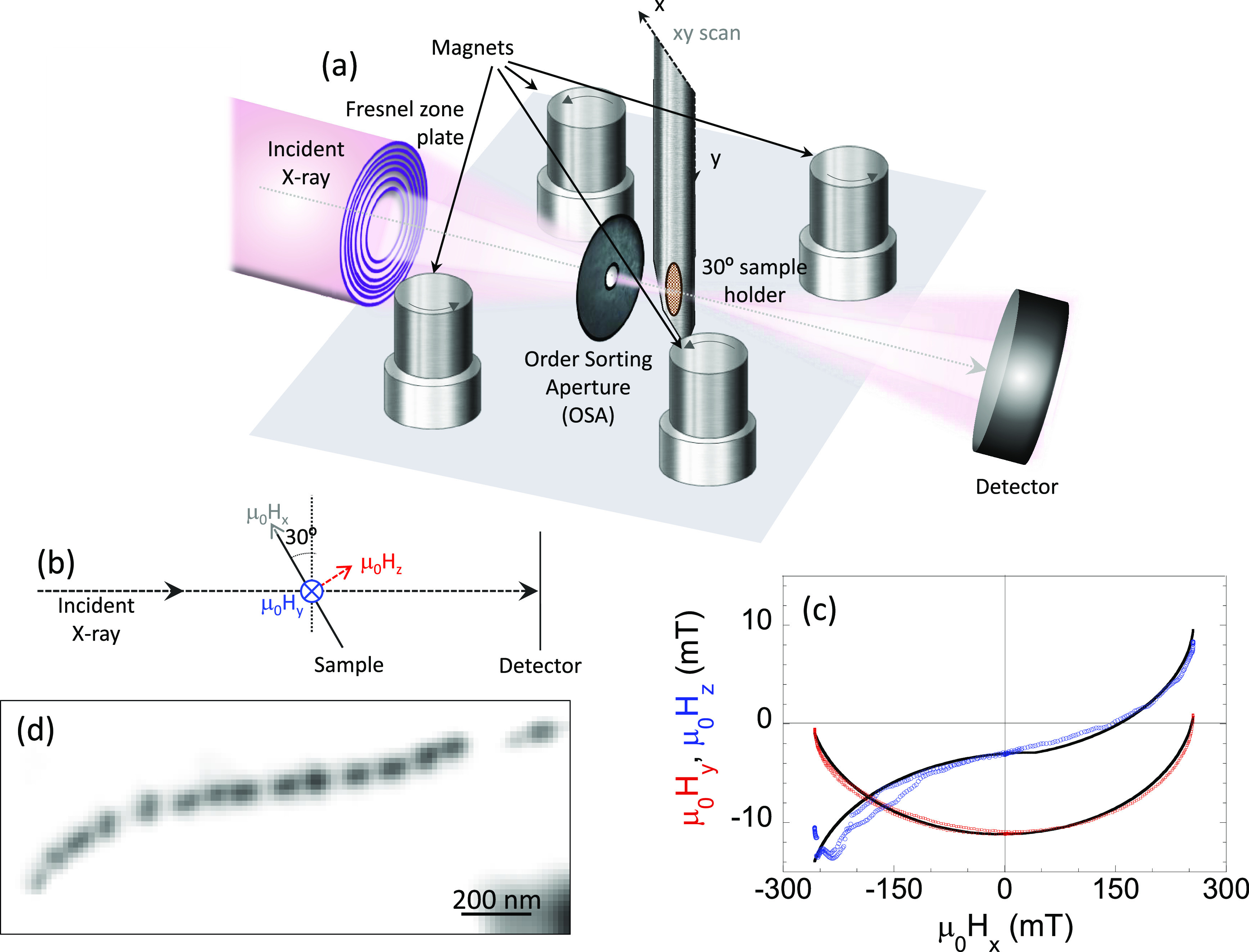
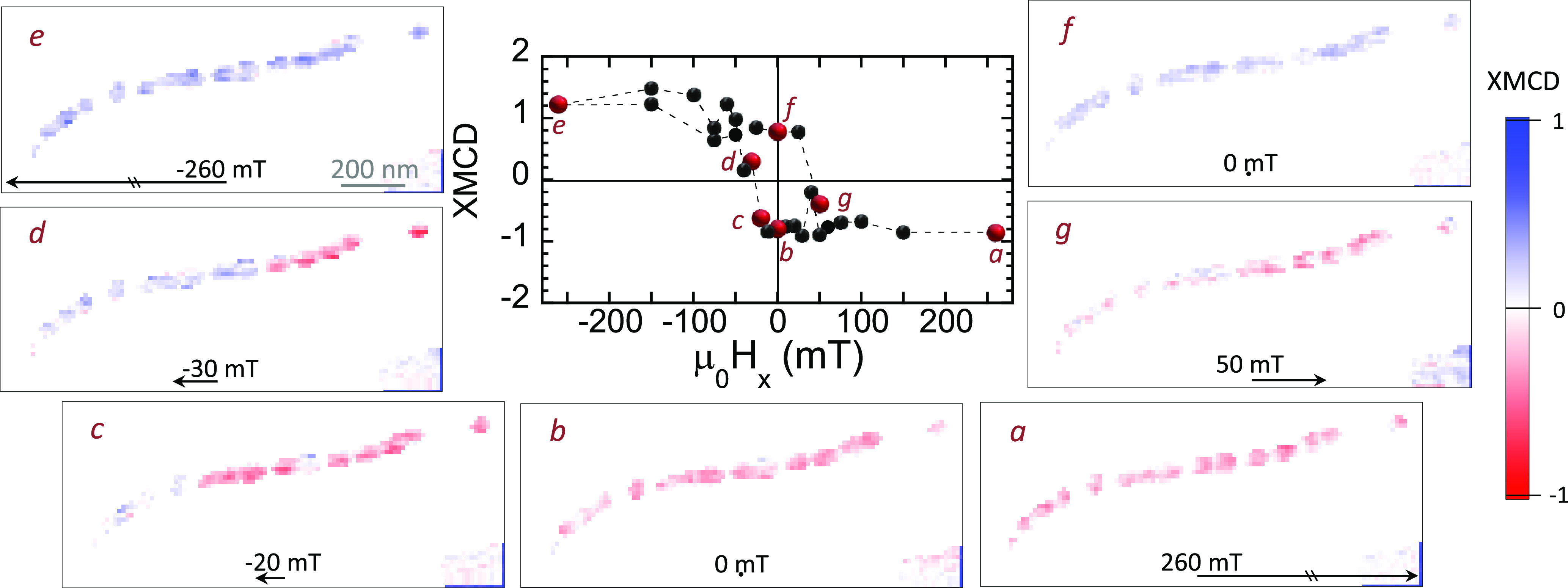
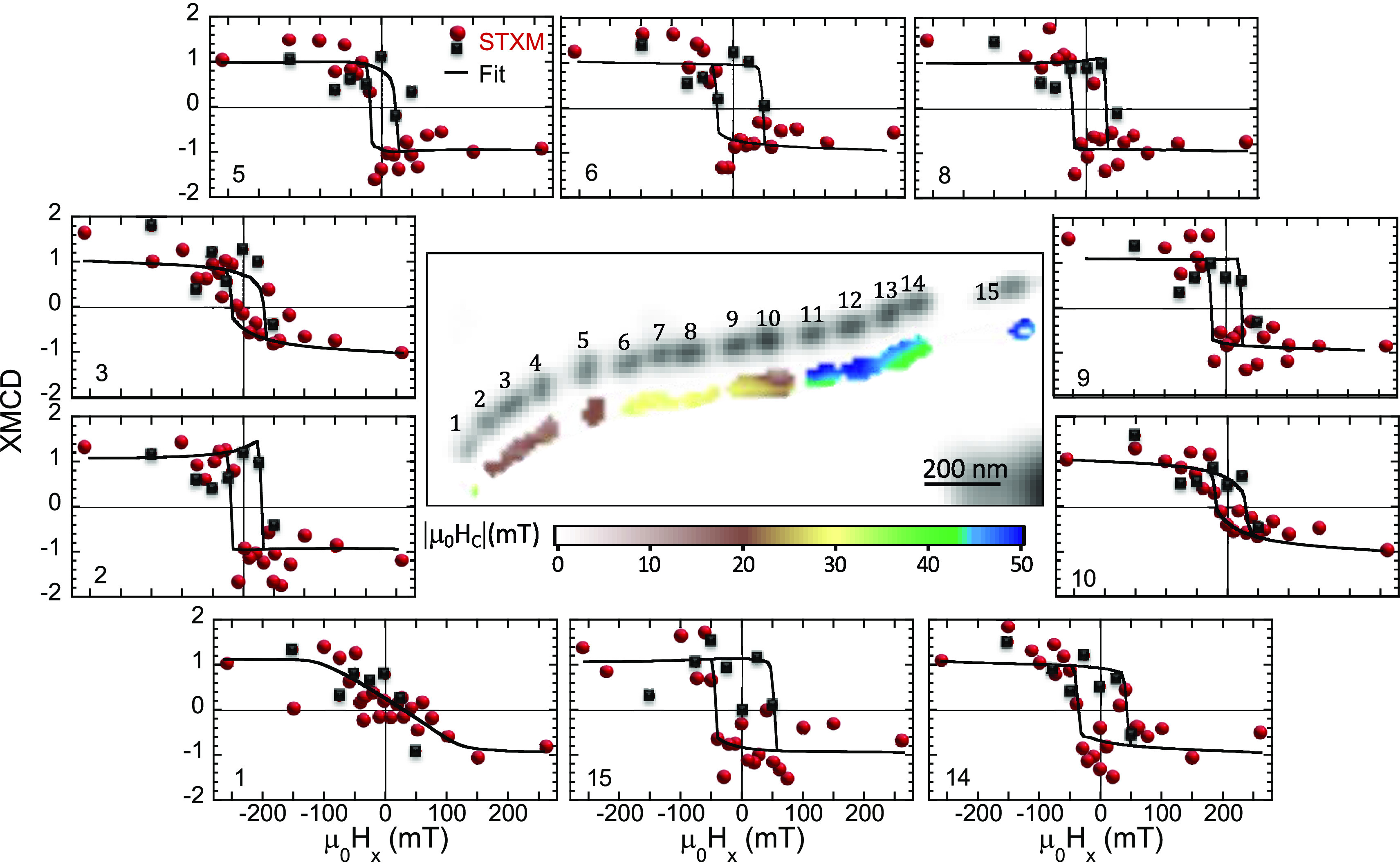
Over the past few years, the use of nanomagnets in biomedical applications has increased. Among others, magnetic nanostructures can be used as diagnostic and therapeutic agents in cardiovascular diseases, to locally destroy cancer cells, to deliver drugs at specific positions, and to guide (and track) stem cells to damaged body locations in regenerative medicine and tissue engineering. All these applications rely on the magnetic properties of the nanomagnets which are mostly determined by their magnetic anisotropy. Despite its importance, the magnetic anisotropy of the individual magnetic nanostructures is unknown. Currently available magnetic sensitive microscopic methods are either limited in spatial resolution or in magnetic field strength or, more relevant, do not allow one to measure magnetic signals of nanomagnets embedded in biological systems. Hence, the use of nanomagnets in biomedical applications must rely on mean values obtained after averaging samples containing thousands of dissimilar entities. Here we present a hybrid experimental/theoretical method capable of working out the magnetic anisotropy constant and the magnetic easy axis of individual magnetic nanostructures embedded in biological systems. The method combines scanning transmission X-ray microscopy using an axi-asymmetric magnetic field with theoretical simulations based on the Stoner-Wohlfarth model. The validity of the method is demonstrated by determining the magnetic anisotropy constant and magnetic easy axis direction of 15 intracellular magnetite nanoparticles (50 nm in size) biosynthesized inside a magnetotactic bacterium.
在过去的几年中,纳米磁铁在生物医学应用中的使用有所增加。例如,磁性纳米结构可用作心血管疾病的诊断和治疗剂,用于局部破坏癌细胞,将药物递送到特定位置,并引导(和跟踪)干细胞到达再生医学和组织工程中受损的身体部位。所有这些应用都依赖于纳米磁铁的磁性,而纳米磁铁的磁性主要由其磁各向异性决定。尽管其重要性,但单个磁性纳米结构的磁各向异性尚不清楚。目前可用的磁性敏感显微镜方法要么在空间分辨率或磁场强度方面受到限制,要么更相关的是,不允许测量嵌入生物系统中的纳米磁铁的磁信号。因此,纳米磁铁在生物医学应用中的使用必须依赖于在包含数千个不同实体的样品上进行平均后获得的平均值。在这里,我们提出了一种混合实验/理论方法,能够计算出嵌入生物系统中的单个磁性纳米结构的磁各向异性常数和磁易轴。该方法结合了使用轴对称磁场的扫描透射 X 射线显微镜和基于 Stoner-Wohlfarth 模型的理论模拟。通过确定 15 个细胞内磁铁矿纳米颗粒(大小为 50nm)的磁各向异性常数和磁易轴方向,证明了该方法的有效性,这些纳米颗粒是在磁趋磁细菌内生物合成的。