Department of Neurosurgery, Ya' an people's Hospital, Ya' an, 625000, People's Republic of China.
Department of Neurosurgery, Affiliated Hospital of Southwest Medical University, Luzhou, People's Republic of China.
BMC Cancer. 2022 Apr 26;22(1):457. doi: 10.1186/s12885-022-09569-2.
Glioma is one of the main causes of cancer-related mortality worldwide and is associated with high heterogeneity. However, the key players determining the fate of glioma remain obscure. In the present study, we shed light on tumor metabolism and aimed to investigate the role of tryptophan hydroxylase 1 (TPH-1) in the advancement of glioma.
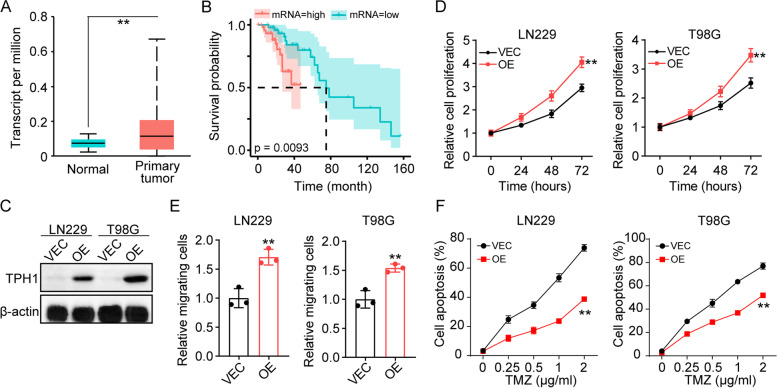
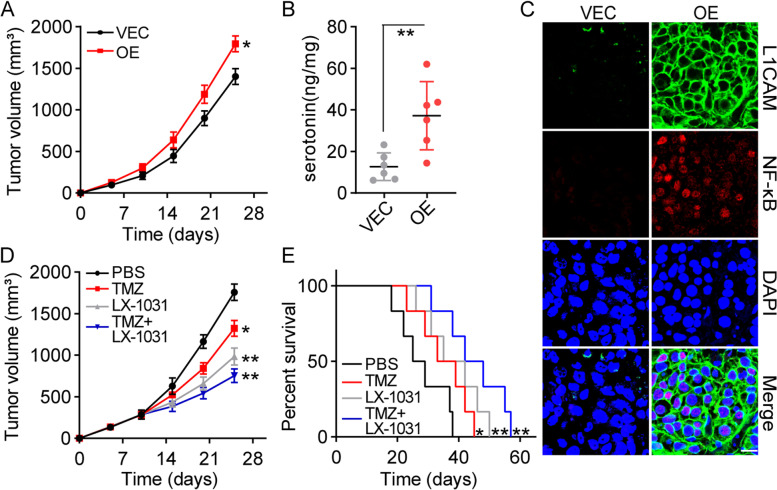
Herein, the levels of TPH-1 expression in glioma tissues were evaluated using The Cancer Genome Atlas (TCGA) database. Further, the proliferative characteristics and migration ability of TPH-1 overexpressing LN229/T98G cells were evaluated. Additionally, we performed a cytotoxicity analysis using temozolomide (TMZ) in these cells. We also examined the tumor growth and survival time in a mouse model of glioma treated with chemotherapeutic agents and a TPH-1 inhibitor.
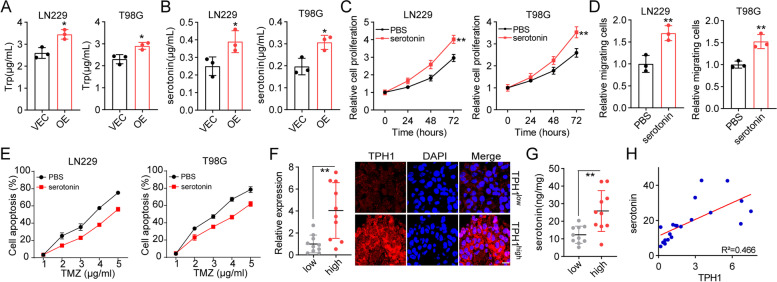
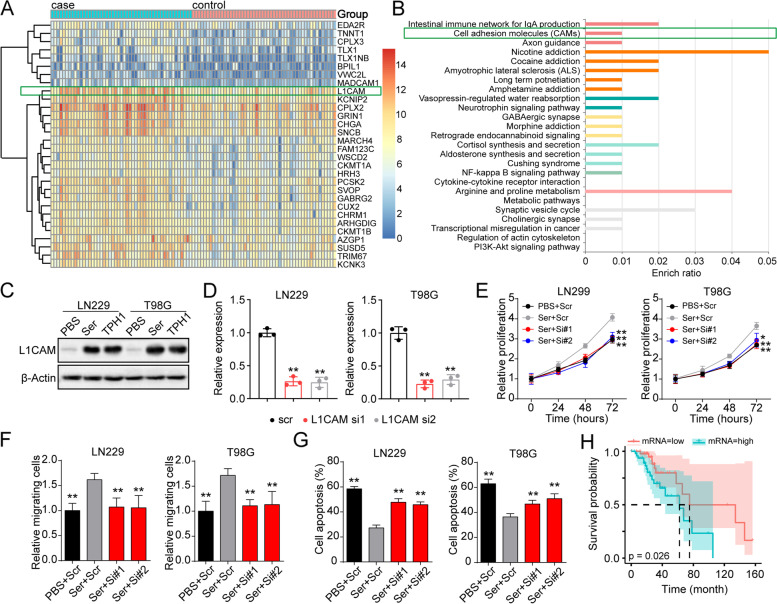
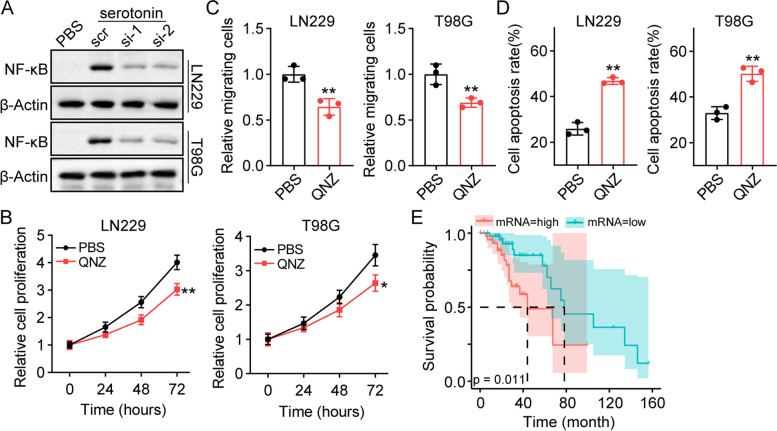
The results of both clinical and experimental data showed that excess TPH-1 expression resulted in sustained glioma progression and a dismal overall survival in these patients. Mechanistically, TPH-1 increased the production of serotonin in glioma cells. The elevated serotonin levels then augmented the NF-κB signaling pathway through the upregulation of the L1-cell adhesion molecule (L1CAM), thereby contributing to cellular proliferation, invasive migration, and drug resistance. In vivo experiments demonstrated potent antitumor effects, which benefited further from the synergistic combination of TMZ and LX-1031.
Taken together, these data suggested that TPH-1 facilitated cellular proliferation, migration, and chemoresistance in glioma through the serotonin/L1CAM/NF-κB pathway. By demonstrating the link of amino acid metabolic enzymes with tumor development, our findings may provide a potentially viable target for therapeutic manipulation aimed at eradicating glioma.
脑肿瘤是全球癌症相关死亡的主要原因之一,具有高度异质性。然而,决定脑肿瘤命运的关键因素仍不清楚。在本研究中,我们揭示了肿瘤代谢,并旨在研究色氨酸羟化酶 1(TPH-1)在脑肿瘤进展中的作用。
本研究使用癌症基因组图谱(TCGA)数据库评估了脑肿瘤组织中 TPH-1 的表达水平。进一步评估了 TPH-1 过表达的 LN229/T98G 细胞的增殖特征和迁移能力。此外,我们在这些细胞中用替莫唑胺(TMZ)进行了细胞毒性分析。我们还在接受化疗药物和 TPH-1 抑制剂治疗的脑肿瘤小鼠模型中检查了肿瘤生长和生存时间。
临床和实验数据的结果表明,过多的 TPH-1 表达导致持续的脑肿瘤进展和这些患者的总生存率降低。从机制上讲,TPH-1 增加了脑肿瘤细胞中血清素的产生。升高的血清素水平通过上调 L1 细胞黏附分子(L1CAM)增强了 NF-κB 信号通路,从而促进细胞增殖、侵袭性迁移和耐药性。体内实验表明具有强大的抗肿瘤作用,进一步受益于 TMZ 和 LX-1031 的协同组合。
总之,这些数据表明,TPH-1 通过血清素/L1CAM/NF-κB 途径促进脑肿瘤中的细胞增殖、迁移和化疗耐药性。通过证明氨基酸代谢酶与肿瘤发生的联系,我们的发现可能为旨在根除脑肿瘤的治疗干预提供了一个潜在可行的靶点。