Department of Pathobiology, Ontario Veterinary College, University of Guelph, Guelph, Ontario N1G 2W1, Canada.
Animal and Veterinary Sciences Department, Clemson University, Clemson, SC 29634, USA.
Poult Sci. 2022 Jun;101(6):101864. doi: 10.1016/j.psj.2022.101864. Epub 2022 Mar 17.
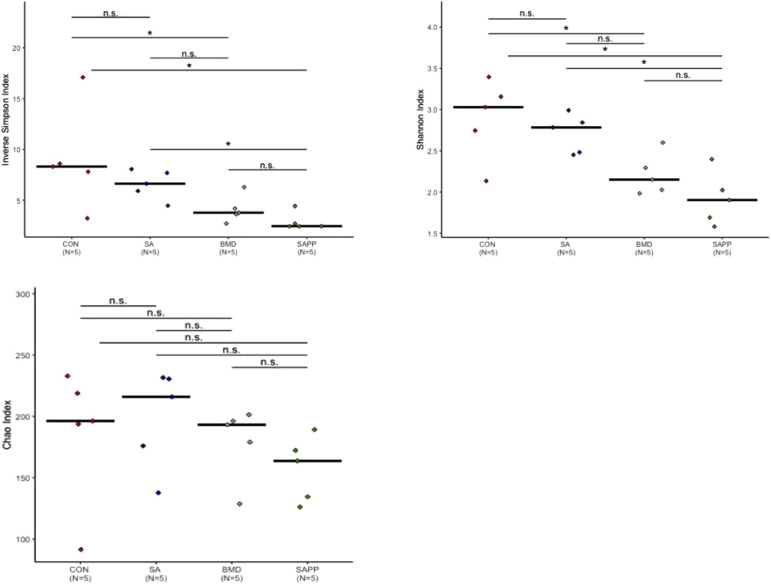
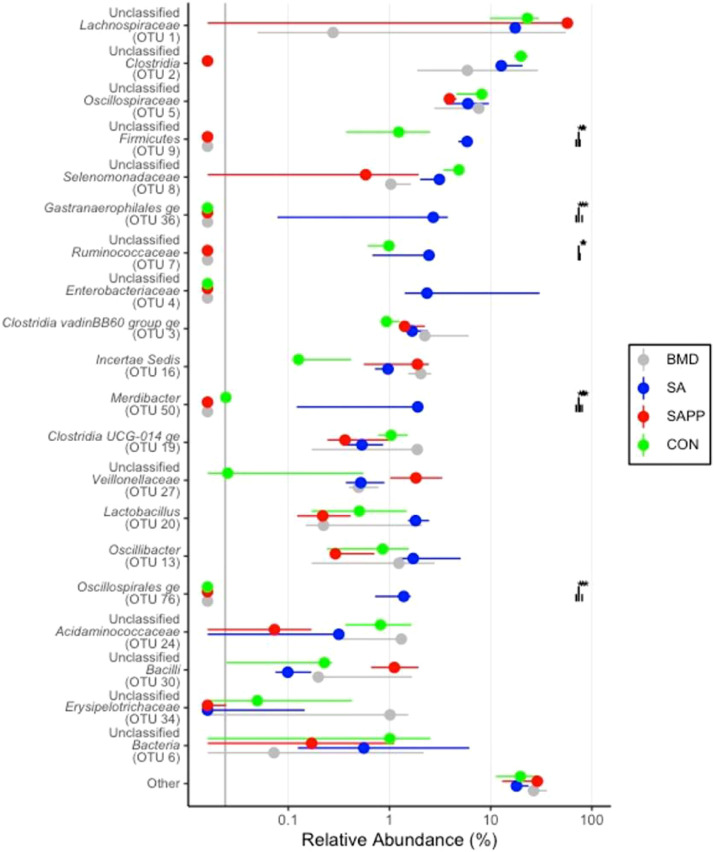
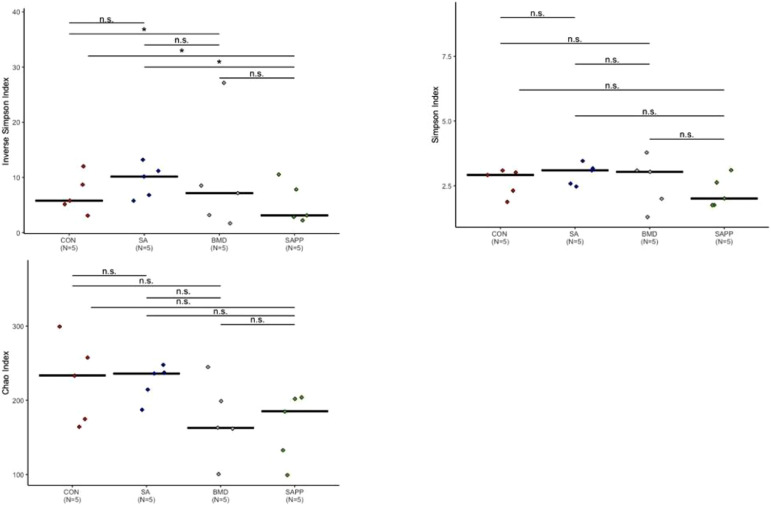
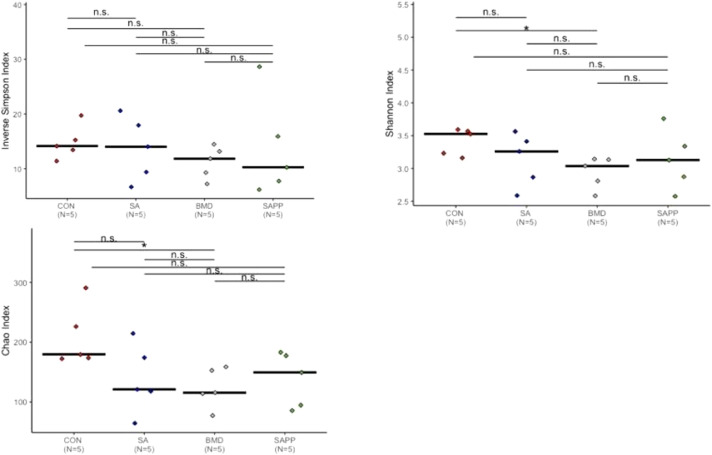
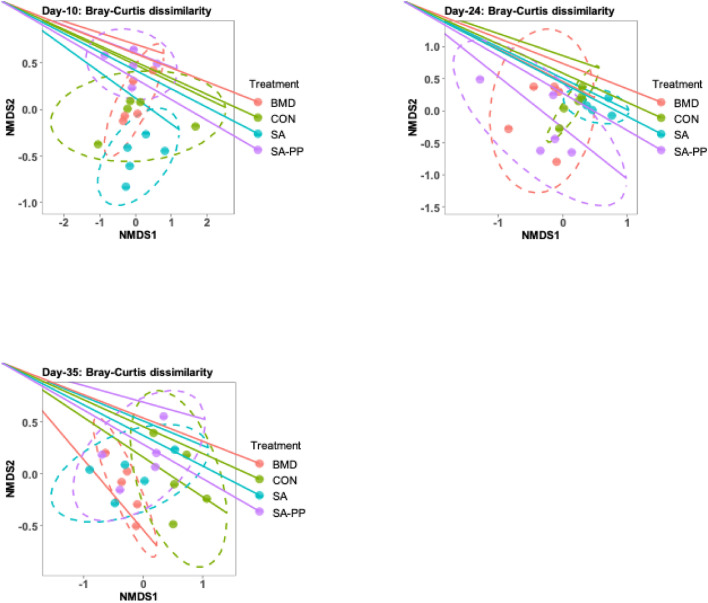
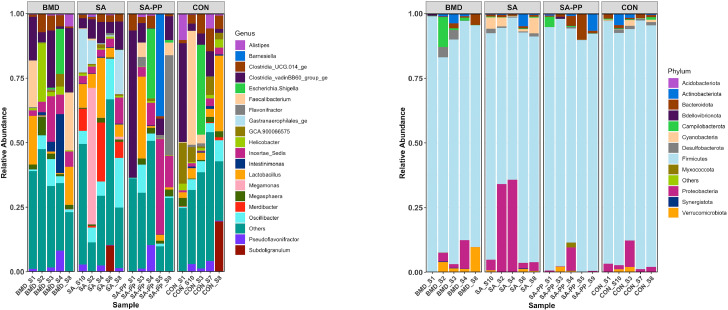
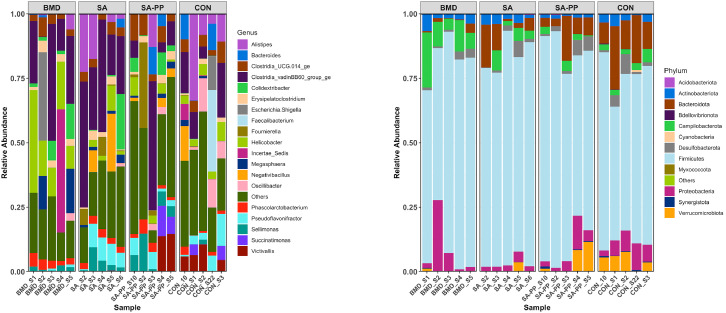
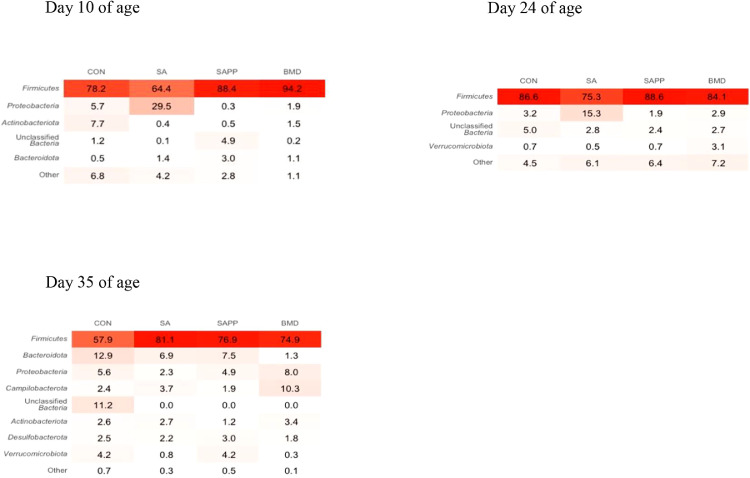
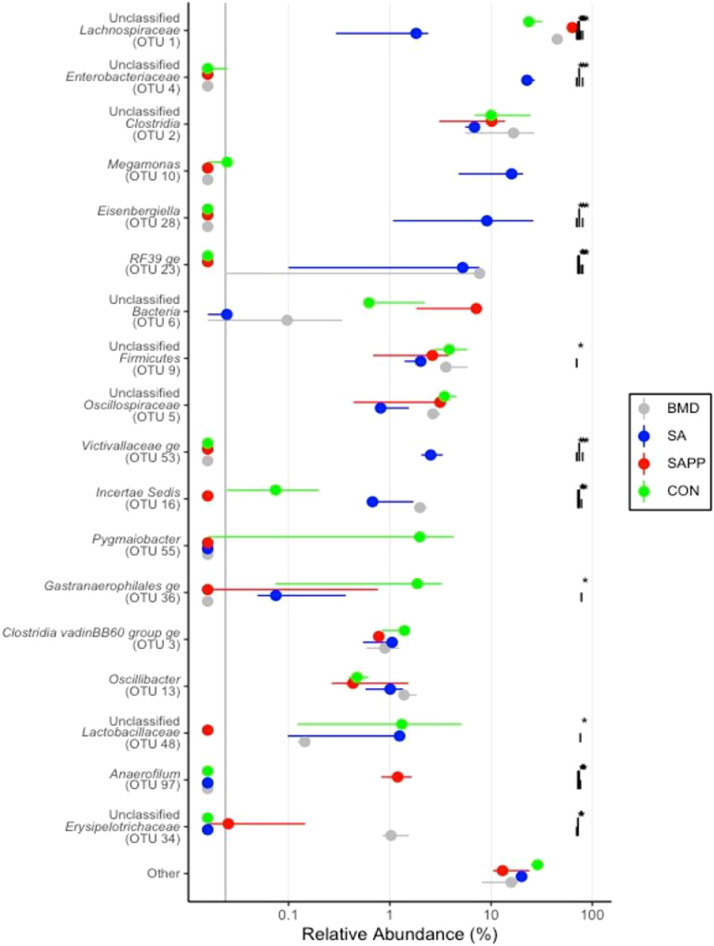
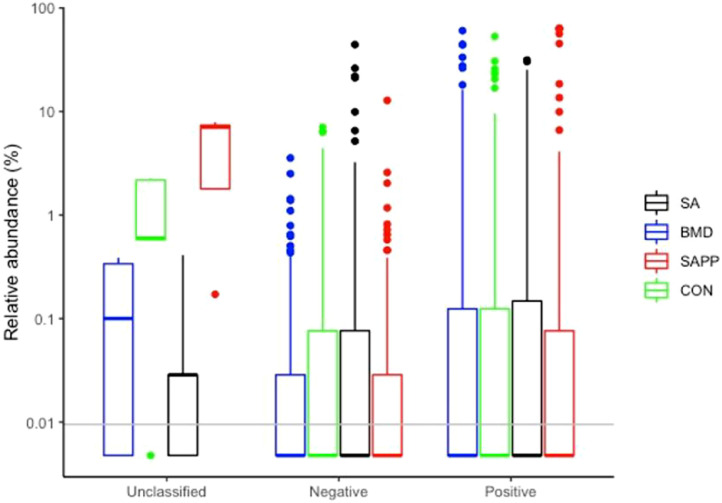
Dietary antibiotics, including antibiotic growth promoters (AGPs), have been commonly used to improve health and growth of poultry. The present study investigated the effects of therapeutic doses of dietary antibiotics, including bacitracin methylene disalicylate (BMD), penicillin G potassium (PP) and an ionophore (salinomycin, SA), on the cecal microbiome of chickens. BMD and SA treatments were given as dietary supplements from d 1 to 35 of age. The SAPP (salinomycin+ penicillin G potassium) group was given SA as a dietary supplement from d 1 to 35 of age and PP was added to drinking water from d 19 to 24 of age to simulate common practices for control of necrotic enteritis in broilers. The cecal contents were collected from all treatment groups on d 10, 24, and 35 of age and DNA was extracted for metagenomic analysis of the cecal microbiome. The results revealed that dietary or water supplementation of therapeutic levels of antibiotics and ionophores to chickens significantly altered the cecal microbial homeostasis during different stages of the chicken life. The alpha diversity analysis showed that BMD, SA, and SAPP treatments decreased diversity and evenness of the cecal microbiome of treated chickens on d 10 of age. Species richness was also reduced on d 35 following treatment with BMD. Beta diversity analyses revealed that SAPP and BMD induced significant changes in the relative abundance of Gram-positive and -negative bacteria on d 10, while no significant differences were observed on d 24. On d 35, the non-treated control group had higher relative abundance of unclassified Gram-positive and -negative bacteria compared to SA, SAPP, and BMD treatment groups. Overall, despite their beneficial role in controlling necrotic enteritis outbreaks, the findings of this study highlight the potential negative effects of dietary supplementation of therapeutic levels of antibiotics on the gut microbiome and suggest that adjusting gut bacteria may be required to restore microbial richness and diversity of the gut microbiome following treatment with these antibiotics.
饲用抗生素,包括抗生素生长促进剂(AGP),已被广泛用于改善家禽的健康和生长。本研究调查了治疗剂量的饲用抗生素,包括杆菌肽甲叉二水杨酸钠(BMD)、青霉素 G 钾(PP)和离子载体(盐霉素,SA)对鸡盲肠微生物组的影响。BMD 和 SA 处理作为饲料补充剂从 1 日龄至 35 日龄给予。SAPP(盐霉素+青霉素 G 钾)组从 1 日龄至 35 日龄作为饲料补充剂给予 SA,并从 19 日龄至 24 日龄向饮水中添加 PP,以模拟肉鸡坏死性肠炎控制的常见做法。在 10、24 和 35 日龄时从所有治疗组收集盲肠内容物,并提取 DNA 进行盲肠微生物组的宏基因组分析。结果表明,饲用或饮水补充治疗水平的抗生素和离子载体对鸡显著改变了鸡生命不同阶段的盲肠微生物稳态。α多样性分析表明,BMD、SA 和 SAPP 处理在 10 日龄时降低了处理鸡盲肠微生物组的多样性和均匀度。BMD 处理还降低了 35 日龄时的物种丰富度。β多样性分析表明,SAPP 和 BMD 在 10 日龄时诱导了革兰氏阳性和阴性细菌相对丰度的显著变化,而在 24 日龄时没有观察到显著差异。在 35 日龄时,未处理的对照组与 SA、SAPP 和 BMD 处理组相比,未分类的革兰氏阳性和阴性细菌的相对丰度更高。总的来说,尽管饲用抗生素在控制坏死性肠炎爆发方面具有有益作用,但本研究的结果强调了饲用治疗水平抗生素对肠道微生物组的潜在负面影响,并表明在使用这些抗生素治疗后,可能需要调整肠道细菌以恢复肠道微生物组的丰富度和多样性。