Department of Nuclear Medicine, Union Hospital, Tongji Medical College, Huazhong University of Science and Technology, No. 1277 Jiefang Ave, Wuhan, 430022, China.
Hubei Key Laboratory of Molecular Imaging, Wuhan, 430022, China.
J Nanobiotechnology. 2022 Apr 27;20(1):203. doi: 10.1186/s12951-022-01401-0.
Photodynamic therapy (PDT) is a promising antitumor strategy with fewer adverse effects and higher selectivity than conventional therapies. Recently, a series of reports have suggested that PDT induced by Cerenkov radiation (CR) (CR-PDT) has deeper tissue penetration than traditional PDT; however, the strategy of coupling radionuclides with photosensitizers may cause severe side effects.
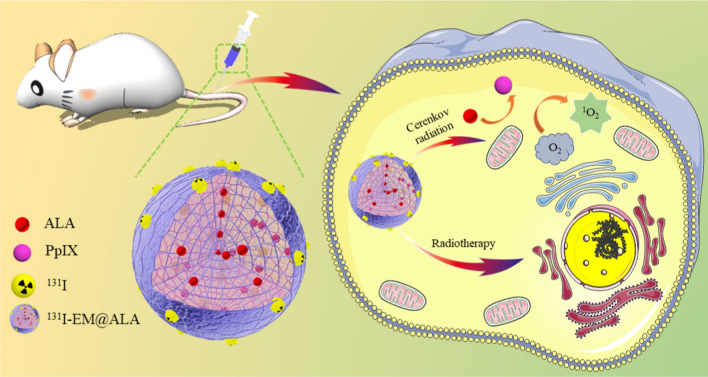
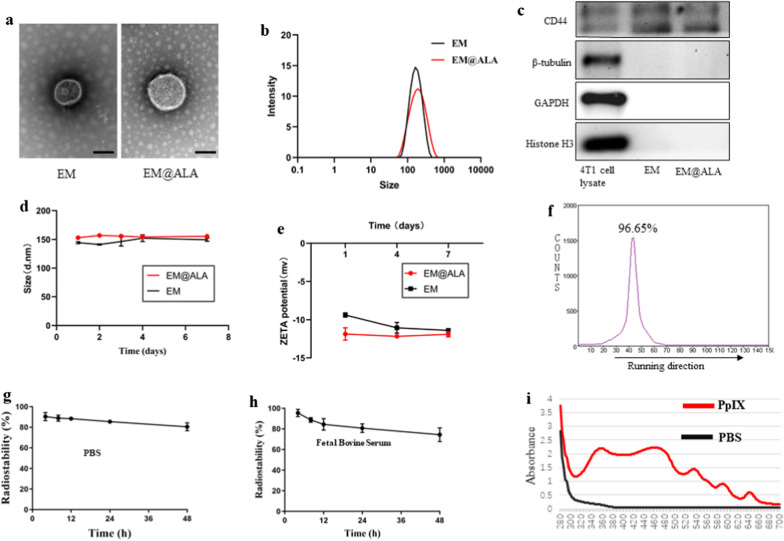
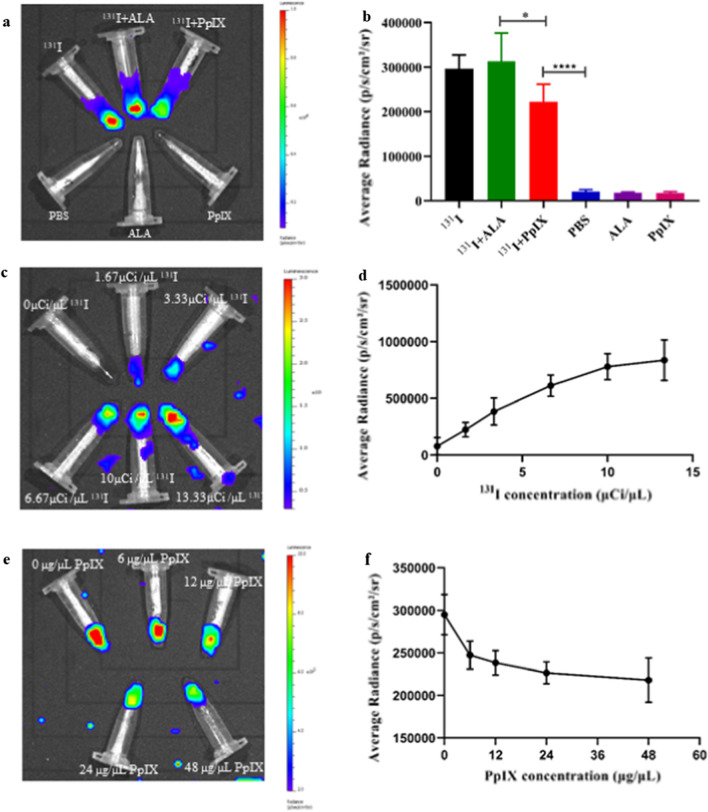
We designed tumor-targeting nanoparticles (I-EM@ALA) by loading 5-aminolevulinic acid (ALA) into an I-labeled exosome mimetic (EM) to achieve combined antitumor therapy. In addition to playing a radiotherapeutic role, I served as an internal light source for the Cerenkov radiation (CR).
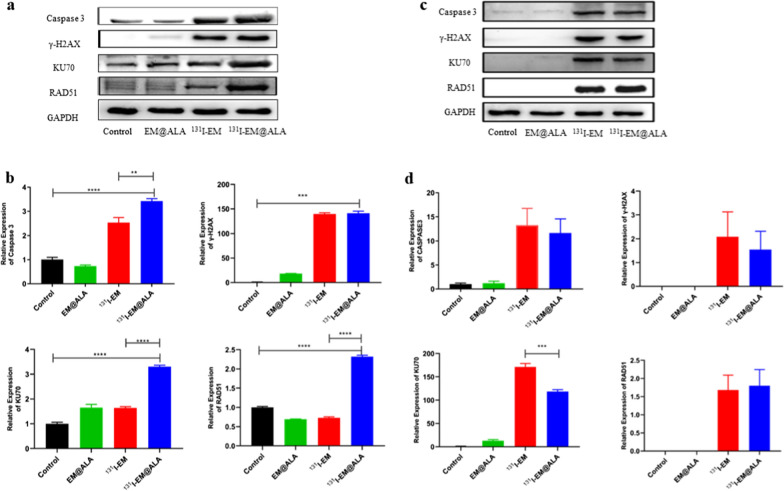
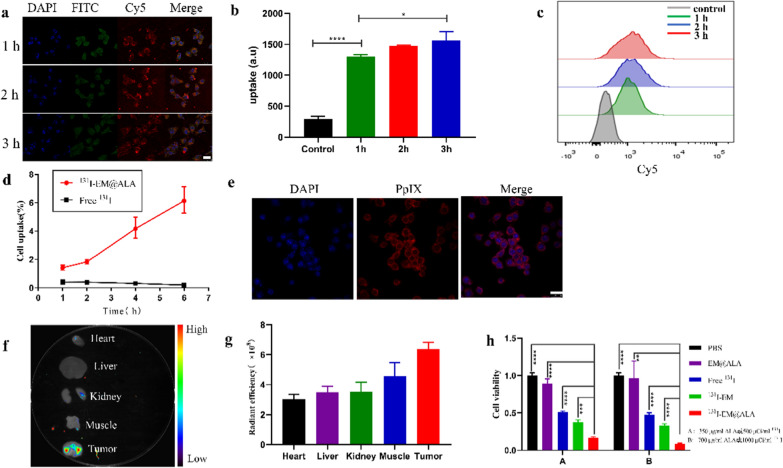
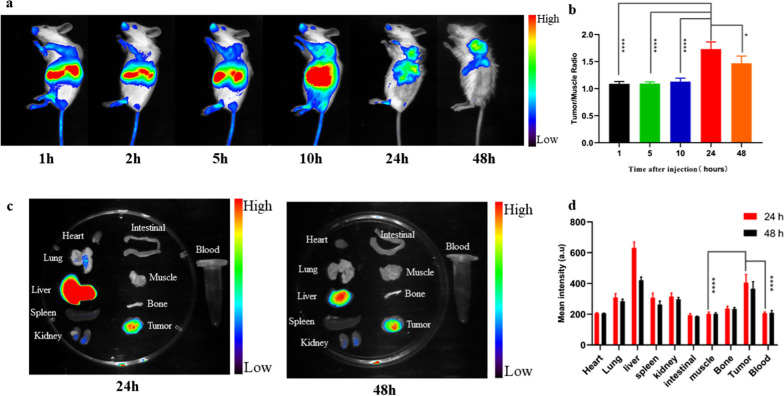
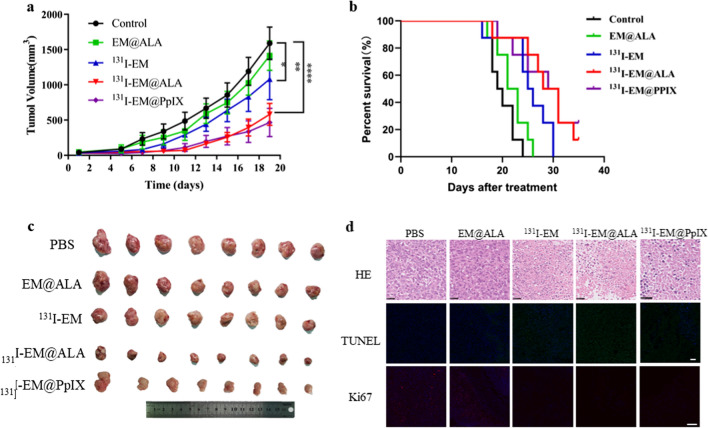
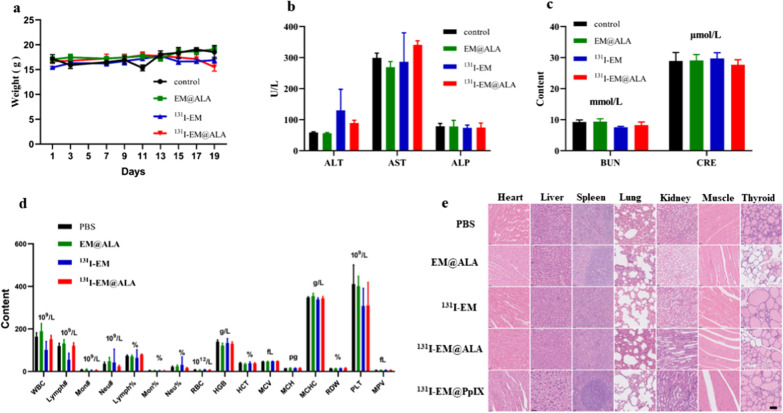
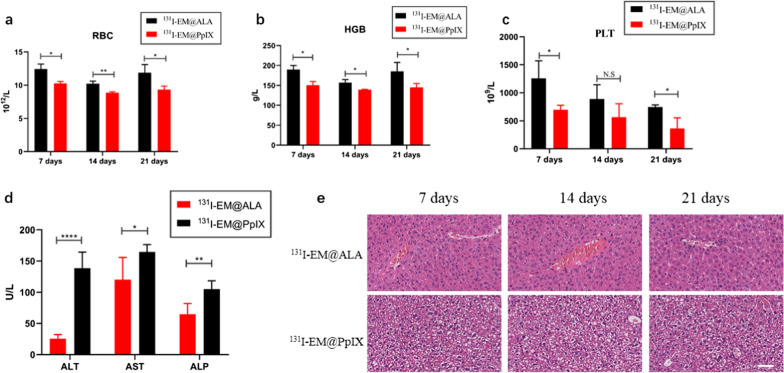
The drug-loaded nanoparticles effectively targeted tumors as confirmed by confocal imaging, flow cytometry, and small animal fluorescence imaging. In vitro and in vivo experiments demonstrated that I-EM@ALA produced a promising antitumor effect through the synergy of radiotherapy and CR-PDT. The nanoparticles killed tumor cells by inducing DNA damage and activating the lysosome-mitochondrial pathways. No obvious abnormalities in the hematology analyses, blood biochemistry, or histological examinations were observed during the treatment.
We successfully engineered a nanocarrier coloaded with the radionuclide I and a photosensitizer precursor for combined radiotherapy and PDT for the treatment of breast cancer.
光动力疗法(PDT)是一种有前途的抗肿瘤策略,与传统疗法相比,其副作用更少,选择性更高。最近,一系列报告表明,光动力疗法诱导的契伦科夫辐射(CR)(CR-PDT)比传统 PDT 具有更深的组织穿透力;然而,将放射性核素与光敏剂结合的策略可能会导致严重的副作用。
我们通过将 5-氨基酮戊酸(ALA)加载到 I 标记的外泌体模拟物(EM)中,设计了肿瘤靶向纳米颗粒(I-EM@ALA),以实现联合抗肿瘤治疗。I 不仅发挥放射治疗作用,还是契伦科夫辐射(CR)的内部光源。
通过共聚焦成像、流式细胞术和小动物荧光成像证实了载药纳米颗粒有效地靶向肿瘤。体外和体内实验表明,I-EM@ALA 通过放射治疗和 CR-PDT 的协同作用产生了有希望的抗肿瘤效果。纳米颗粒通过诱导 DNA 损伤和激活溶酶体-线粒体途径杀死肿瘤细胞。在治疗过程中,血液分析、血液生化或组织学检查未观察到明显异常。
我们成功地设计了一种纳米载体,同时装载放射性核素 I 和光敏剂前体,用于联合放射治疗和 PDT 治疗乳腺癌。