Abteilung für Unfallchirurgie, Orthopädie, Plastische und Handchirurgie, Universitätsklinikum Augsburg, Stenglinstraße 2, 86156, Augsburg, Germany.
Eur J Trauma Emerg Surg. 2022 Aug;48(4):2953-2966. doi: 10.1007/s00068-022-01974-3. Epub 2022 Apr 28.
Literature shows that orthogeriatric co-management improves the outcomes of patients with hip fractures. Corresponding research with more diverse fragility fracture groups is lacking. Therefore, an examination was performed prospectively as a 2 year-follow-up on an orthogeriatric co-managed ward, comparing relevant outcome parameters for major and minor fragility fractures.
All patients treated on an orthogeriatric co-managed ward from February 2014 to January 2015 were included and their injuries, orthogeriatric parameters such as the Barthel Index (BI), Parker Mobility Score (PMS) and place of residence (POR). Patients were separated into two groups of either immobilizing major (MaF) or non-immobilizing minor (MiF) fractures. 2 years later, a follow-up was conducted via telephone calls and questionnaires mailed to patients and/or their relatives.
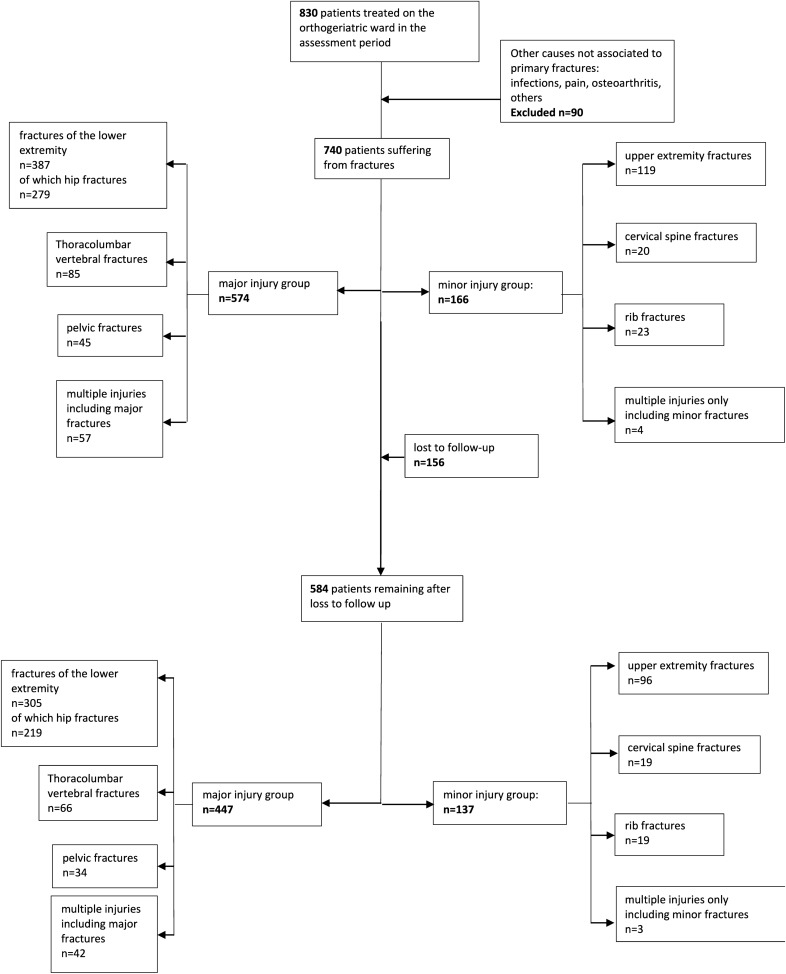
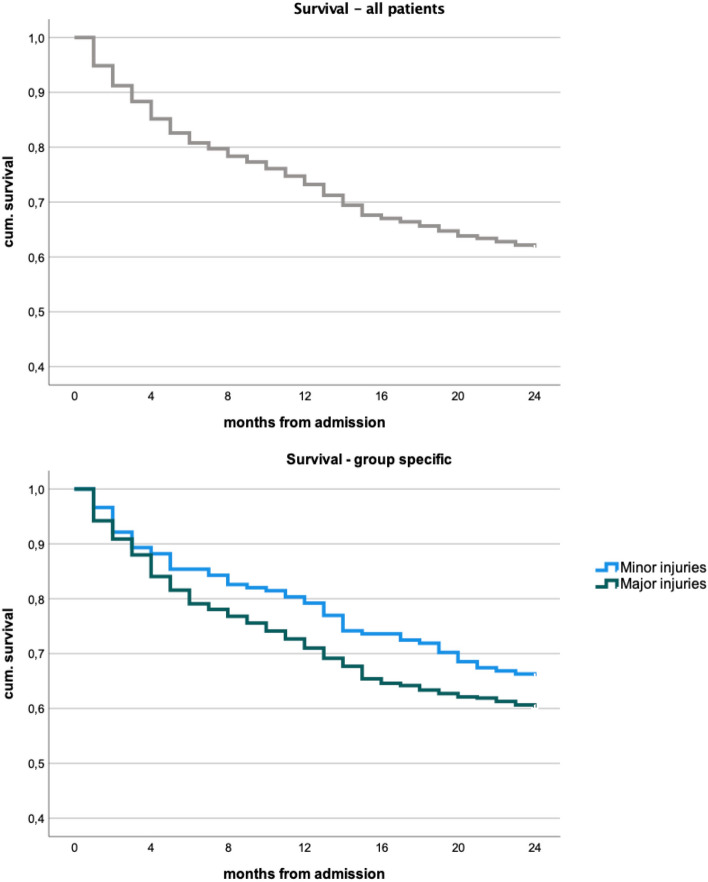
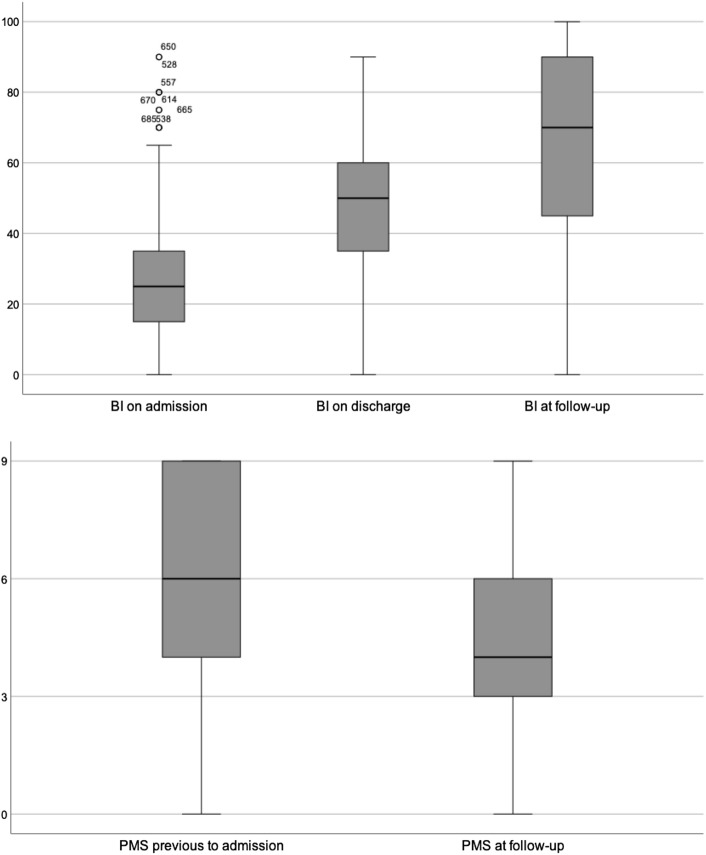
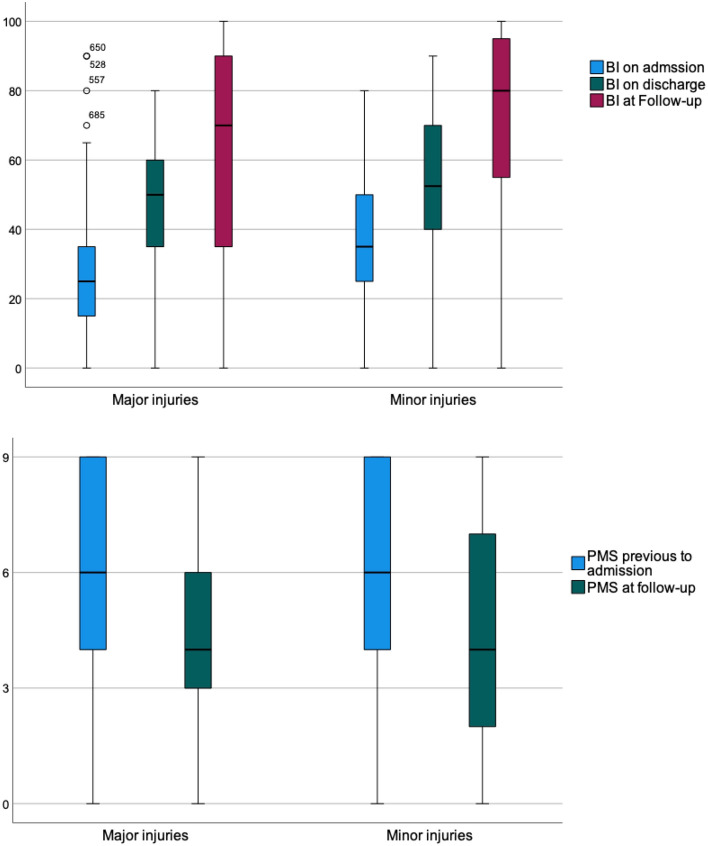
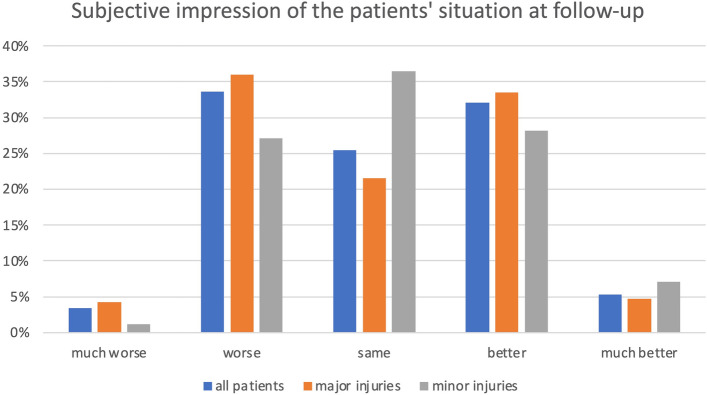
740 (574 major vs. 166 minor injuries) patients were initially assessed, with a follow-up rate of 78.9%. The in-house, 1-year, and 2-year-mortality rates were 2.7, 27.4, and 39.2%, respectively. Mortality was significantly higher for MaF in the short term, but not after 2 years. On average, during the observation period, patients regained their BI by 36.7 points (95% CI: 33.80-39.63) and PMS was reduced by 1.4 points (95% CI: 1.16-1.68). No significant differences were found in the readmission rate, change in BI, PMS or POR between the MaF and MiF groups.
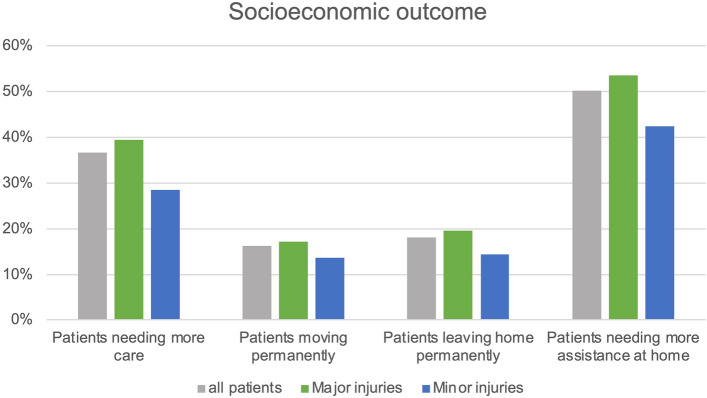
The relevance of orthogeriatric treatment to improving functional and socioeconomic outcomes was confirmed. The similarity of the results from both fracture groups emphasizes the need for a multidisciplinary approach also for minor fractures.
文献表明,骨科老年病学联合管理可改善髋部骨折患者的预后。但缺乏针对更多类型脆性骨折患者的相应研究。因此,我们对一个骨科老年病学联合管理病房进行了前瞻性研究,对 2 年的随访结果进行了分析,比较了主要和次要脆性骨折患者的相关结局参数。
纳入 2014 年 2 月至 2015 年 1 月期间在骨科老年病学联合管理病房接受治疗的所有患者,并记录其损伤、骨科老年病学相关参数(如巴氏指数(BI)、帕克移动评分(PMS)和居住地点(POR)。患者被分为两组:固定治疗的主要(MaF)骨折和非固定治疗的次要(MiF)骨折。2 年后,通过电话和邮寄问卷对患者及其亲属进行随访。
共对 740 例(574 例主要骨折与 166 例次要骨折)患者进行了初始评估,随访率为 78.9%。院内、1 年和 2 年的死亡率分别为 2.7%、27.4%和 39.2%。MaF 在短期内死亡率明显更高,但 2 年后则无差异。平均而言,在观察期间,患者的 BI 恢复了 36.7 分(95%CI:33.80-39.63),PMS 降低了 1.4 分(95%CI:1.16-1.68)。MaF 和 MiF 两组之间的再入院率、BI 变化、PMS 或 POR 无显著差异。
骨科老年病学治疗对改善功能和社会经济学结局的相关性得到了证实。两组骨折患者的结果相似,强调了对次要骨折也需要采取多学科的方法。