Howard Hughes Medical Institute, Basic Sciences Division, Fred Hutchinson Cancer Research Center, Seattle, Washington 98109, USA.
Human Biology Division, Fred Hutchinson Cancer Research Center, Seattle, Washington 98109, USA.
Genes Dev. 2022 Apr 1;36(7-8):495-510. doi: 10.1101/gad.349319.121. Epub 2022 Apr 28.
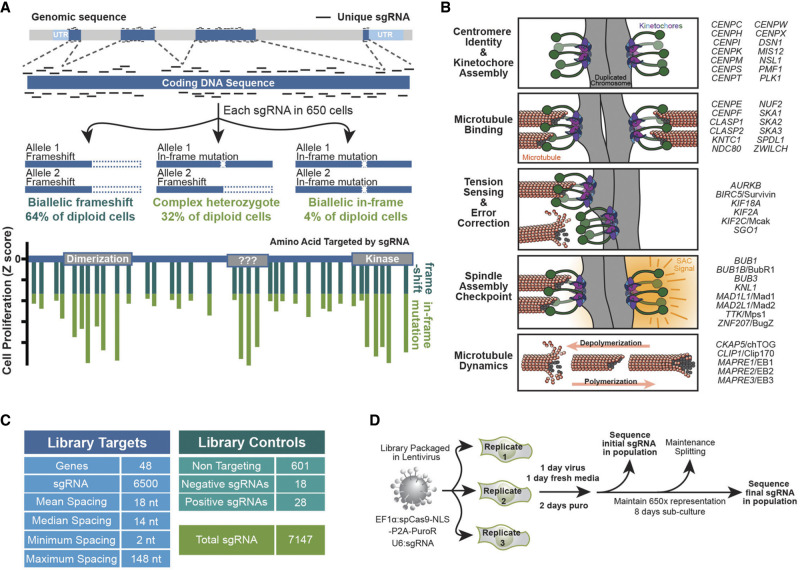
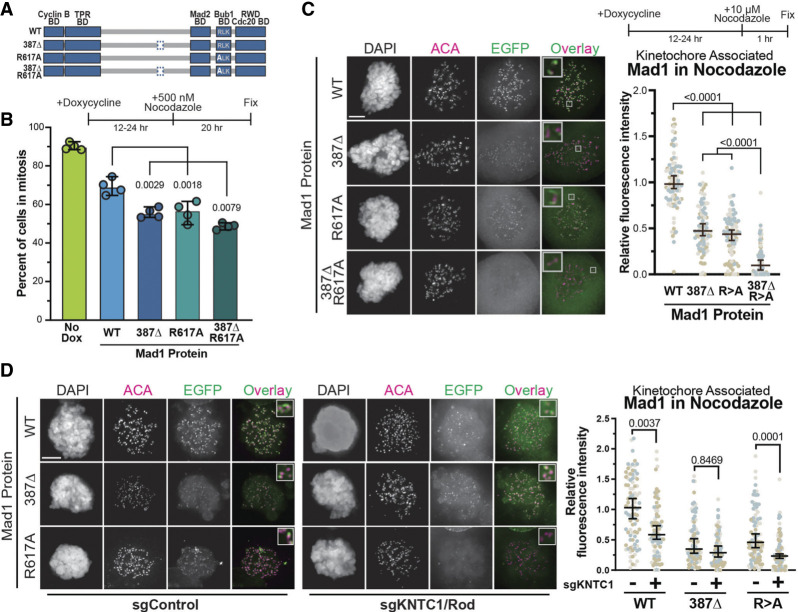
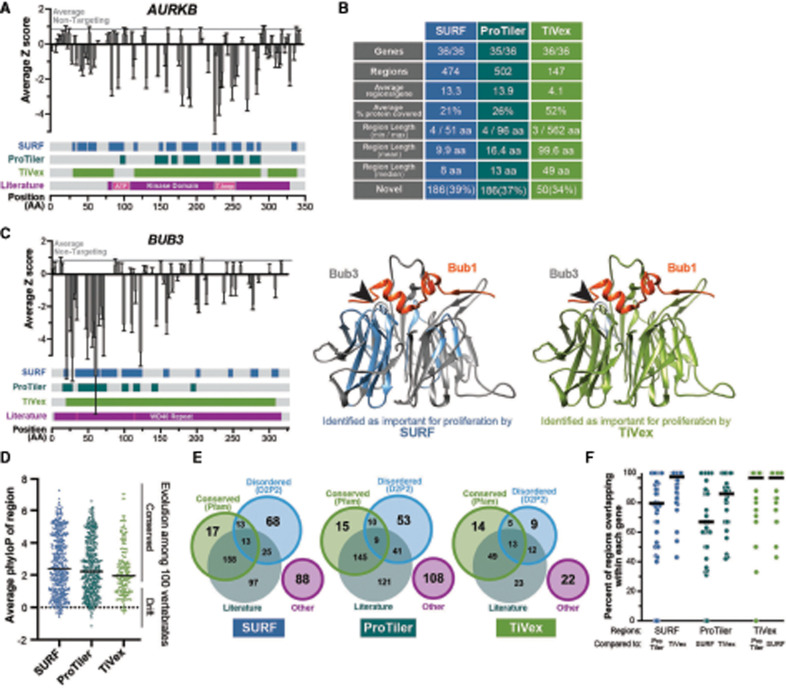
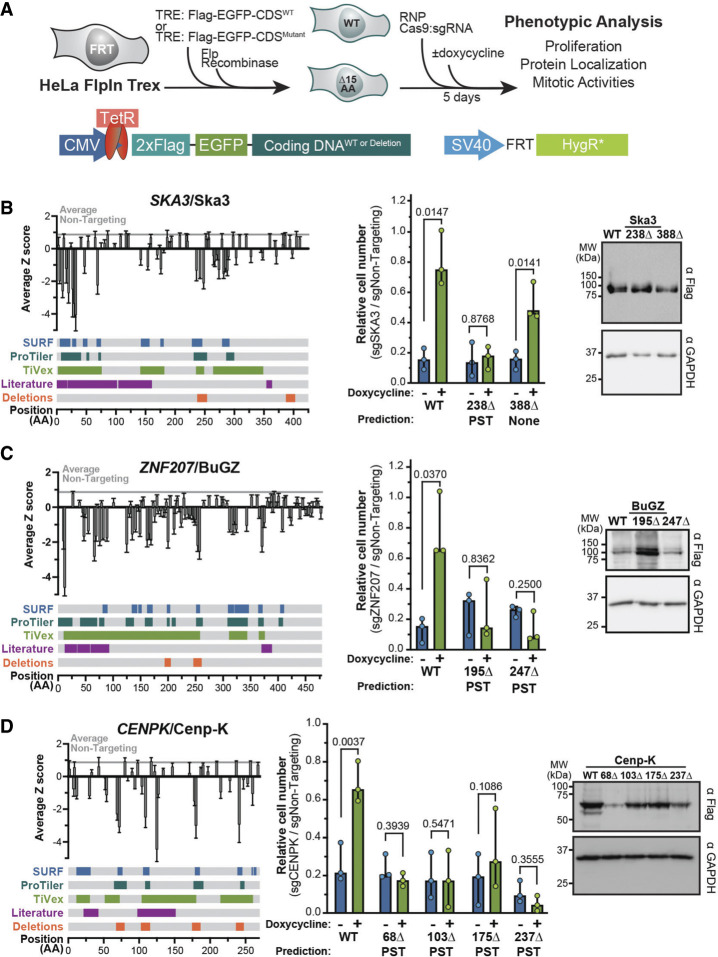
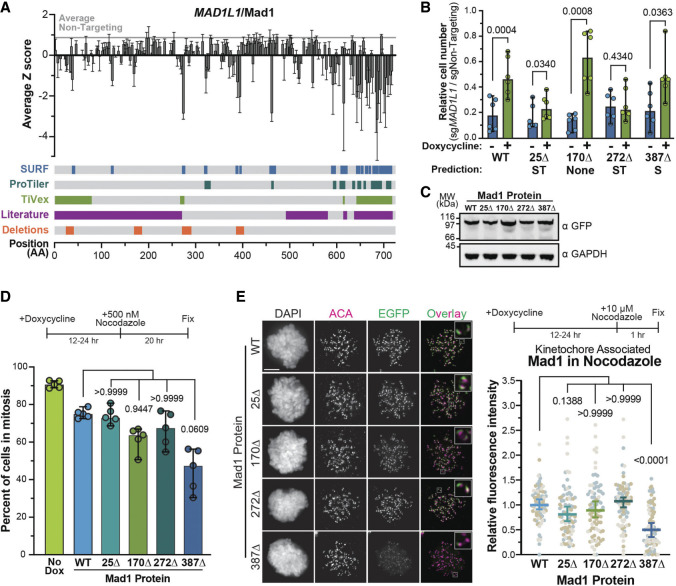
The identity of human protein-coding genes is well known, yet our in-depth knowledge of their molecular functions and domain architecture remains limited by shortcomings in homology-based predictions and experimental approaches focused on whole-gene depletion. To bridge this knowledge gap, we developed a method that leverages CRISPR-Cas9-induced mutations across protein-coding genes for the a priori identification of functional regions at the sequence level. As a test case, we applied this method to 48 human mitotic genes, revealing hundreds of regions required for cell proliferation, including domains that were experimentally characterized, ones that were predicted based on homology, and novel ones. We validated screen outcomes for 15 regions, including amino acids 387-402 of Mad1, which were previously uncharacterized but contribute to Mad1 kinetochore localization and chromosome segregation fidelity. Altogether, we demonstrate that CRISPR-Cas9-based tiling mutagenesis identifies key functional domains in protein-coding genes de novo, which elucidates separation of function mutants and allows functional annotation across the human proteome.
人类蛋白编码基因的身份已为人熟知,但我们对其分子功能和结构域架构的深入了解仍然受到基于同源性预测的局限性以及侧重于全基因缺失的实验方法的限制。为了弥补这一知识空白,我们开发了一种方法,该方法利用 CRISPR-Cas9 诱导的蛋白编码基因突变,在序列水平上预先确定功能区域。作为一个测试案例,我们将该方法应用于 48 个人类有丝分裂基因,揭示了数百个细胞增殖所需的区域,包括经过实验表征的结构域、基于同源性预测的结构域以及新的结构域。我们验证了 15 个区域的筛选结果,包括 Mad1 的氨基酸 387-402,这些区域以前没有被描述过,但对 Mad1 着丝粒定位和染色体分离保真度有贡献。总的来说,我们证明了基于 CRISPR-Cas9 的平铺诱变可以从头鉴定蛋白编码基因中的关键功能结构域,这阐明了功能分离突变体,并允许在整个人类蛋白质组中进行功能注释。