Institute of Functional Nano & Soft Materials (FUNSOM), Jiangsu Key Laboratory for Carbon-Based Functional Materials and Devices, Soochow University, 215123, Suzhou, China.
Nat Commun. 2022 Apr 28;13(1):2336. doi: 10.1038/s41467-022-29938-6.
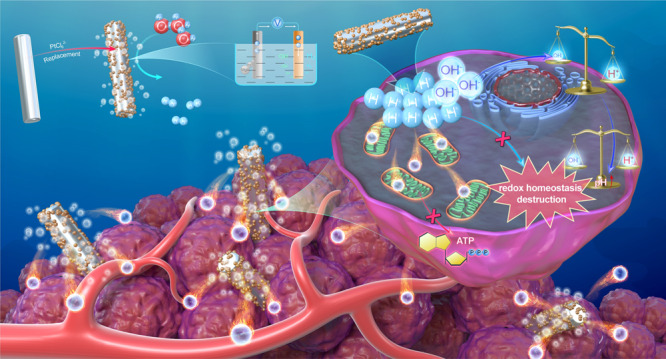
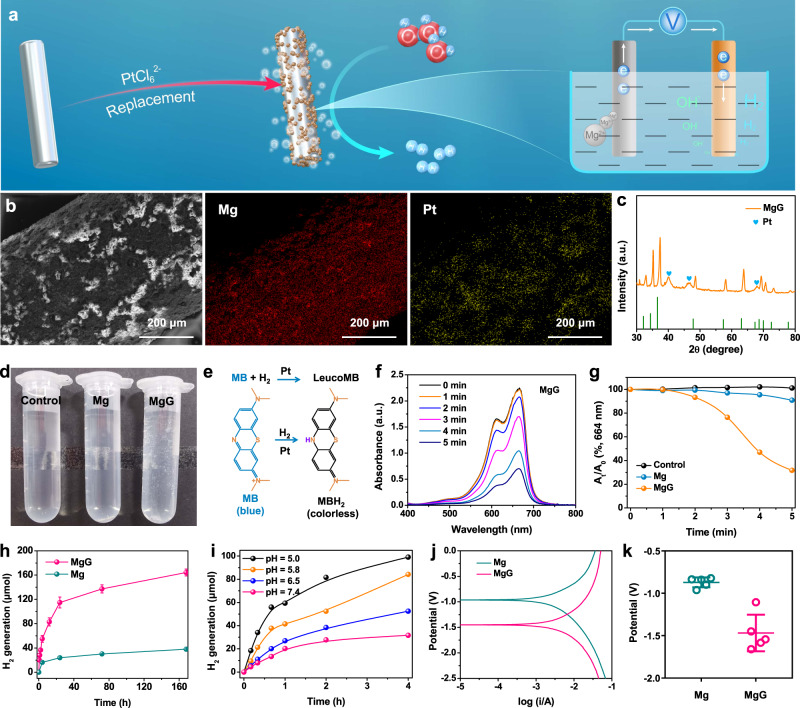
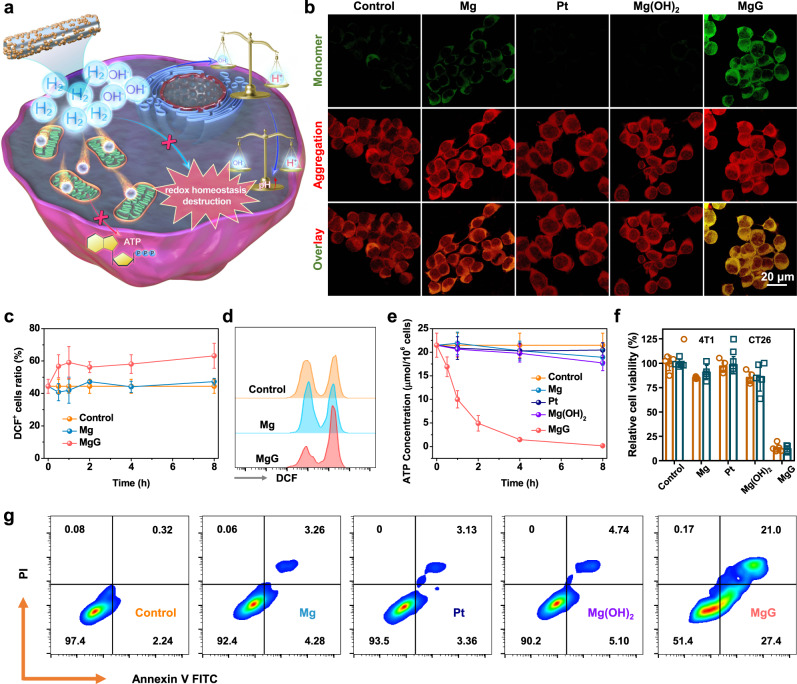
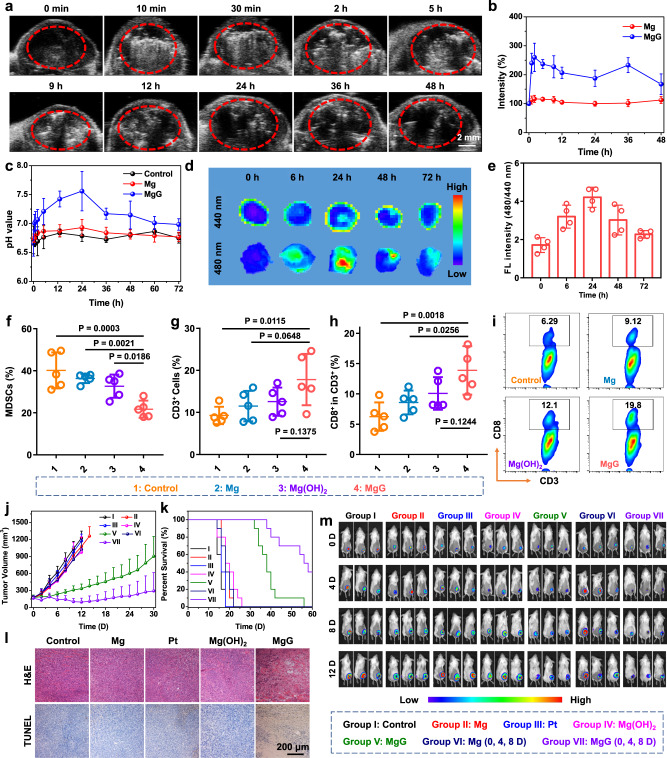
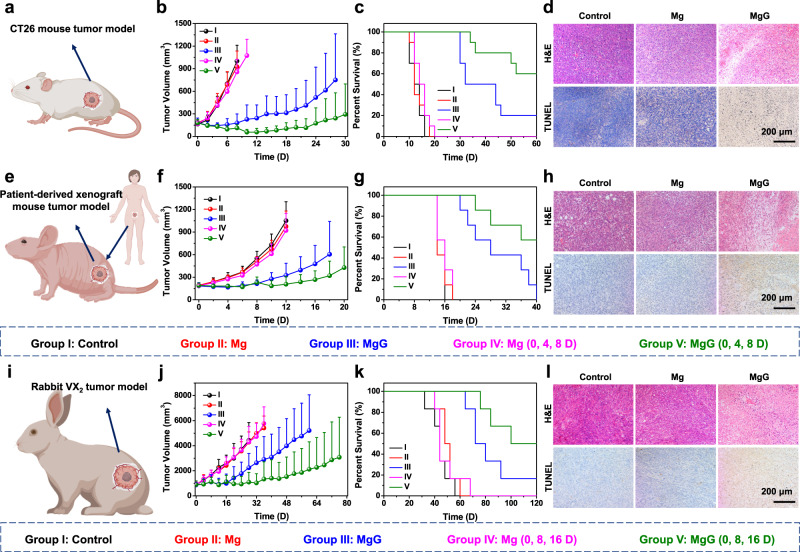
Hydrogen can be used as an anti-cancer treatment. However, the continuous generation of H molecules within the tumor is challenging. Magnesium (Mg) and its alloys have been extensively used in the clinic as implantable metals. Here we develop, by decorating platinum on the surface of Mg rods, a Mg-based galvanic cell (MgG), which allows the continuous generation of H in an aqueous environment due to galvanic-cell-accelerated water etching of Mg. By implanting MgG rods into a tumor, H molecules can be generated within the tumor, which induces mitochondrial dysfunction and intracellular redox homeostasis destruction. Meanwhile, the Mg(OH) residue can neutralize the acidic tumor microenvironment (TME). Such MgG rods with the micro-galvanic cell structure enable hydrogen therapy to inhibit the growth of tumors, including murine tumor models, patient-derived xenografts (PDX), as well as VX tumors in rabbits. Our research suggests that the galvanic cells for hydrogen therapy based on implantable metals may be a safe and effective cancer treatment.
氢气可作为一种抗癌疗法。然而,肿瘤内 H 分子的持续生成是一个挑战。镁 (Mg) 及其合金已广泛作为可植入金属应用于临床。在此,我们通过在 Mg 棒表面修饰铂,开发了一种基于镁的原电池 (MgG),由于原电池加速了 Mg 的水蚀,因此可在水相环境中持续生成 H。通过将 MgG 棒植入肿瘤,可在肿瘤内生成 H 分子,从而导致线粒体功能障碍和细胞内氧化还原稳态破坏。同时,Mg(OH) 残留可中和酸性肿瘤微环境 (TME)。这种具有微原电池结构的 MgG 棒可通过氢气疗法抑制肿瘤的生长,包括鼠类肿瘤模型、患者来源的异种移植瘤 (PDX) 以及兔 VX 肿瘤。我们的研究表明,基于可植入金属的用于氢气疗法的原电池可能是一种安全有效的癌症治疗方法。