DATA Science Department, Santé publique France, 12 rue du Val D'Osne, 94415, Saint Maurice, France.
Gynaecology and Obstetrics CHI Poissy/Saint-Germain-en-Laye, Poissy, France.
Sci Rep. 2022 Apr 28;12(1):6966. doi: 10.1038/s41598-022-11017-x.
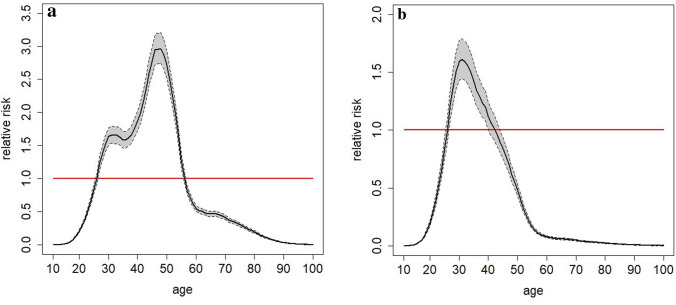
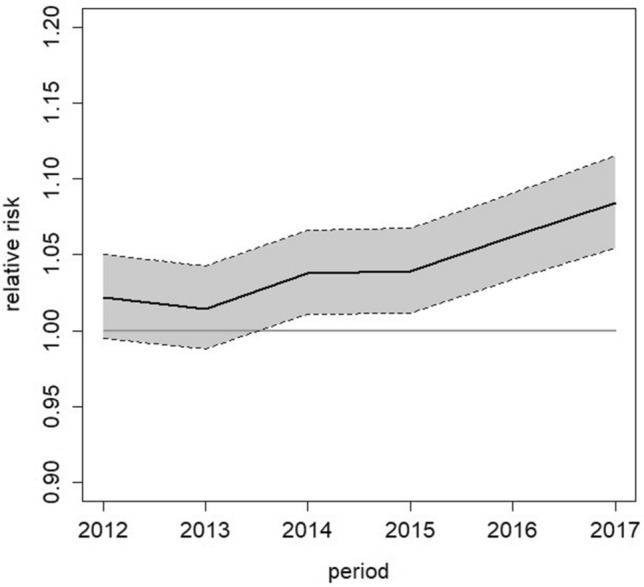
Endometriosis is a female hormone-dependent disease, possibly related to endocrine disruptor exposure. We aimed to monitor this disease nationwide in France and analyze spatial trends at a fine scale to explore possible environmental contributing risk factors. We conducted a retrospective national descriptive study from 2011 to 2017 in females aged 10 years old and over, using comprehensive hospital discharge data. Cases were identified using ICD-10 N80 codes and were localized at their municipality of residence. We defined incident cases as the first hospital stay of patients, without a stay in at least the previous 5 years. We performed statistical analyses according to age and type of endometriosis, and we modeled the temporal, spatial and spatiotemporal trends. We identified 207,462 incident cases of all-type hospitalized endometriosis (83,112 for non-adenomyosis cases). The crude incidence rate for the study period was 9.85/10,000 person-years (3.95/10,000 for non-adenomyosis cases). From 2011 to 2017, the risk of all-type endometriosis increased by 8.5% (95% CI: 3.9; 13.4) (by 3.6% (95% CI: 0.6; 6.8) for non-adenomyosis cases). The risk was geographically heterogeneous, with 20 high-risk hotspots, showing similar results for non-adenomyosis cases. Shifting practice patterns, improved awareness and healthcare disparities interlinked with environmental risk factors could explain these trends.
子宫内膜异位症是一种女性激素依赖性疾病,可能与内分泌干扰物暴露有关。我们旨在对法国全国范围内的这种疾病进行监测,并对精细尺度的空间趋势进行分析,以探索可能的环境致病风险因素。我们进行了一项回顾性全国描述性研究,纳入了 2011 年至 2017 年期间年龄在 10 岁及以上的女性,使用了全面的医院出院数据。使用 ICD-10 N80 代码识别病例,并根据患者的居住市/镇定位。我们将首发住院患者定义为新发病例,且之前至少 5 年内没有住院史。我们根据年龄和子宫内膜异位症的类型进行了统计分析,并对时间、空间和时空趋势进行了建模。我们共鉴定出 207462 例所有类型的住院子宫内膜异位症病例(83112 例为非腺肌病病例)。研究期间的粗发病率为 9.85/10000 人年(3.95/10000 人年用于非腺肌病病例)。从 2011 年至 2017 年,所有类型子宫内膜异位症的发病风险增加了 8.5%(95%CI:3.9; 13.4)(非腺肌病病例增加了 3.6%(95%CI:0.6; 6.8))。发病风险在地理上存在异质性,有 20 个高风险热点,非腺肌病病例也有类似结果。实践模式的转变、意识的提高以及与环境风险因素相关的医疗保健差异可能解释了这些趋势。