MOE Laboratory of Biosystems Homeostasis & Protection and Innovation Center for Cell Signaling Network, Life Sciences Institute, Zhejiang University, 310058, Hangzhou, PR China.
Department of Orthopaedic Surgery, The First Affiliated Hospital of Wenzhou Medical University, 325000, Wenzhou, PR China.
Signal Transduct Target Ther. 2022 Apr 29;7(1):143. doi: 10.1038/s41392-022-00986-0.
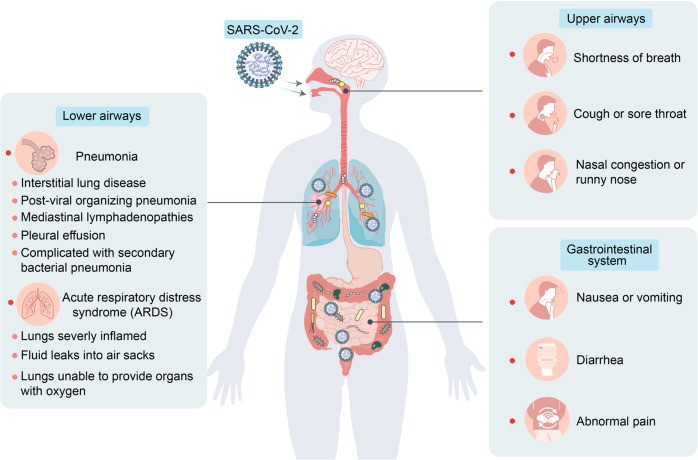
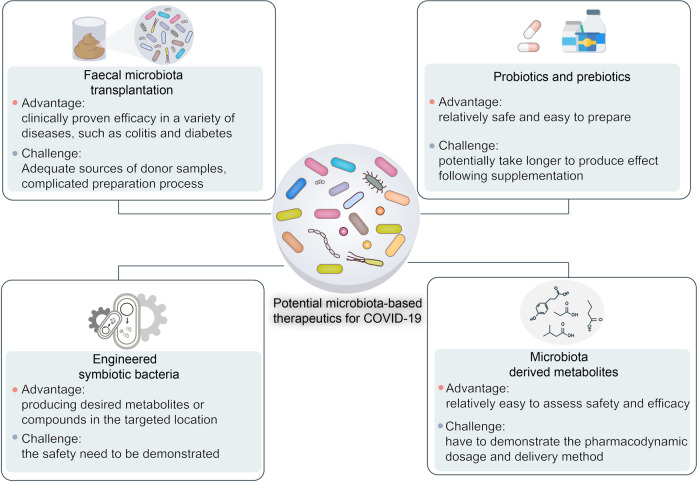
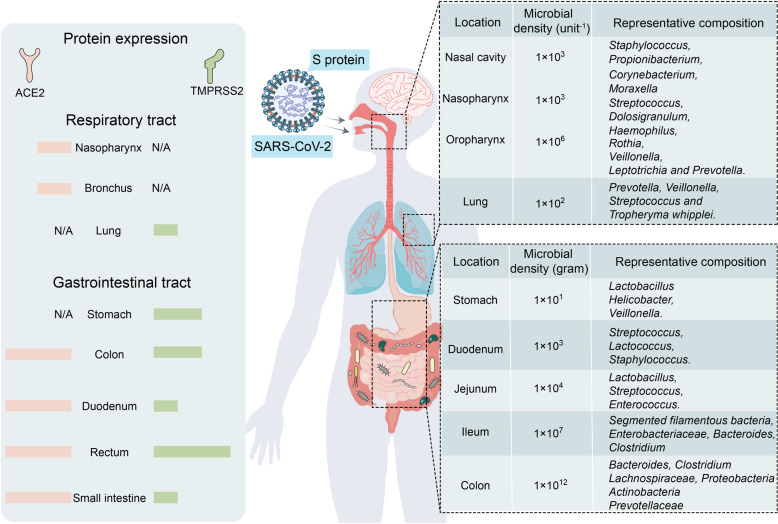
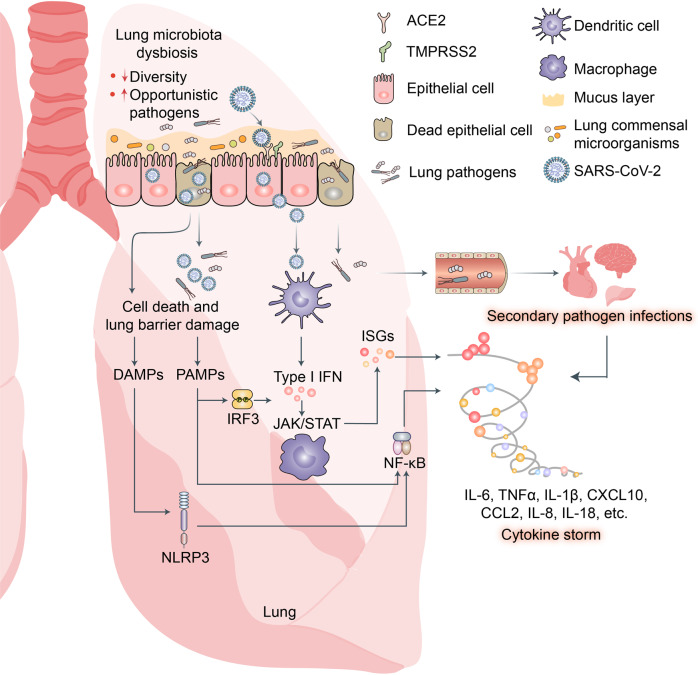
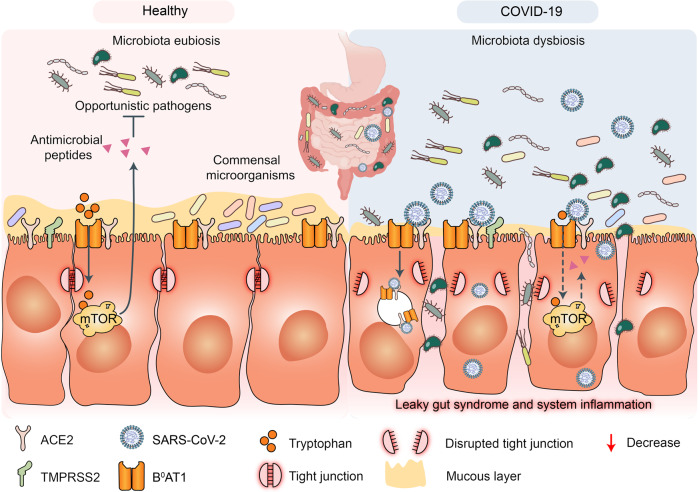
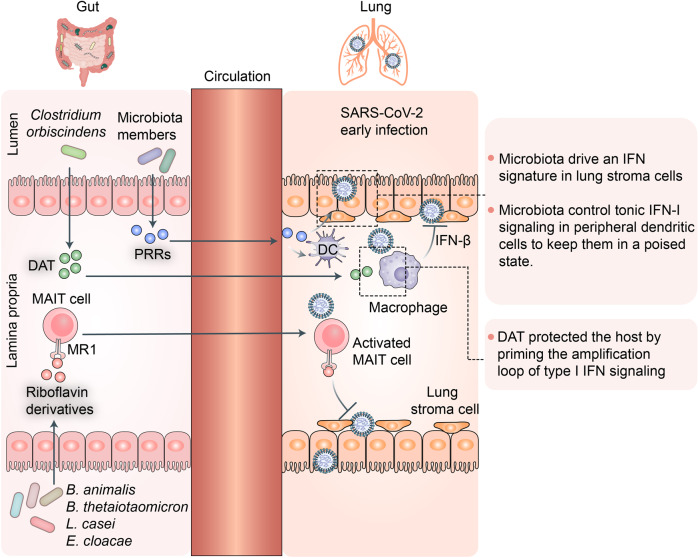
The global coronavirus disease 2019 (COVID-19) pandemic is currently ongoing. It is caused by severe acute respiratory syndrome coronavirus 2 (SARS-CoV-2). A high proportion of COVID-19 patients exhibit gastrointestinal manifestations such as diarrhea, nausea, or vomiting. Moreover, the respiratory and gastrointestinal tracts are the primary habitats of human microbiota and targets for SARS-CoV-2 infection as they express angiotensin-converting enzyme-2 (ACE2) and transmembrane protease serine 2 (TMPRSS2) at high levels. There is accumulating evidence that the microbiota are significantly altered in patients with COVID-19 and post-acute COVID-19 syndrome (PACS). Microbiota are powerful immunomodulatory factors in various human diseases, such as diabetes, obesity, cancers, ulcerative colitis, Crohn's disease, and certain viral infections. In the present review, we explore the associations between host microbiota and COVID-19 in terms of their clinical relevance. Microbiota-derived metabolites or components are the main mediators of microbiota-host interactions that influence host immunity. Hence, we discuss the potential mechanisms by which microbiota-derived metabolites or components modulate the host immune responses to SARS-CoV-2 infection. Finally, we review and discuss a variety of possible microbiota-based prophylaxes and therapies for COVID-19 and PACS, including fecal microbiota transplantation (FMT), probiotics, prebiotics, microbiota-derived metabolites, and engineered symbiotic bacteria. This treatment strategy could modulate host microbiota and mitigate virus-induced inflammation.
全球 2019 年冠状病毒病(COVID-19)大流行仍在持续。它是由严重急性呼吸系统综合征冠状病毒 2(SARS-CoV-2)引起的。相当一部分 COVID-19 患者表现出腹泻、恶心或呕吐等胃肠道症状。此外,呼吸道和胃肠道是人类微生物群的主要栖息地,也是 SARS-CoV-2 感染的目标,因为它们高水平表达血管紧张素转换酶-2(ACE2)和跨膜蛋白酶丝氨酸 2(TMPRSS2)。越来越多的证据表明,COVID-19 患者和急性 COVID-19 后综合征(PACS)患者的微生物群明显改变。在各种人类疾病中,如糖尿病、肥胖症、癌症、溃疡性结肠炎、克罗恩病和某些病毒感染,微生物群是强大的免疫调节因素。在本综述中,我们从临床相关性的角度探讨了宿主微生物群与 COVID-19 之间的关系。微生物群衍生的代谢物或成分是微生物群-宿主相互作用的主要介质,影响宿主免疫。因此,我们讨论了微生物群衍生的代谢物或成分调节宿主对 SARS-CoV-2 感染的免疫反应的潜在机制。最后,我们综述并讨论了各种可能的基于微生物群的 COVID-19 和 PACS 预防和治疗方法,包括粪便微生物群移植(FMT)、益生菌、益生元、微生物群衍生的代谢物和工程共生细菌。这种治疗策略可以调节宿主微生物群并减轻病毒引起的炎症。