Gang Jiaqi, Wang Haiyu, Xue Xiangsheng, Zhang Shu
Department of Emergency, The First Affiliated Hospital of Zhengzhou University, Zhengzhou, China.
Department of Oncology, Xiuwu County People's Hospital, Jiaozuo, China.
Front Microbiol. 2022 Aug 12;13:963488. doi: 10.3389/fmicb.2022.963488. eCollection 2022.
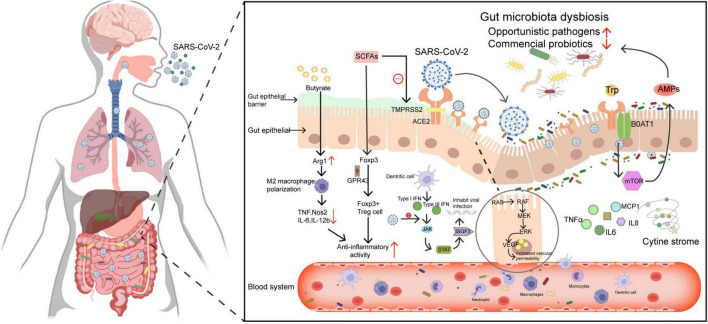
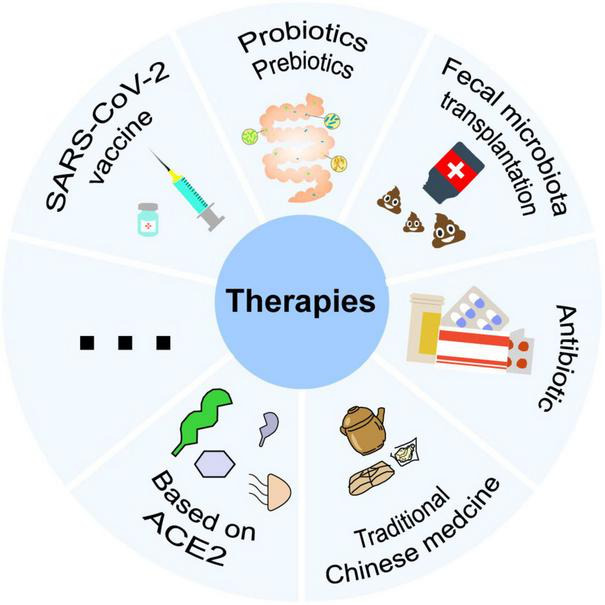
The coronavirus disease 2019 (COVID-19) is an infectious disease caused by severe acute respiratory syndrome coronavirus 2 (SARS-CoV-2). According to the World Health Organization statistics, more than 500 million individuals have been infected and more than 6 million deaths have resulted worldwide. Although COVID-19 mainly affects the respiratory system, considerable evidence shows that the digestive, cardiovascular, nervous, and reproductive systems can all be involved. Angiotensin-converting enzyme 2 (AEC2), the target of SARS-CoV-2 invasion of the host is mainly distributed in the respiratory and gastrointestinal tract. Studies found that microbiota contributes to the onset and progression of many diseases, including COVID-19. Here, we firstly conclude the characterization of respiratory, gut, and oral microbial dysbiosis, including bacteria, fungi, and viruses. Then we explore the potential mechanisms of microbial involvement in COVID-19. Microbial dysbiosis could influence COVID-19 by complex interactions with SARS-CoV-2 and host immunity. Moreover, microbiota may have an impact on COVID-19 through their metabolites or modulation of ACE2 expression. Subsequently, we generalize the potential of microbiota as diagnostic markers for COVID-19 patients and its possible association with post-acute COVID-19 syndrome (PACS) and relapse after recovery. Finally, we proposed directed microbiota-targeted treatments from the perspective of gut microecology such as probiotics and prebiotics, fecal transplantation and antibiotics, and other interventions such as traditional Chinese medicine, COVID-19 vaccines, and ACE2-based treatments.
2019冠状病毒病(COVID-19)是由严重急性呼吸综合征冠状病毒2(SARS-CoV-2)引起的一种传染病。根据世界卫生组织的统计,全球已有超过5亿人感染,死亡人数超过600万。尽管COVID-19主要影响呼吸系统,但大量证据表明,消化系统、心血管系统、神经系统和生殖系统也都可能受累。血管紧张素转换酶2(AEC2)是SARS-CoV-2入侵宿主的靶点,主要分布在呼吸道和胃肠道。研究发现,微生物群与包括COVID-19在内的许多疾病的发生和发展有关。在此,我们首先总结了呼吸道、肠道和口腔微生物群失调的特征,包括细菌、真菌和病毒。然后我们探讨了微生物群参与COVID-19的潜在机制。微生物群失调可能通过与SARS-CoV-2和宿主免疫的复杂相互作用影响COVID-19。此外,微生物群可能通过其代谢产物或对ACE2表达的调节对COVID-19产生影响。随后,我们概括了微生物群作为COVID-19患者诊断标志物的潜力及其与急性COVID-19后综合征(PACS)和康复后复发的可能关联。最后,我们从肠道微生态的角度提出了针对微生物群的定向治疗方法,如益生菌和益生元、粪便移植和抗生素,以及其他干预措施,如中药、COVID-19疫苗和基于ACE2的治疗。