Hachiya Rumi, Tanaka Miyako, Itoh Michiko, Suganami Takayoshi
Department of Pediatrics, Keio University School of Medicine, Tokyo, Japan.
Department of Pediatrics, Tokyo Dental College Ichikawa General Hospital, Chiba, Japan.
Inflamm Regen. 2022 May 1;42(1):13. doi: 10.1186/s41232-022-00198-7.
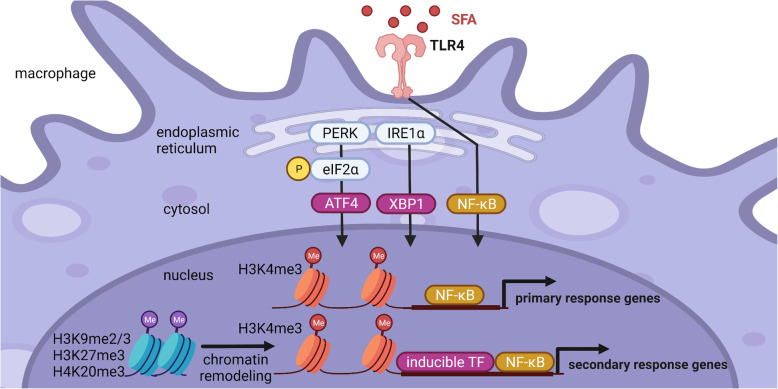
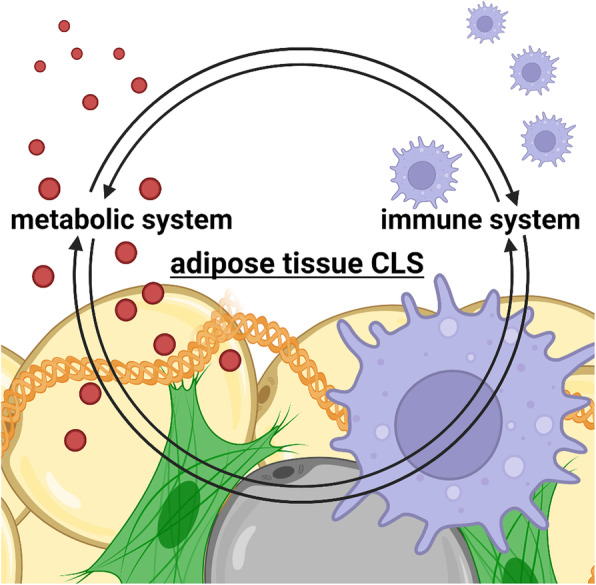
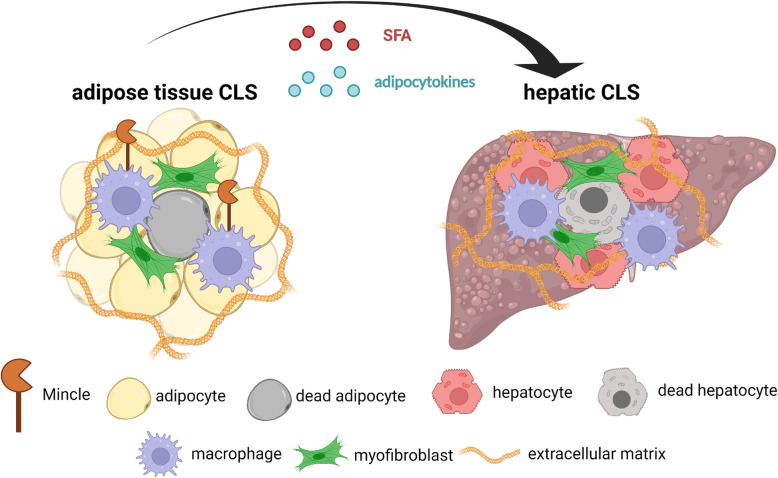
Chronic inflammation is currently considered as a molecular basis of metabolic syndrome. Particularly, obesity-induced inflammation in adipose tissue is the origin of chronic inflammation of metabolic syndrome. Adipose tissue contains not only mature adipocytes with large lipid droplets, but also a variety of stromal cells including adipocyte precursors, vascular component cells, immune cells, and fibroblasts. However, crosstalk between those various cell types in adipose tissue in obesity still remains to be fully understood. We focus on two innate immune receptors, Toll-like receptor 4 (TLR4) and macrophage-inducible C-type lectin (Mincle). We provided evidence that adipocyte-derived saturated fatty acids (SFAs) activate macrophage TLR4 signaling pathway, thereby forming a vicious cycle of inflammatory responses during the development of obesity. Intriguingly, the TLR4 signaling pathway is modulated metabolically and epigenetically: SFAs augment TLR4 signaling through the integrated stress response and chromatin remodeling, such as histone methylation, regulates dynamic transcription patterns downstream of TLR4 signaling. Another innate immune receptor Mincle senses cell death, which is a trigger of chronic inflammatory diseases including obesity. Macrophages form a histological structure termed "crown-like structure (CLS)", in which macrophages surround dead adipocytes to engulf cell debris and residual lipids. Mincle is exclusively expressed in macrophages forming the CLS in obese adipose tissue and regulates adipocyte death-triggered adipose tissue fibrosis. In addition to adipose tissue, we found a structure similar to CLS in the liver of nonalcoholic steatohepatitis (NASH) and the kidney after acute kidney injury. This review article highlights the recent progress of the crosstalk between immune and metabolic systems in metabolic syndrome, with a focus on innate immune receptors.
慢性炎症目前被认为是代谢综合征的分子基础。特别是,肥胖诱导的脂肪组织炎症是代谢综合征慢性炎症的根源。脂肪组织不仅含有带有大量脂滴的成熟脂肪细胞,还含有多种基质细胞,包括脂肪细胞前体、血管组成细胞、免疫细胞和成纤维细胞。然而,肥胖状态下脂肪组织中这些不同细胞类型之间的相互作用仍有待充分了解。我们聚焦于两种天然免疫受体,即Toll样受体4(TLR4)和巨噬细胞诱导性C型凝集素(Mincle)。我们提供的证据表明,脂肪细胞衍生的饱和脂肪酸(SFA)激活巨噬细胞TLR4信号通路,从而在肥胖发展过程中形成炎症反应的恶性循环。有趣的是,TLR4信号通路在代谢和表观遗传水平上受到调控:SFA通过整合应激反应增强TLR4信号,而染色质重塑,如组蛋白甲基化,调节TLR4信号下游的动态转录模式。另一种天然免疫受体Mincle可感知细胞死亡,而细胞死亡是包括肥胖在内的慢性炎症性疾病的触发因素。巨噬细胞形成一种组织学结构,称为“冠状结构(CLS)”,其中巨噬细胞围绕死亡的脂肪细胞以吞噬细胞碎片和残留脂质。Mincle仅在肥胖脂肪组织中形成CLS的巨噬细胞中表达,并调节脂肪细胞死亡引发的脂肪组织纤维化。除了脂肪组织,我们在非酒精性脂肪性肝炎(NASH)的肝脏和急性肾损伤后的肾脏中发现了类似于CLS的结构。这篇综述文章重点介绍了代谢综合征中免疫和代谢系统之间相互作用的最新进展,重点关注天然免疫受体。