Mo Huaqiang, Fu Chenxing, Wu Zhiye, Liu Peng, Wen Zhibo, Hong Qingqing, Cai Yanbin, Li Gongxin
Department of Cardiology, Zhujiang Hospital, Southern Medical University Guangzhou 510280 People's Republic of China
Laboratory of Heart Center, Zhujiang Hospital, Sino-Japanese Cooperation Platform for Translational Research in Heart Failure, Guangdong Provincial Biomedical Engineering Technology Research Center for Cardiovascular Diseases Guangzhou 510280 People's Republic of China
RSC Adv. 2020 Apr 17;10(26):15346-15353. doi: 10.1039/c9ra10509c. eCollection 2020 Apr 16.
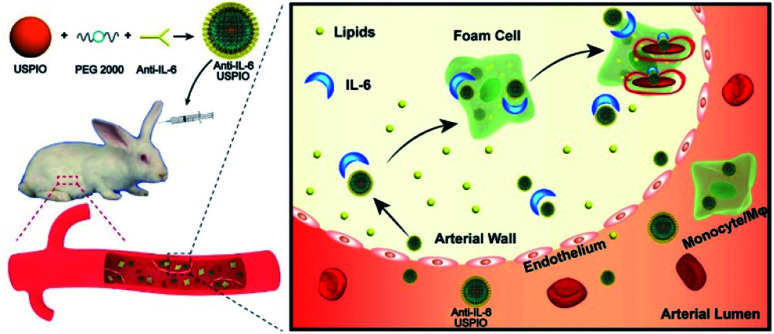
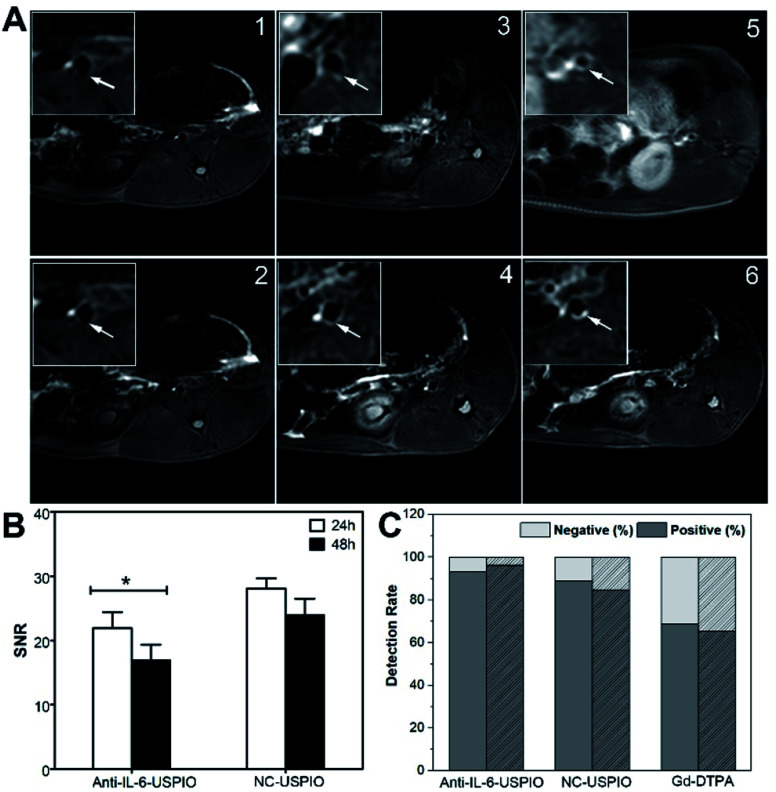
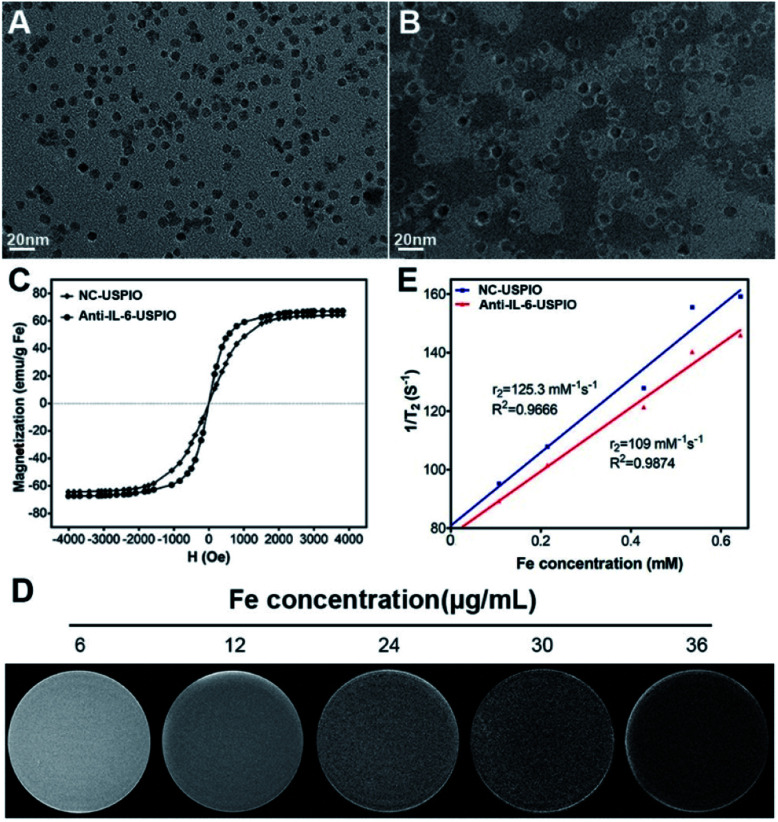
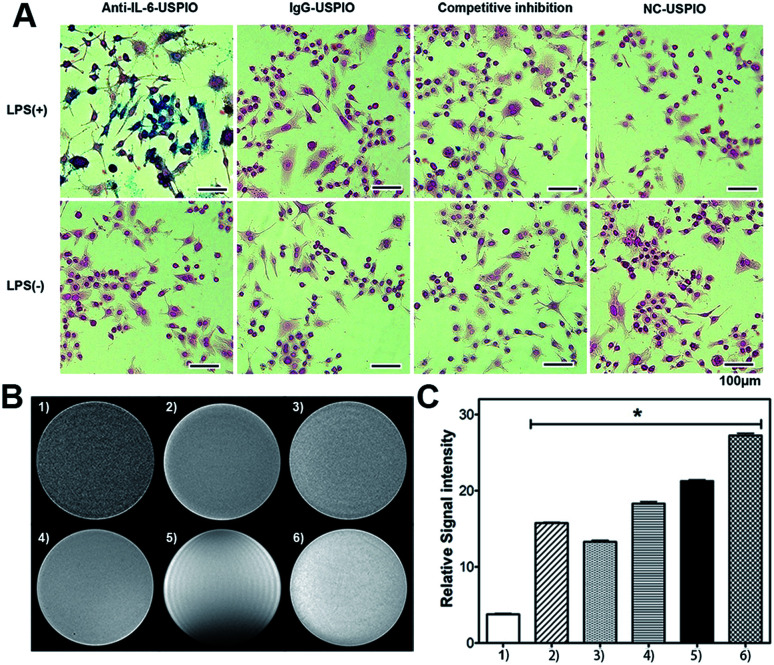
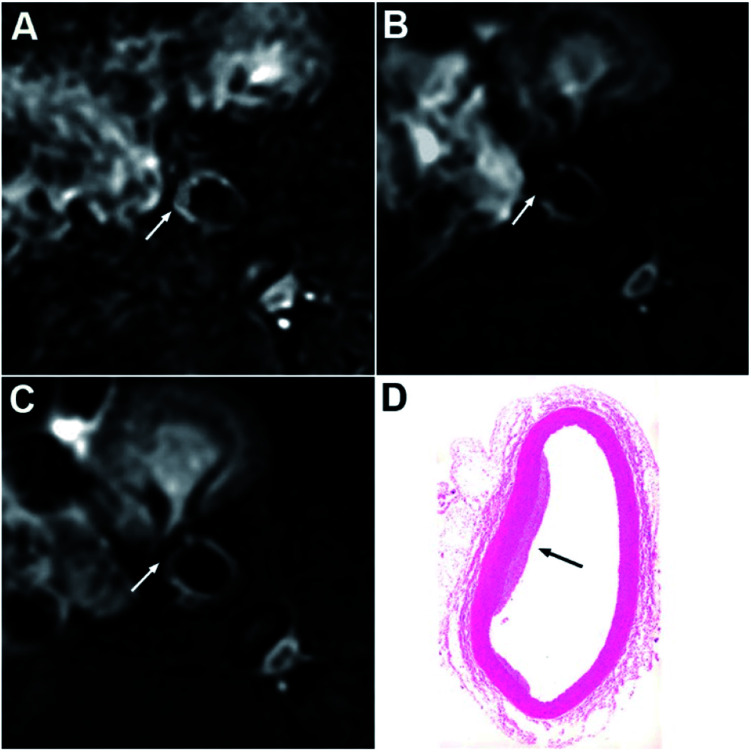
Vulnerable plaques of atherosclerosis (AS) are the main culprit lesion for the serious risk of acute cardiovascular disease (CVD). Therefore, developing new non-invasive methods to detect vulnerable plaques and to evaluate their stability effectively is of great value in the early diagnosis of CVD. IL-6 plays a vital role in the development and rupture of AS. In this study, IL-6-targeted superparamagnetic iron oxide nanoparticles (Anti-IL-6-USPIO) are synthesized by a chemical condensation reaction. An AS model was established by damaging rabbit abdominal aortic intima with Foley's tube in combination with a high cholesterol diet. The results confirm that Anti-IL-6-USPIO have excellent IL-6-targeting ability and usefulness in detecting vulnerable plaques and , which may provide a novel, non-invasive strategy for evaluating acute cardiovascular risk or exploiting anti-atherosclerotic drugs.
动脉粥样硬化(AS)易损斑块是急性心血管疾病(CVD)严重风险的主要罪魁祸首病变。因此,开发新的非侵入性方法来检测易损斑块并有效评估其稳定性在CVD的早期诊断中具有重要价值。白细胞介素-6(IL-6)在AS的发展和破裂中起关键作用。在本研究中,通过化学缩合反应合成了靶向IL-6的超顺磁性氧化铁纳米颗粒(Anti-IL-6-USPIO)。通过用Foley管损伤兔腹主动脉内膜并结合高胆固醇饮食建立AS模型。结果证实,Anti-IL-6-USPIO具有优异的IL-6靶向能力,可用于检测易损斑块,这可能为评估急性心血管风险或开发抗动脉粥样硬化药物提供一种新的非侵入性策略。