Xu Xiaomu, Hu Yusheng, Zhang Li-Peng, Liu Bo, Yang Yue, Tang Taya, Tian Jijing, Peng Kaisong, Liu Tianlong
Laboratory of Aquatic Health and Public Health, College of Animal Science and Technology, Anhui Agricultural University Hefei 230036 China
Laboratory of Veterinary Pathology and Nanopathology, College of Veterinary Medicine, China Agricultural University No. 2 West Road Yuanmingyuan Beijing 100193 P. R. China.
RSC Adv. 2020 Mar 26;10(21):12304-12307. doi: 10.1039/d0ra01034k. eCollection 2020 Mar 24.
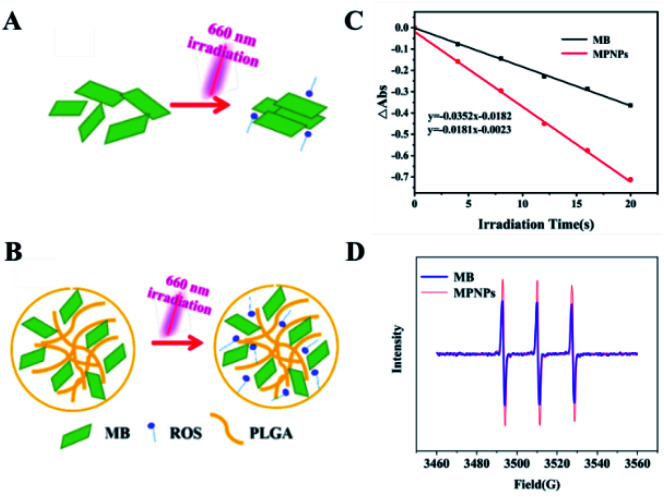
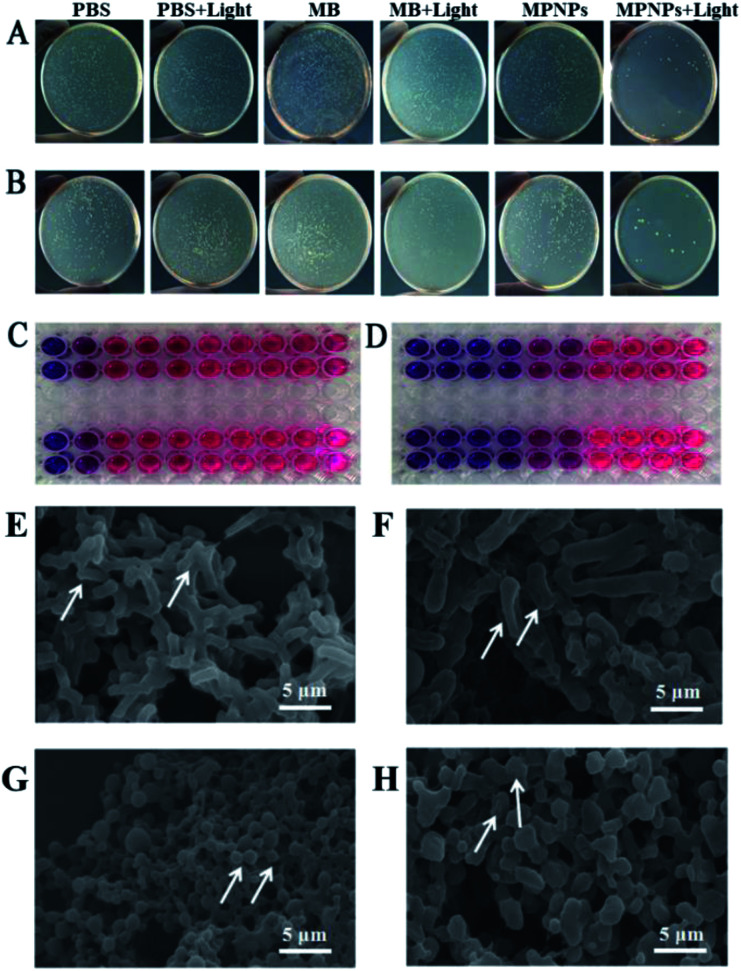
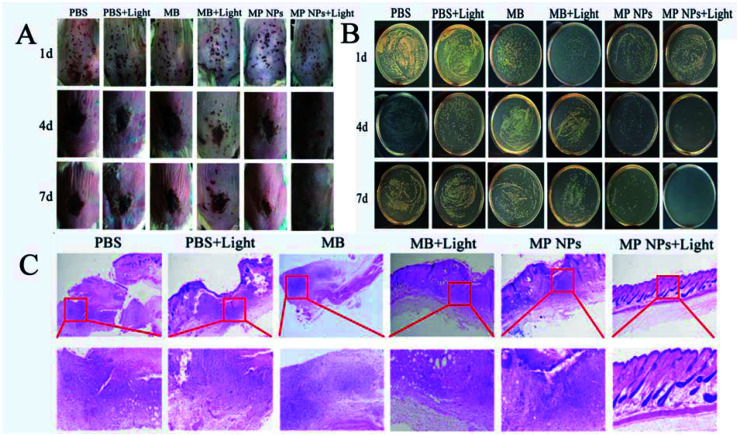
Effective wound healing has been demonstrated using lactic--glycolic acid (PLGA)-coated methylene blue nanoparticles (MPNPs) as a novel susceptible agent for photodynamic antibacterial therapy. Compared with methylene blue (MB) solution, MPNPs have a significantly improved antibacterial effect and . The enhanced antibacterial effect is achieved through increased singlet oxygen generation in MPNPs compared to that of MB solution, as a result of the decreased aggregation-induced quenching (ACQ) effect of the MPNPs. The mouse skin infection model experiment proved that MPNP has good antibacterial effects and promotes wound healing.
已证明使用聚乳酸-乙醇酸共聚物(PLGA)包被的亚甲蓝纳米颗粒(MPNPs)作为光动力抗菌疗法的新型敏感剂可实现有效的伤口愈合。与亚甲蓝(MB)溶液相比,MPNPs具有显著增强的抗菌效果。与MB溶液相比,MPNPs中单线态氧生成增加,由于MPNPs的聚集诱导猝灭(ACQ)效应降低,从而实现了增强的抗菌效果。小鼠皮肤感染模型实验证明,MPNP具有良好的抗菌效果并促进伤口愈合。