Department of Internal Medicine I, Gastroenterology, Hepatology, Endocrinology & Metabolism, Medical University of Innsbruck, Innsbruck, Austria.
Department of Hygiene, Microbiology and Public Health, Institute of Virology, Medical University of Innsbruck, Innsbruck Austria.
Gastroenterology. 2022 Aug;163(2):495-506.e8. doi: 10.1053/j.gastro.2022.04.037. Epub 2022 May 1.
BACKGROUND & AIMS: The coronavirus disease 2019 (COVID-19) pandemic has affected populations, societies, and lives for more than 2 years. Long-term sequelae of COVID-19, collectively termed the postacute COVID-19 syndrome, are rapidly emerging across the globe. Here, we investigated whether severe acute respiratory syndrome coronavirus 2 (SARS-CoV-2) antigen persistence underlies the postacute COVID-19 syndrome.
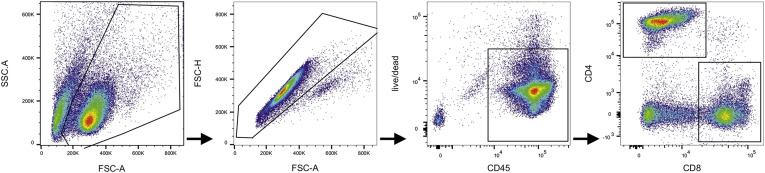
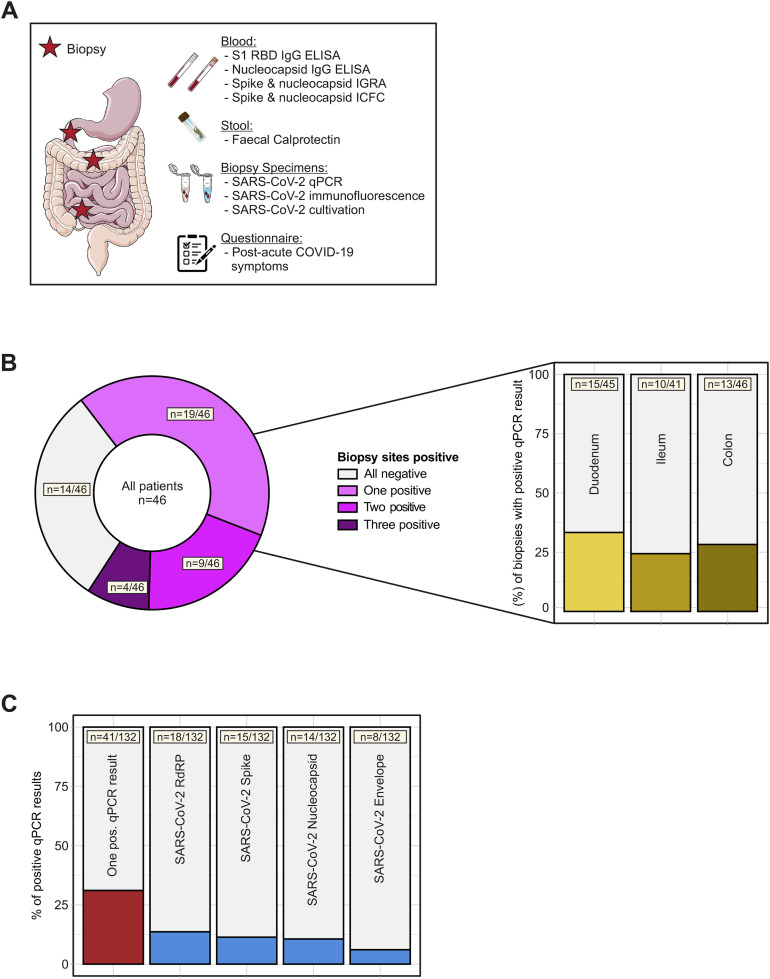
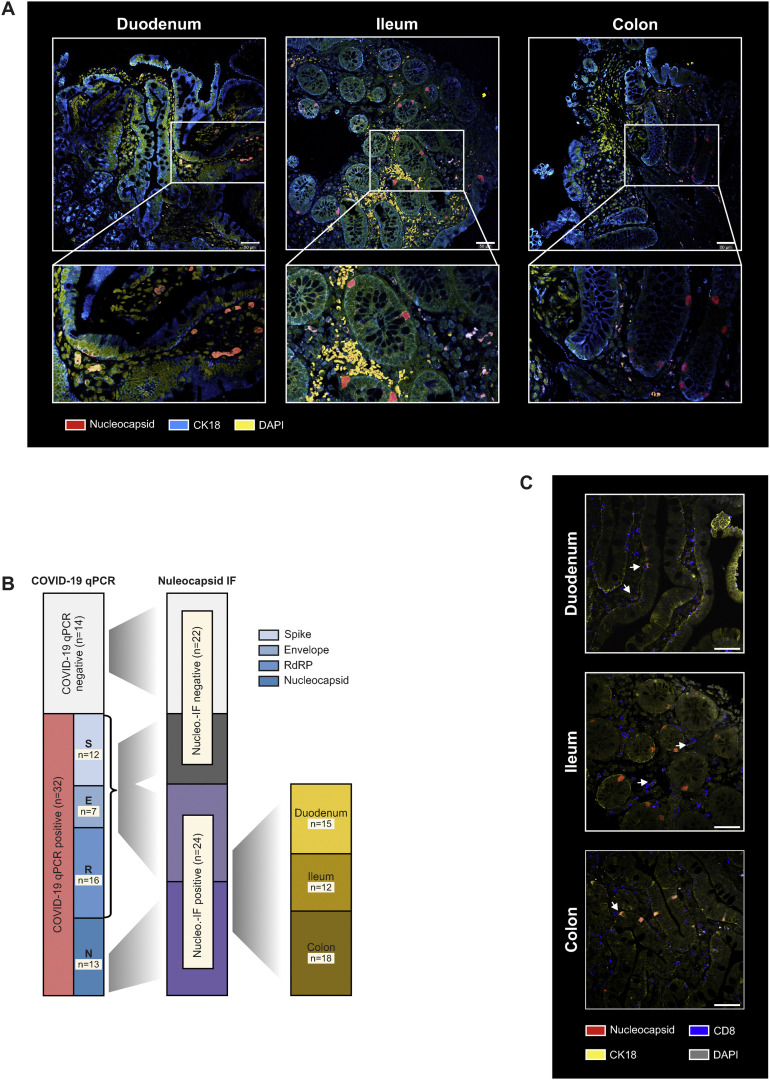
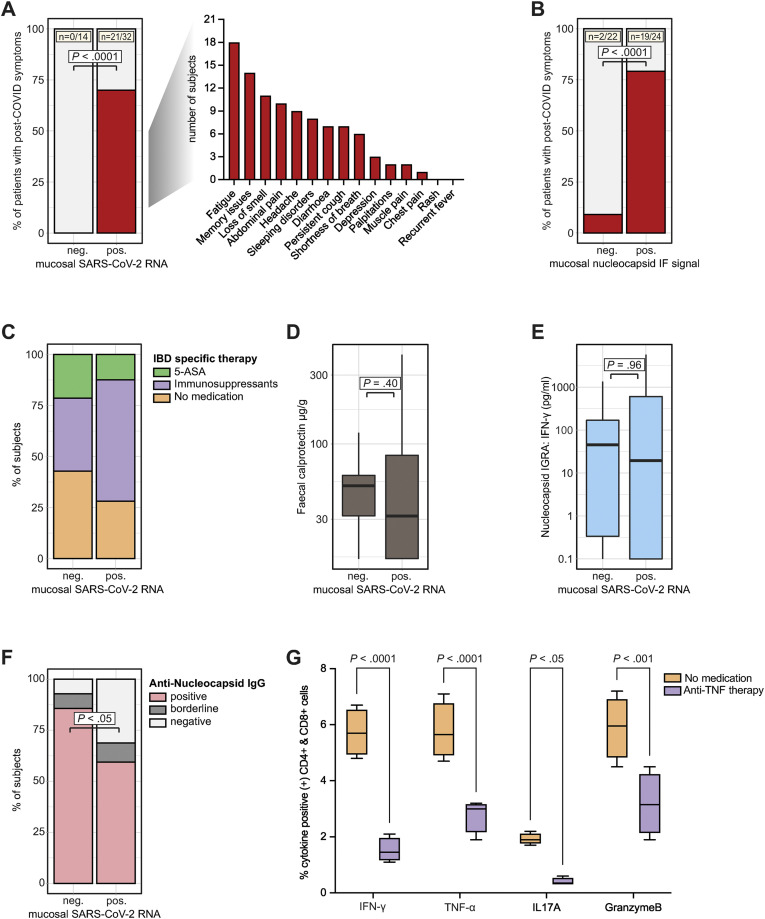
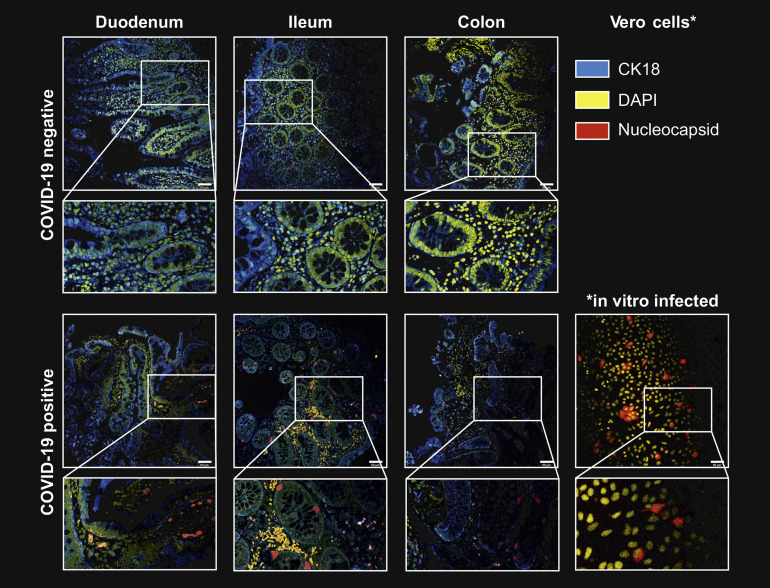
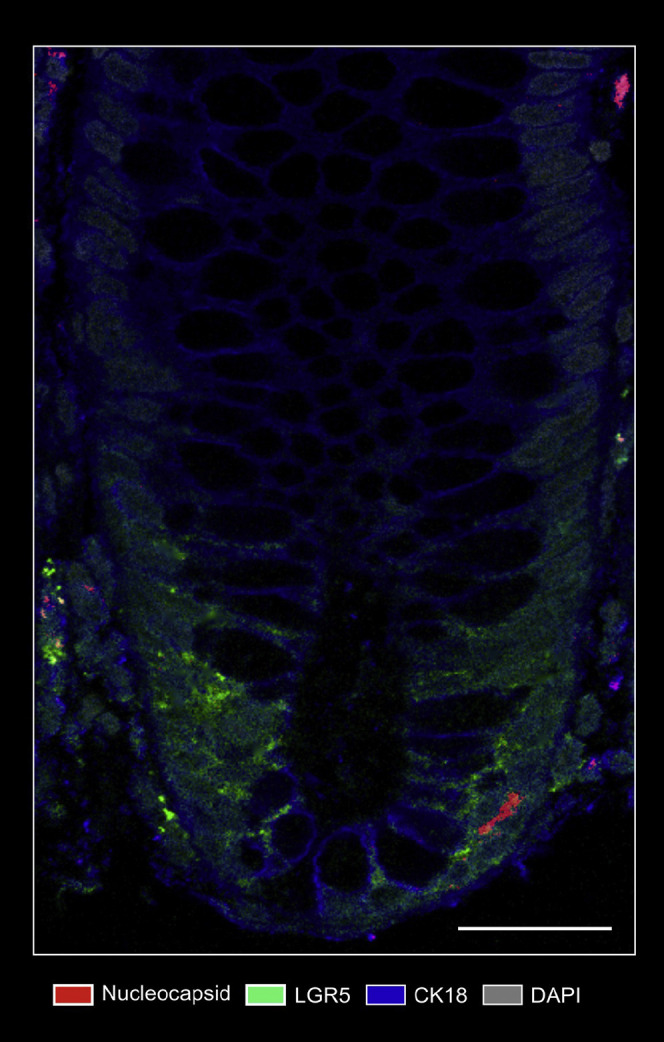
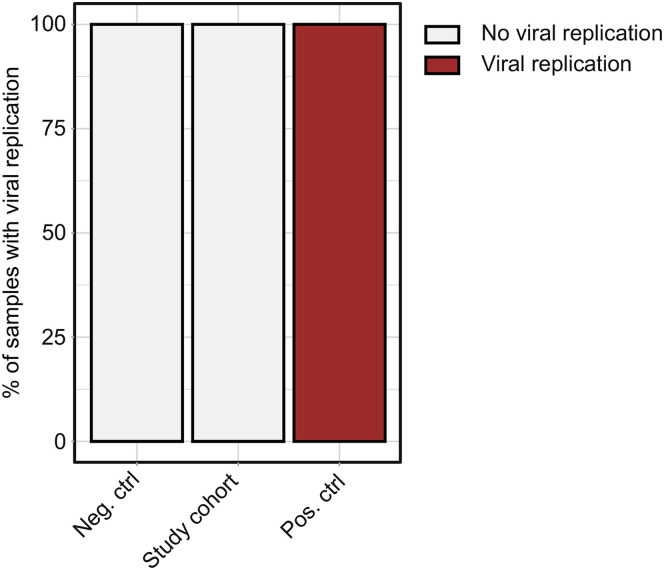
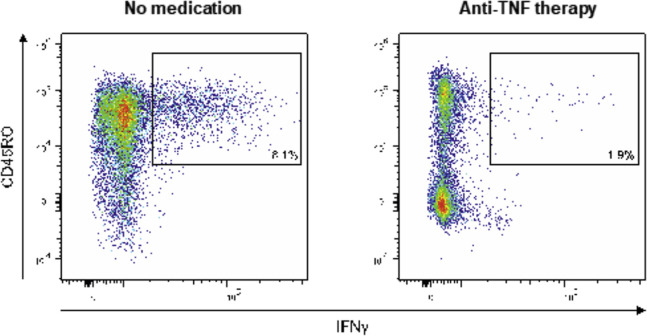
We performed an endoscopy study with 46 patients with inflammatory bowel disease (IBD) 219 days (range, 94-257) after a confirmed COVID-19 infection. SARS-CoV-2 antigen persistence was assessed in the small and large intestine using quantitative polymerase chain reaction of 4 viral transcripts, immunofluorescence of viral nucleocapsid, and virus cultivation from biopsy tissue. Postacute COVID-19 was assessed using a standardized questionnaire, and a systemic SARS-CoV-2 immune response was evaluated using flow cytometry and enzyme-linked immunosorbent assay at endoscopy. IBD activity was evaluated using clinical, biochemical, and endoscopic means.
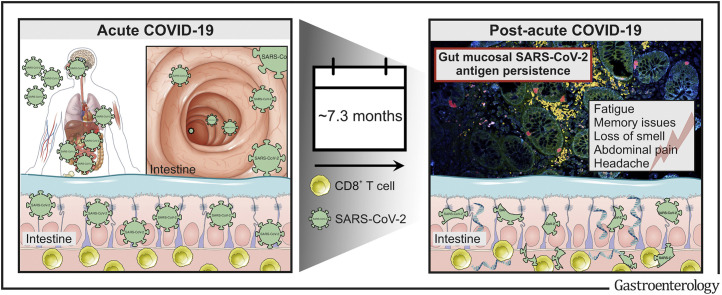
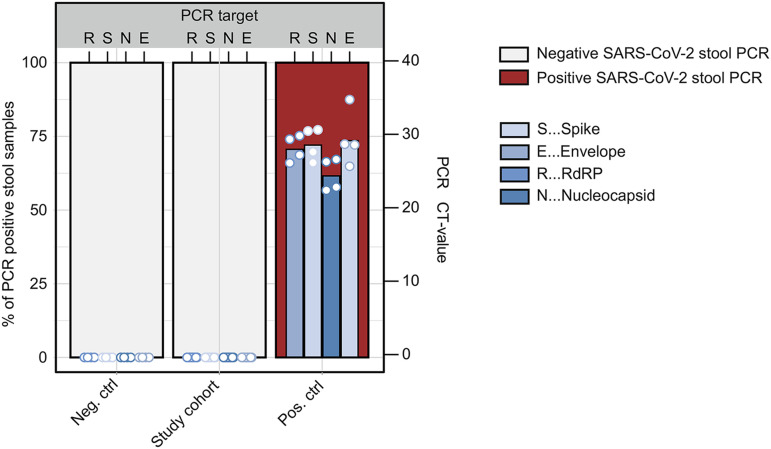
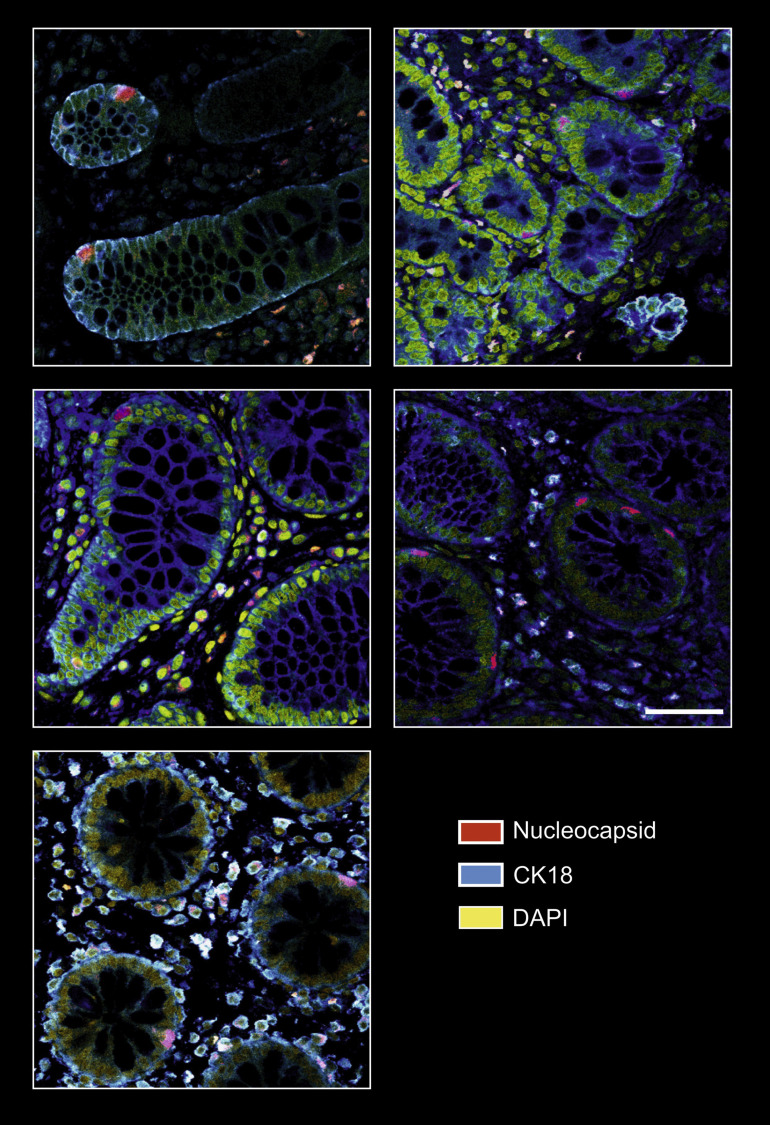
We report expression of SARS-CoV-2 RNA in the gut mucosa ∼7 months after mild acute COVID-19 in 32 of 46 patients with IBD. Viral nucleocapsid protein persisted in 24 of 46 patients in gut epithelium and CD8 T cells. Expression of SARS-CoV-2 antigens was not detectable in stool and viral antigen persistence was unrelated to severity of acute COVID-19, immunosuppressive therapy, and gut inflammation. We were unable to culture SARS-CoV-2 from gut tissue of patients with viral antigen persistence. Postacute sequelae of COVID-19 were reported from the majority of patients with viral antigen persistence, but not from patients without viral antigen persistence.
Our results indicate that SARS-CoV-2 antigen persistence in infected tissues serves as a basis for postacute COVID-19. The concept that viral antigen persistence instigates immune perturbation and postacute COVID-19 requires validation in controlled clinical trials.
新型冠状病毒病 2019(COVID-19)大流行已经持续了两年多,影响了人群、社会和生活。COVID-19 的长期后遗症,统称为急性后 COVID-19 综合征,正在全球范围内迅速出现。在这里,我们研究了严重急性呼吸综合征冠状病毒 2(SARS-CoV-2)抗原持续存在是否是急性后 COVID-19 综合征的基础。
我们对 46 例炎症性肠病(IBD)患者进行了内镜研究,这些患者在确诊 COVID-19 感染后 219 天(范围 94-257 天)。使用 4 种病毒转录物的定量聚合酶链反应、病毒核衣壳的免疫荧光和活检组织的病毒培养,评估小肠和大肠中的 SARS-CoV-2 抗原持续存在。使用标准化问卷评估急性后 COVID-19,使用流式细胞术和酶联免疫吸附试验在内镜下评估全身性 SARS-CoV-2 免疫反应。使用临床、生化和内镜手段评估 IBD 活动。
我们报告了 32 例 IBD 患者在轻度急性 COVID-19 后约 7 个月在肠道黏膜中表达 SARS-CoV-2 RNA。在 46 例患者中的 24 例中,病毒核衣壳蛋白持续存在于肠道上皮和 CD8 T 细胞中。在粪便中未检测到 SARS-CoV-2 抗原,病毒抗原持续存在与急性 COVID-19 的严重程度、免疫抑制治疗和肠道炎症无关。我们未能从有病毒抗原持续存在的患者的肠道组织中培养 SARS-CoV-2。有病毒抗原持续存在的患者大多数报告了急性后 COVID-19 的后遗症,但没有病毒抗原持续存在的患者没有报告。
我们的结果表明,感染组织中的 SARS-CoV-2 抗原持续存在是急性后 COVID-19 的基础。需要在对照临床试验中验证病毒抗原持续存在引发免疫扰动和急性后 COVID-19 的概念。