Department of Physical Geography, Eötvös Loránd University, Pázmány Péter sétány 1/C, Budapest, 1117, Hungary.
Department of Sanitary and Environmental Engineering, Budapest University of Technology and Economics, Műegyetem rkp. 3, Budapest, 1111, Hungary.
Sci Rep. 2022 May 5;12(1):7374. doi: 10.1038/s41598-022-10670-6.
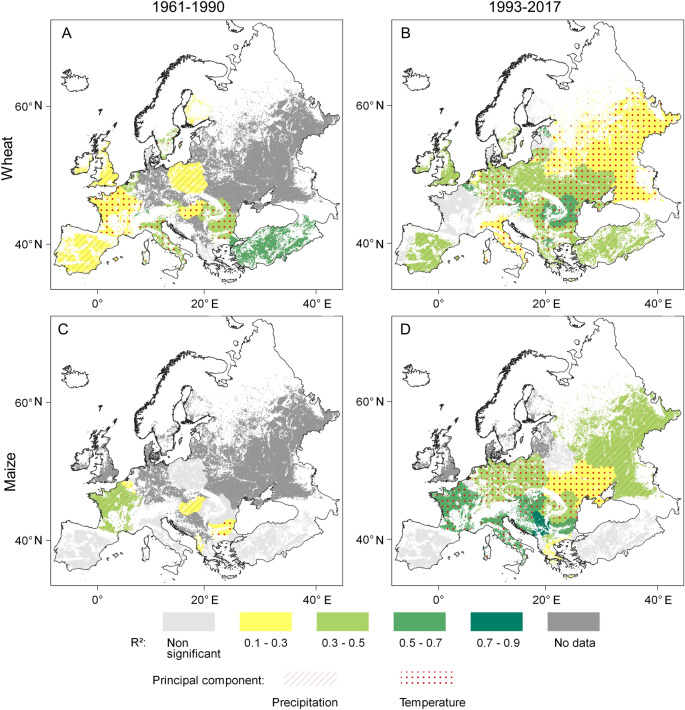
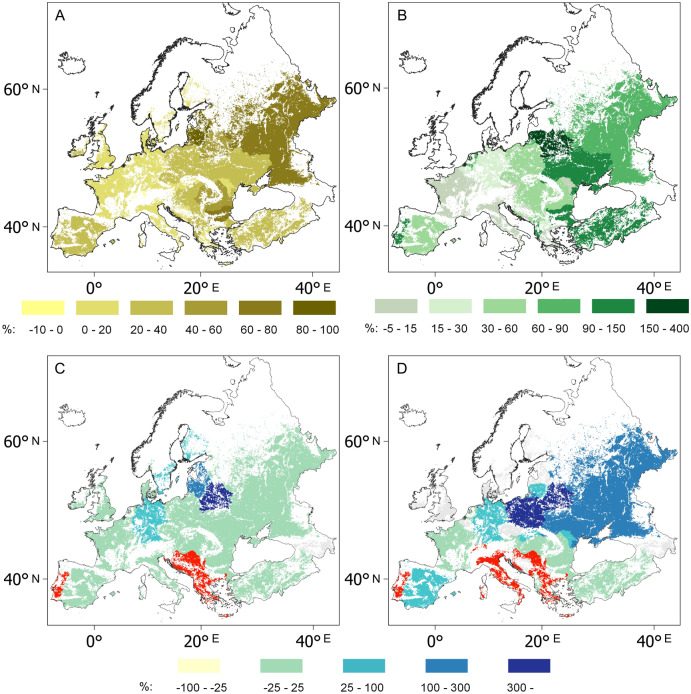
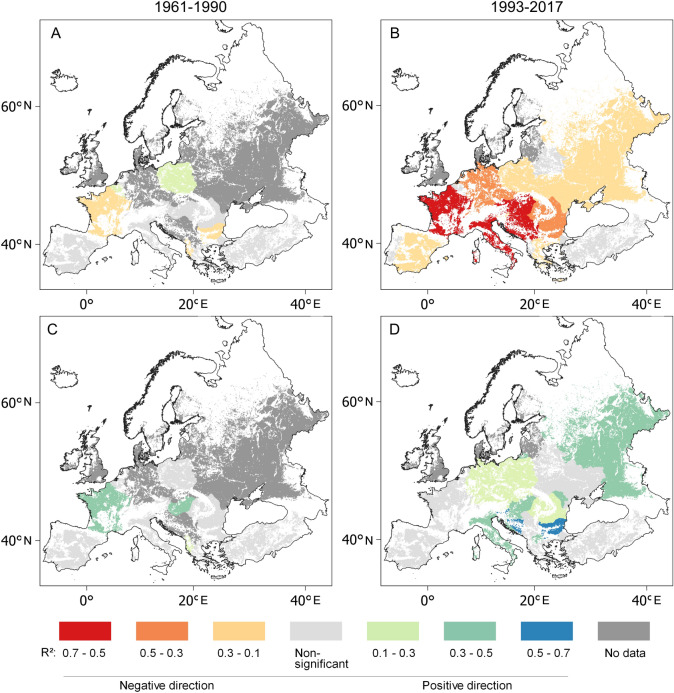
Charting the long-term trends in European wheat and maize yields and harvested areas and the relation of yields to climatic and economic drivers, two profound spatial processes become apparent. One consequence of the relatively late modernization of Eastern Europe has been to shift the focus of grain production from West to East. The warming trend prevailing over the past decades in the summer and winter seasons has been accompanied by a South to North shift in the harvested areas. The combination of these two processes has meant that the north-eastern sector of the European grain chessboard has emerged as the main beneficiary. There, the relatively low sensitivity of cereals to climatic change plus high economic growth rates have been accompanied by the most dynamic increases in cereal yields on the continent. As a result, a modern version of the 3000 year-old grain distribution system of the Ancient World is being restored before our eyes. One noteworthy finding is that increasing January-March temperatures have had a significant positive impact on wheat yields from Northern to South-Eastern Europe, and this is, at least in part, compensating for the negative impact of summer warming.
绘制欧洲小麦和玉米的长期产量和收获面积趋势图,并研究产量与气候和经济驱动因素的关系,可以明显看出两个深层次的空间过程。东欧相对较晚实现现代化的一个后果是,谷物生产的重点从西方向东方转移。过去几十年,夏季和冬季的变暖趋势伴随着收获面积从南向北的转移。这两个过程的结合意味着,欧洲谷物棋盘的东北部分成为了主要受益者。在那里,谷物对气候变化的相对较低敏感性加上高经济增长率,伴随着欧洲大陆谷物产量最具活力的增长。因此,一个具有现代版本的 3000 年前古老世界的谷物分配系统正在我们眼前恢复。一个值得注意的发现是,1 月至 3 月的气温升高对从北欧到东南欧的小麦产量产生了显著的积极影响,这至少在一定程度上弥补了夏季变暖的负面影响。