Lin Lin, Wang Yanfang, Wang Ling, Pan Jianying, Xu Yichao, Li Shiyu, Huang Da, Chen Jiali, Liang Zilu, Yin Panjing, Li Yanbin, Zhang Hongwu, Wu Yaobin, Zeng Chun, Huang Wenhua
Guangdong Engineering Research Center for Translation of Medical 3D Printing Application, Guangdong Provincial Key Laboratory of Medical Biomechanics, Department of Human Anatomy, School of Basic Medical Sciences, Southern Medical University Guangzhou China
Department of Joint Surgery, The Third Affiliated Hospital, Southern Medical University Guangzhou 510630 PR China
RSC Adv. 2020 Oct 29;10(65):39662-39672. doi: 10.1039/d0ra07318k. eCollection 2020 Oct 27.
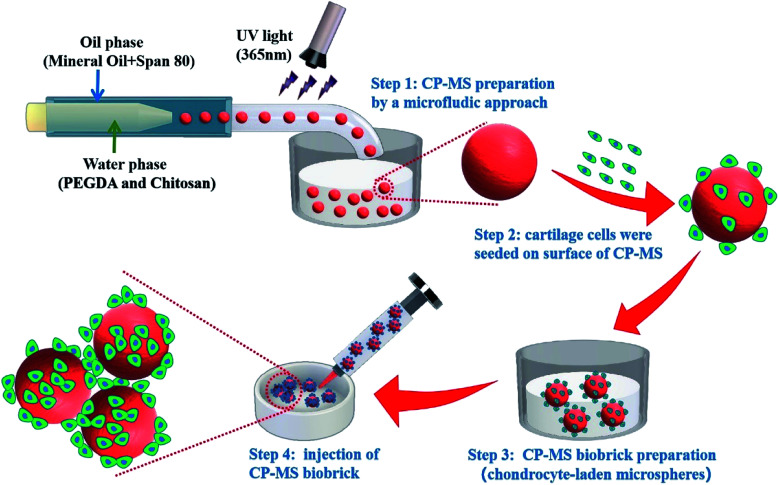
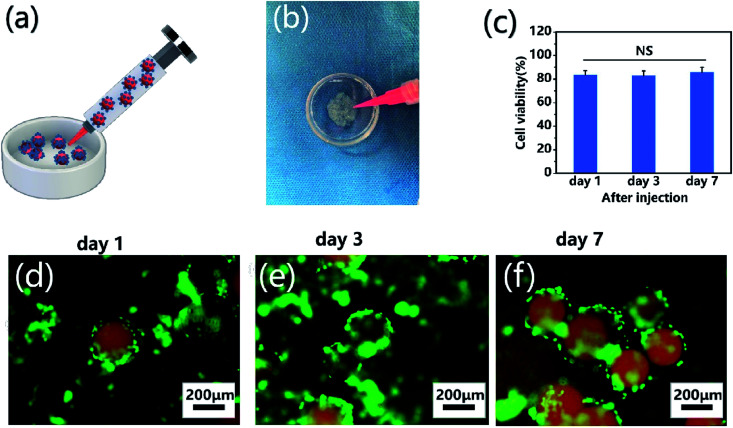
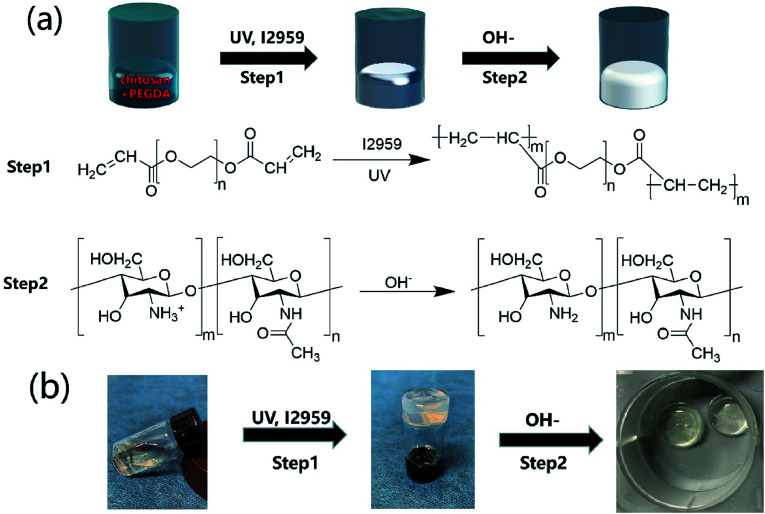
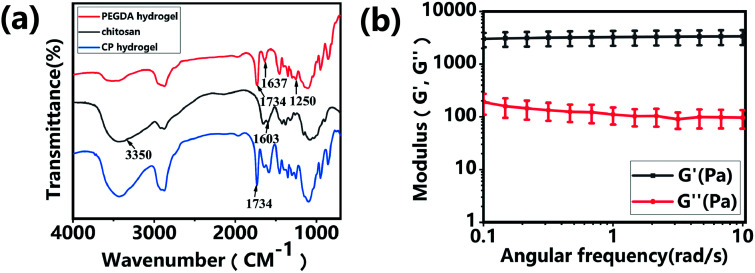
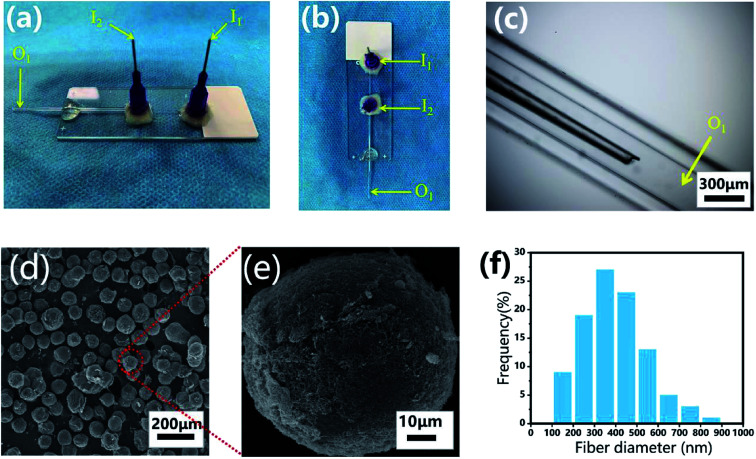
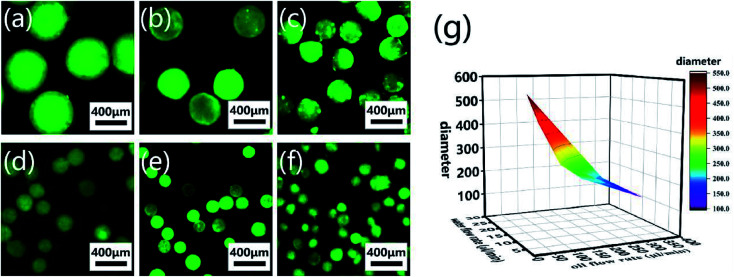
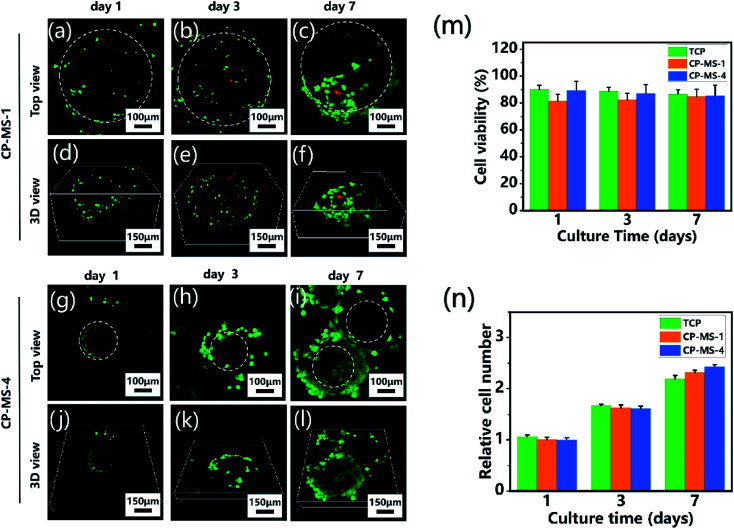
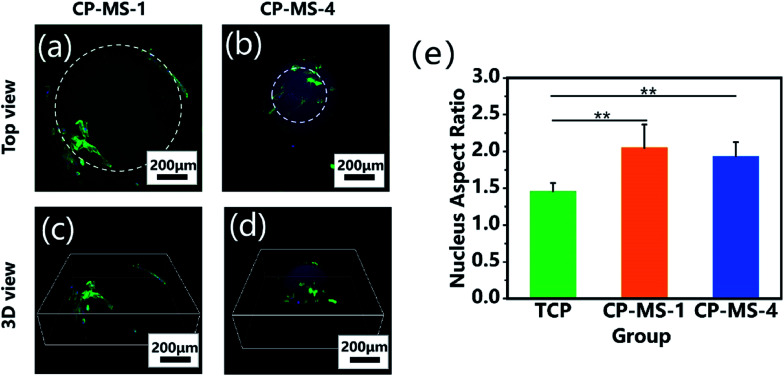
Direct injection of chondrocytes in a minimally invasive way has been regarded as the significantly potential treatment for cartilage repair due to their ability to fill various irregular chondral defects. However, the low cell retention and survival after injection still limited their application in clinical transformation. Herein, we present chondrocyte-laden microspheres as cell carriers based on a double-network hydrogel by the combination of the chitosan and poly(ethylene glycol) diacrylate (PEGDA). The microfluidic technique was applied to prepare size-controllable chitosan/PEGDA hydrogel microspheres (CP-MSs) the water-in-oil approach after photo-crosslinking and physical-crosslinking. The chondrocytes were laden on CP-MSs, which showed good cell viability and proliferation after long-term cell cultivation. The investigation further demonstrated that chondrocyte-laden CP-MSs were injectable and the cell viability was still high after injection. In particular, these cell-laden microspheres were self-assembled into a 3D cartilage-like scaffold by a bottom-up strategy based on cell-cell interconnectivity, which suggested that these injectable chondrocyte-laden microspheres showed potential applications as chondrocyte carriers for bottom-to-up cartilage tissue engineering.
以微创方式直接注射软骨细胞,因其能够填充各种不规则软骨缺损,被视为软骨修复极具潜力的治疗方法。然而,注射后细胞保留率和存活率较低,这仍然限制了它们在临床转化中的应用。在此,我们通过壳聚糖和聚(乙二醇)二丙烯酸酯(PEGDA)的组合,提出了基于双网络水凝胶的载软骨细胞微球作为细胞载体。应用微流控技术,通过光交联和物理交联后的油包水方法制备尺寸可控的壳聚糖/PEGDA水凝胶微球(CP-MSs)。将软骨细胞负载在CP-MSs上,经过长期细胞培养后,其显示出良好的细胞活力和增殖能力。进一步研究表明,载软骨细胞的CP-MSs可注射,注射后细胞活力仍然很高。特别是,这些载细胞微球通过基于细胞间相互连接的自下而上策略自组装成三维软骨样支架,这表明这些可注射的载软骨细胞微球作为自下而上软骨组织工程的软骨细胞载体具有潜在应用价值。