Ma He, Lai Bingjie, Jin Yufen, Tian Chang, Liu Jiaying, Wang Ke
Department of Respiratory Medicine, The Second Hospital of Jilin University Changchun China
Department of Anesthesiology, The Second Hospital of Jilin University Changchun China.
RSC Adv. 2020 Jul 17;10(45):26862-26873. doi: 10.1039/d0ra04250a. eCollection 2020 Jul 15.
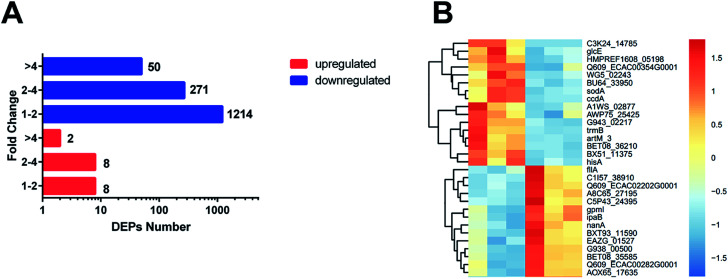
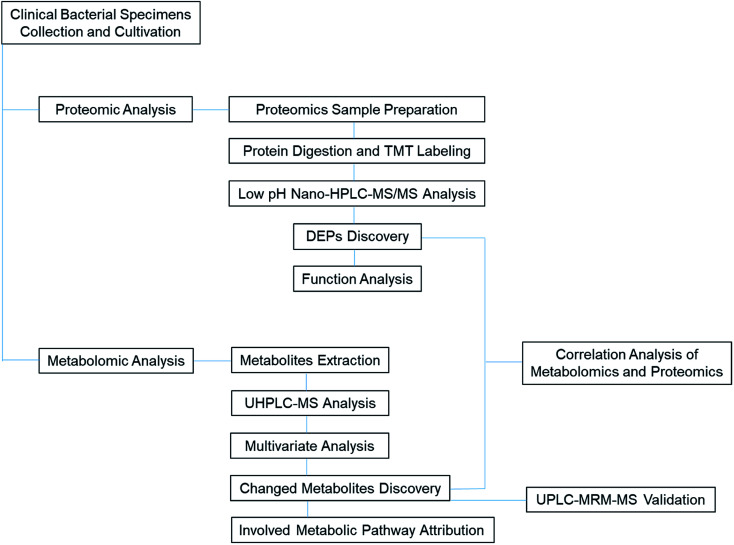
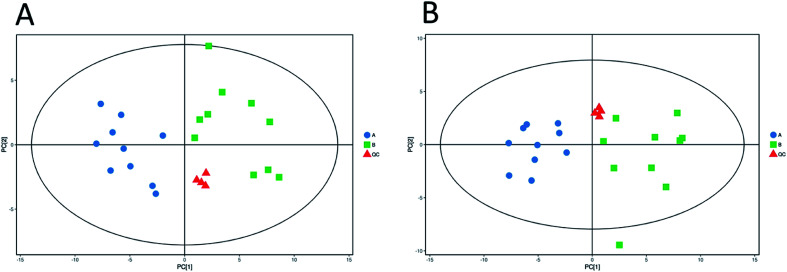
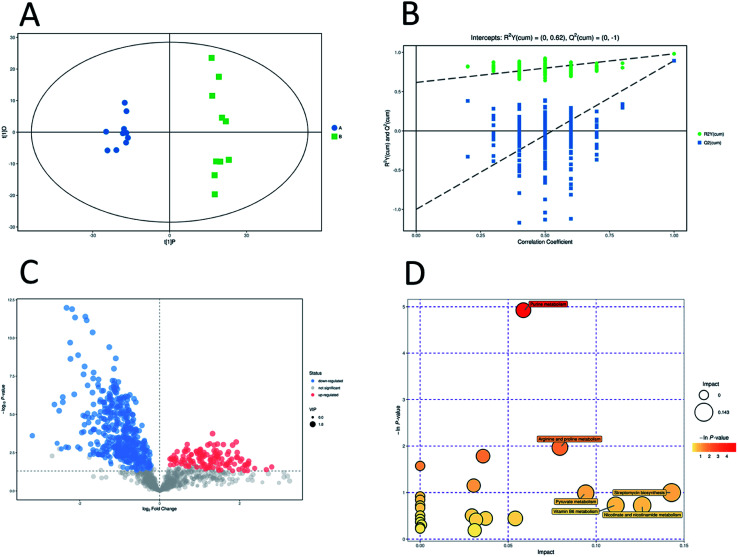
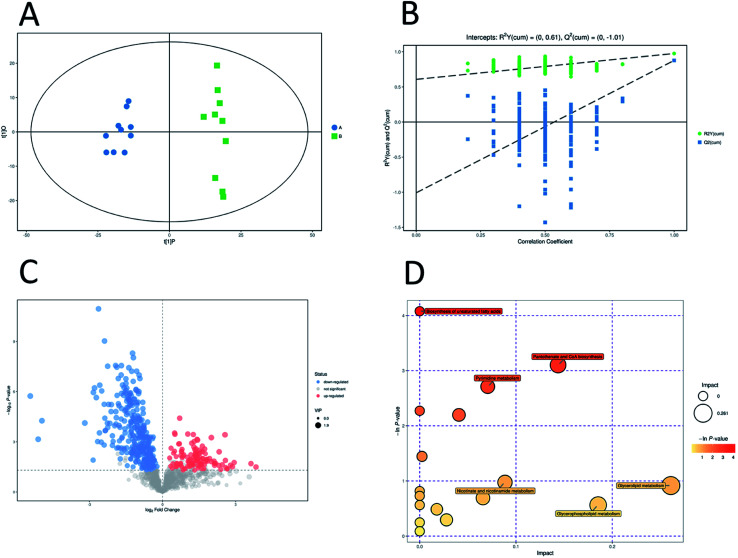
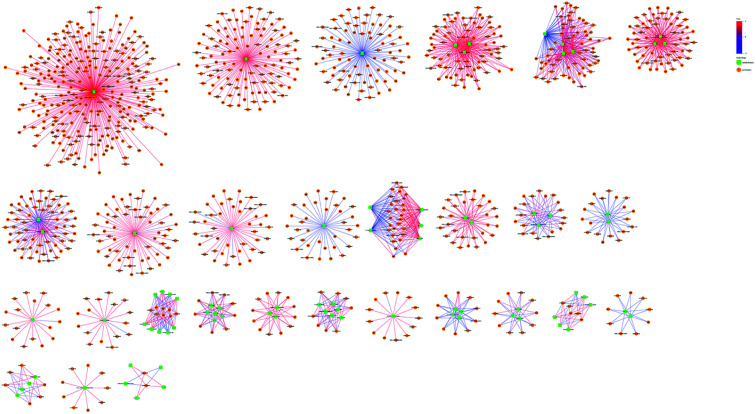
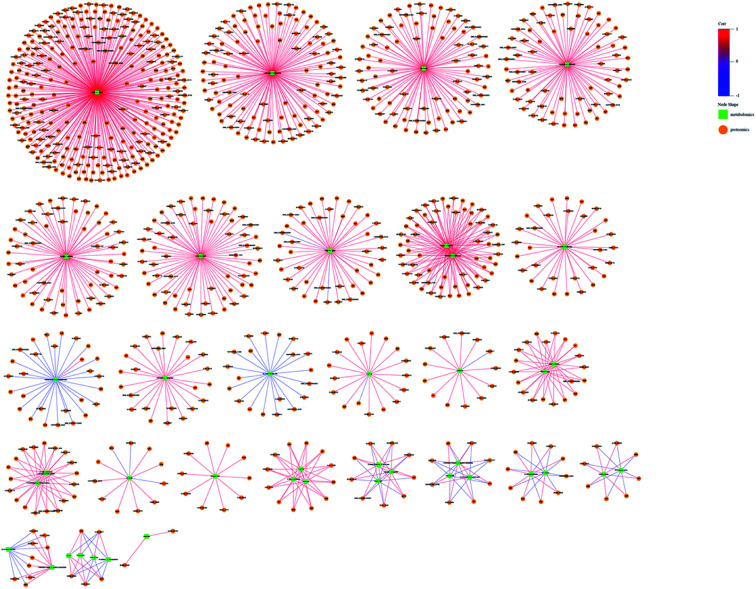
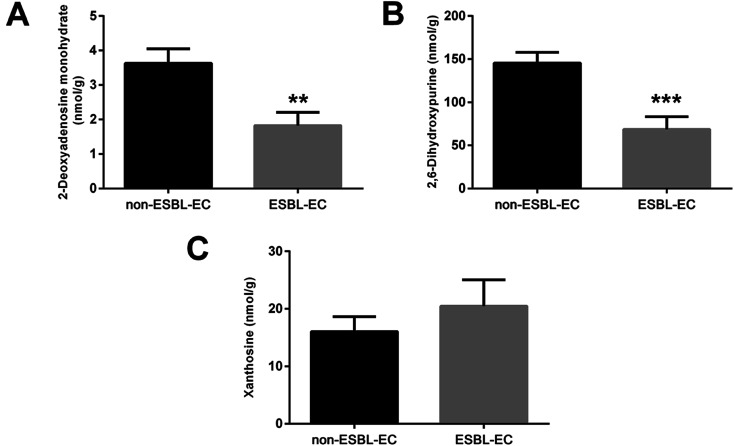
In this study, ten clinical susceptible strains and ten clinical ESBL-EC (extended-spectrum β-lactamase-producing ) were screened and obtained by microbial identification using ITEK® 2 Compact. TMT (Tandem Mass Tag) proteomics analysis discovered 1553 DEPs (differentially expressed proteins) between ESBL-EC and non-ESBL-EC. In addition, an untargeted metabolomics assay by using UHPLC-MS (ultra-high-performance liquid chromatography-mass spectrometry) was applied to compare the differential profiles of metabolites between β-lactam antibiotic-sensitive and multidrug-resistant ESBL-producing strains. The PCA (principal component analysis) score plots and OPLS-DA (orthogonal projections to latent structures discriminant analysis) plots clearly discriminated ESBL-EC and non-ESBL-EC, and volcano analysis presented 606 and 459 altered metabolites between ESBL-EC non-ESBL-EC in positive and negative ion modes, respectively. Interestingly, the bioinformatics analysis demonstrated that the purine metabolism pathway was enriched in ESBL-EC. These results suggest that the existence of extended-spectrum β-lactamase affects the metabolite and protein profiles of . The correlation analysis of metabolomics and proteomics data established a correlation between DEPs and differential metabolites in the purine metabolism pathway. Moreover, three metabolite candidates in the purine metabolism pathway were validated by the UPLC-MRM-MS (ultra-performance liquid chromatography multiple reaction monitoring mass spectrometry) method. Our data suggest that these DEPs and differential metabolites may play important roles in the antibiotic resistance of ESBL-EC. Our study can provide scientific data for the mechanism study of antibiotic resistance of ESBL-EC at the metabolite and protein levels and targeting modulators to these pathways may be effective for treatment of ESBL-EC strains.
在本研究中,使用ITEK® 2 Compact微生物鉴定仪筛选并获得了10株临床敏感菌株和10株临床产超广谱β-内酰胺酶大肠埃希菌(ESBL-EC)。串联质谱标签(TMT)蛋白质组学分析发现ESBL-EC和非ESBL-EC之间有1553个差异表达蛋白(DEP)。此外,采用超高效液相色谱-质谱联用(UHPLC-MS)的非靶向代谢组学分析方法,比较了β-内酰胺类抗生素敏感和产超广谱β-内酰胺酶多重耐药菌株之间的代谢物差异谱。主成分分析(PCA)得分图和正交投影到潜在结构判别分析(OPLS-DA)图清晰地区分了ESBL-EC和非ESBL-EC,火山分析分别在正离子和负离子模式下呈现出ESBL-EC与非ESBL-EC之间606个和459个改变的代谢物。有趣的是,生物信息学分析表明嘌呤代谢途径在ESBL-EC中富集。这些结果表明超广谱β-内酰胺酶的存在会影响大肠埃希菌的代谢物和蛋白质谱。代谢组学和蛋白质组学数据的相关性分析建立了嘌呤代谢途径中DEP与差异代谢物之间的相关性。此外,通过超高效液相色谱-多反应监测质谱(UPLC-MRM-MS)方法验证了嘌呤代谢途径中的三种代谢物候选物。我们的数据表明,这些DEP和差异代谢物可能在ESBL-EC的抗生素耐药性中发挥重要作用。我们的研究可以为ESBL-EC抗生素耐药机制在代谢物和蛋白质水平的研究提供科学数据,针对这些途径的调节剂可能对ESBL-EC菌株的治疗有效。