
差距是什么?推进理论的一种可能策略,以及呼吁提供实验结构数据以推动这一进展。
What's the gap? A possible strategy for advancing theory, and an appeal for experimental structure data to drive that advance.
作者信息
Sohlberg Karl, Foster Michael E
机构信息
Department of Chemistry, Drexel University Philadelphia PA 19104 USA
Department of Materials Science & Engineering, Drexel University Philadelphia PA 19104 USA.
出版信息
RSC Adv. 2020 Oct 6;10(60):36887-36896. doi: 10.1039/d0ra07496a. eCollection 2020 Oct 1.
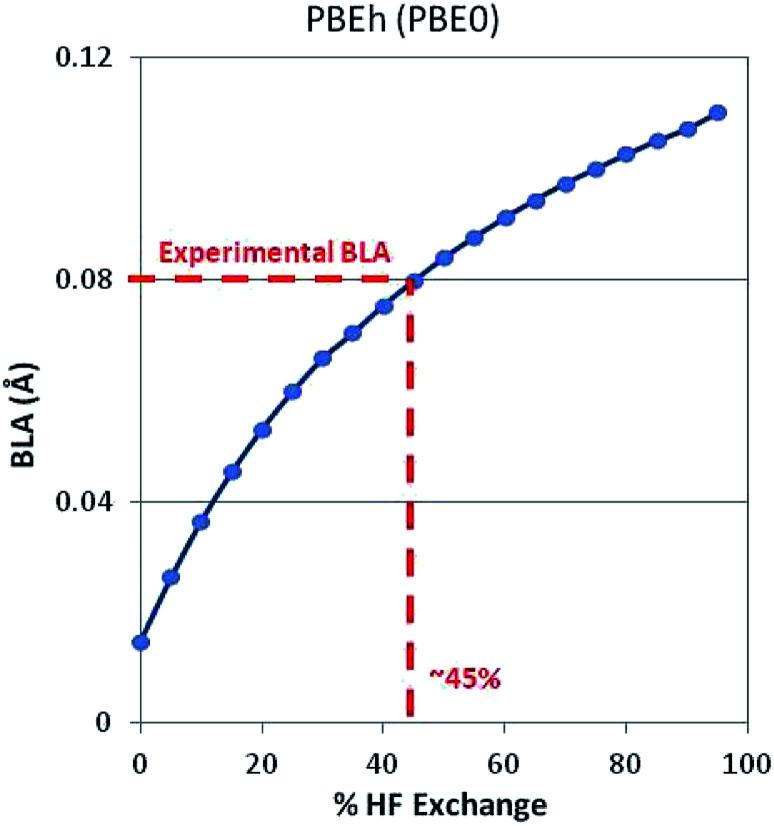
There is substantial demand for theoretical/computational tools that can produce correct predictions of the geometric structure and band gap to accelerate the design and screening of new materials with desirable electronic properties. DFT-based methods exist that reliably predict electronic structure given the correct geometry. Similarly, when good spectroscopic data are available, these same methods may, in principle, be used as input to the inverse problem of generating a good structural model. The same is generally true for gas-phase systems, for which the choice of method is different, but factors that guide its selection are known. Despite these successes, there are shortcomings associated with DFT for the prediction of materials' electronic structure. The present paper offers a perspective on these shortcomings. Fundamentally, the shortcomings associated with DFT stem from a lack of knowledge of the exact functional form of the exchange-correlation functional. Inaccuracies therefore arise from using an approximate functional. These inaccuracies can be reduced by judicious selection of the approximate functional. Other apparent shortcomings present due to misuse or improper application of the method. One of the most significant difficulties is the lack of a robust method for predicting electronic and geometric structure when only qualitative (connectivity) information is available about the system/material. Herein, some actual shortcomings of DFT are distinguished from merely common improper applications of the method. The role of the exchange functional in the predicted relationship between geometric structure and band gap is then explored, using fullerene, 2D polymorphs of elemental phosphorus and polyacetylene as case studies. The results suggest a potentially fruitful avenue of investigation by which some of the true shortcomings might be overcome, and serve as the basis for an appeal for high-accuracy experimental structure data to drive advances in theory.
对于能够准确预测几何结构和带隙以加速具有理想电子特性的新材料设计与筛选的理论/计算工具,存在着大量需求。基于密度泛函理论(DFT)的方法可以在给定正确几何结构的情况下可靠地预测电子结构。同样,当有良好的光谱数据时,原则上这些相同的方法可作为生成良好结构模型的反问题的输入。对于气相系统也是如此,虽然方法选择不同,但指导其选择的因素是已知的。尽管取得了这些成功,但DFT在预测材料电子结构方面仍存在缺点。本文对这些缺点进行了探讨。从根本上说,与DFT相关的缺点源于对交换关联泛函的确切函数形式缺乏了解。因此,使用近似泛函会产生不准确之处。通过明智地选择近似泛函可以减少这些不准确之处。其他明显的缺点是由于方法的误用或不当应用造成的。最显著的困难之一是当仅获得关于系统/材料的定性(连接性)信息时,缺乏一种可靠的方法来预测电子和几何结构。在此,区分了DFT的一些实际缺点与该方法仅仅常见的不当应用。然后以富勒烯、元素磷的二维多晶型物和聚乙炔为案例研究,探讨了交换泛函在预测几何结构与带隙之间关系中的作用。结果表明了一条潜在富有成效的研究途径,通过该途径一些真正的缺点可能被克服,并为呼吁提供高精度实验结构数据以推动理论进步奠定基础。



 Zotero 插件