Li Shirui, Gao Zhihui, Zhong Meihan, Yu Zhujun, Li Jianan, Bi Haoran
Department of Biostatistics, Xuzhou Medical University, Xuzhou, People's Republic of China.
Key Laboratory of Environment and Health, Xuzhou Medical University, Xuzhou, People's Republic of China.
Risk Manag Healthc Policy. 2022 Apr 29;15:845-864. doi: 10.2147/RMHP.S360274. eCollection 2022.
The emergence of the mutant virus has exacerbated the COVID-19 epidemic, and vaccines remain an effective and viable means of resistance. As a socially influential young group, university students' awareness and acceptance of the COVID-19 vaccine are crucial to achieving herd immunity. This study aimed to assess the awareness and acceptance of the COVID-19 vaccine among Chinese university students and identify possible factors associated with their awareness level and vaccine hesitancy.
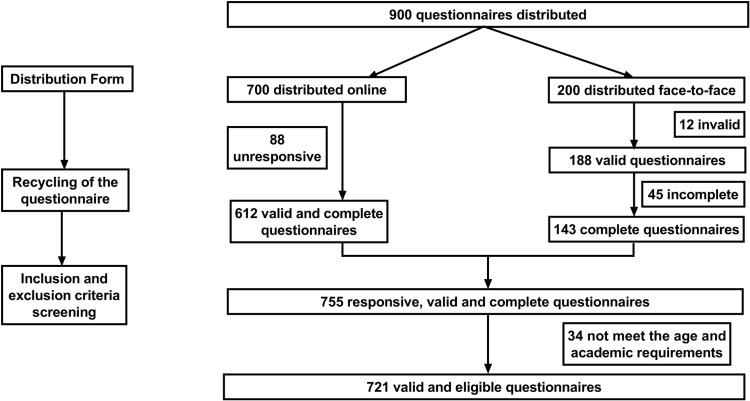
An anonymous cross-sectional survey was conducted among Chinese university students between 10 and 28 June 2021. We collected information on the demographic characteristics, awareness and acceptance of the COVID-19 vaccine, and influencing factors. Sleep disturbances and anxiety disorders were also evaluated. Multinomial logistic regression analyses were performed.
Among the 721 participants (aged 18 to 23 years) with a female predominance (68.9%), 40.4% of cases exhibited moderate awareness the COVID-19 vaccine, and 87.4% of cases expressed high acceptance of the vaccine. Participants' awareness of the COVID-19 vaccine was associated with gender, ethnicity, region of residence, grade level, satisfaction with current state of pandemic control, the perceived likelihood of a COVID-19 pandemic rebound, the source number of COVID-19 information, concerns about differences in vaccine manufacturers, acceptance of current state-approved vaccines and insomnia level. Furthermore, age, preferred channels for vaccination and the acceptance of current state-approved vaccines were significantly associated with their acceptance of the vaccine.
This study reflected Chinese university students' high acceptance, but insufficient awareness of the COVID-19 vaccine, some students have insomnia and anxiety problems. These require the government to take measures such as individualized publicity and education, adding professional psychological counseling courses to improve the university students' awareness of vaccines and public health events, and comprehensively promote vaccination to cope with the ever-changing situation of the COVID-19 epidemic.
变异病毒的出现加剧了新冠疫情,疫苗仍是有效的抵抗手段。作为具有社会影响力的青年群体,大学生对新冠疫苗的认知和接受程度对于实现群体免疫至关重要。本研究旨在评估中国大学生对新冠疫苗的认知和接受程度,并确定与其认知水平和疫苗犹豫相关的可能因素。
于2021年6月10日至28日对中国大学生进行了一项匿名横断面调查。我们收集了人口统计学特征、对新冠疫苗的认知和接受程度以及影响因素等信息。还评估了睡眠障碍和焦虑症。进行了多项逻辑回归分析。
在721名参与者(年龄18至23岁,女性占68.9%)中,40.4%的人对新冠疫苗有中等程度的认知,87.4%的人对疫苗表示高度接受。参与者对新冠疫苗的认知与性别、民族、居住地区、年级、对当前疫情防控状况的满意度、对新冠疫情反弹可能性的感知、新冠信息来源数量、对疫苗制造商差异的担忧、对当前国家批准疫苗的接受程度以及失眠程度有关。此外,年龄、首选接种渠道和对当前国家批准疫苗的接受程度与他们对疫苗的接受程度显著相关。
本研究反映出中国大学生对新冠疫苗接受度高,但认知不足,部分学生存在失眠和焦虑问题。这些需要政府采取个性化宣传教育、增设专业心理咨询课程等措施,以提高大学生对疫苗及公共卫生事件的认知,全面推动疫苗接种,应对新冠疫情不断变化的形势。