Chi Xuewen, Liu Chao, Bi Yan-Hong, Yu Guang, Zhang Yuedong, Wang Zhaoyu, Li Bin, Cui Qiu
School of Life Science and Food Engineering, Huaiyin Institute of Technology Huai'an Jiangsu 223003 China
CAS Key Laboratory of Biofuels, CAS Key Laboratory of Bio-based Material, Dalian National Laboratory of Clean Energy, Qingdao Institute of Bioenergy and Bioprocess Technology, Chinese Academy of Sciences Qingdao Shandong 266101 China
RSC Adv. 2019 Apr 11;9(20):11558-11566. doi: 10.1039/c9ra01555h. eCollection 2019 Apr 9.
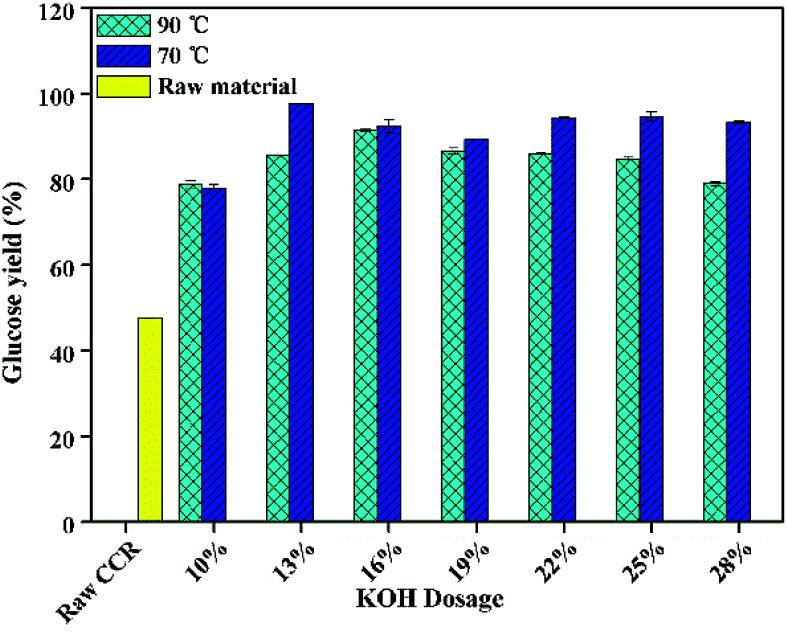
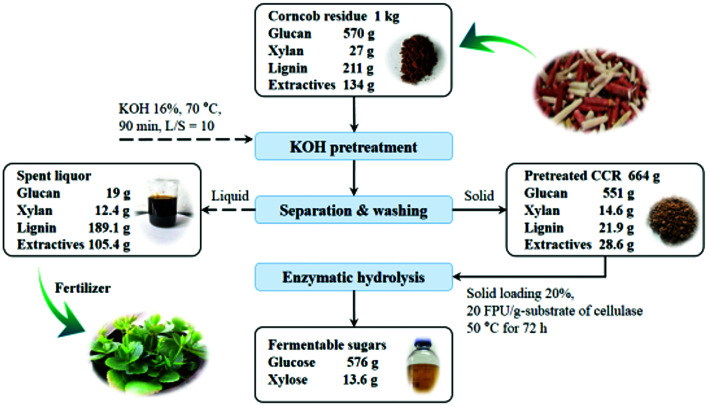
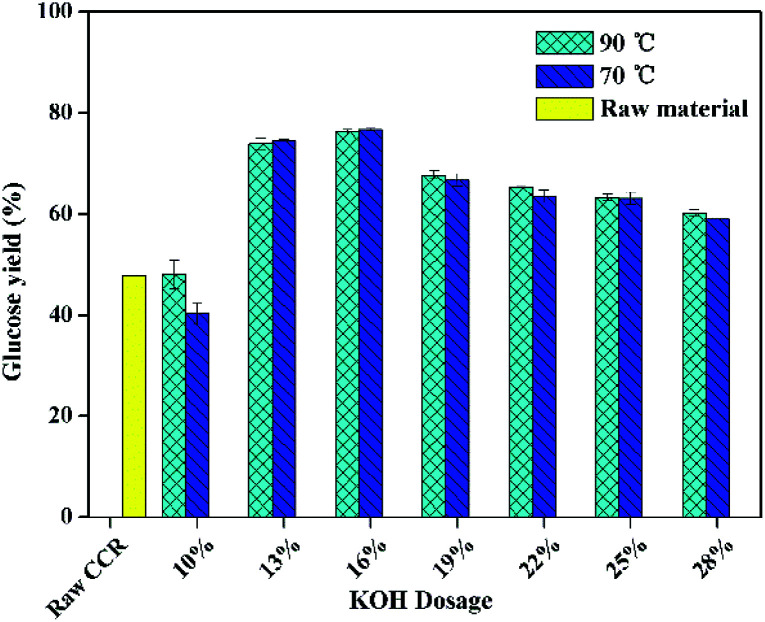
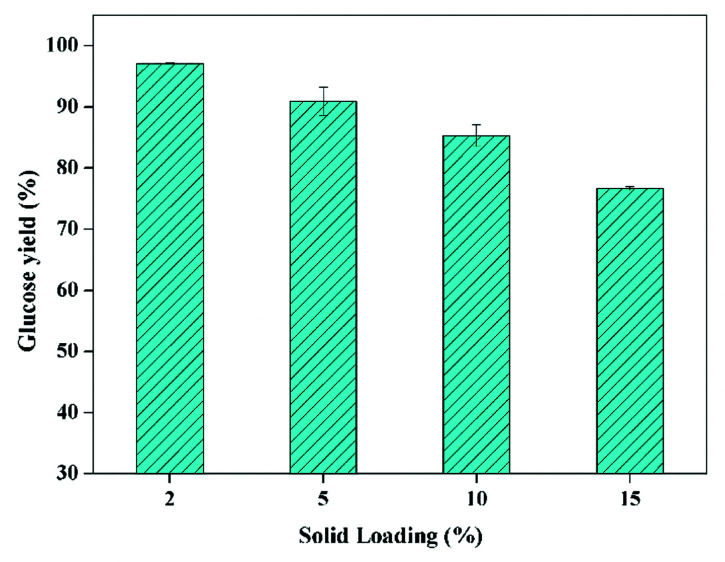
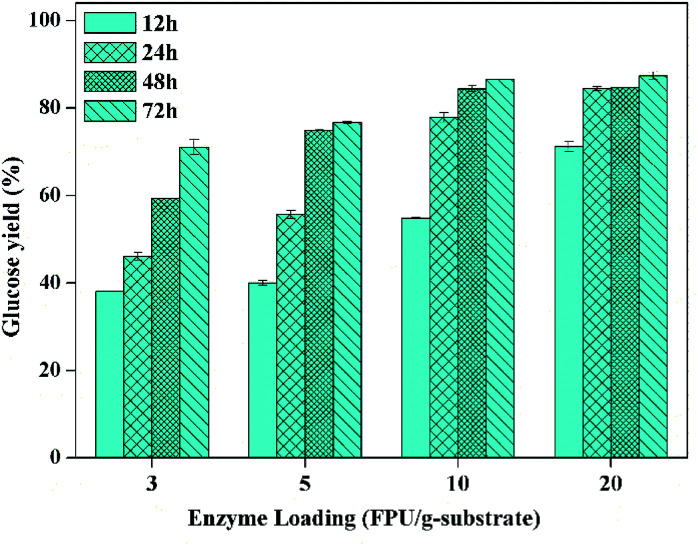
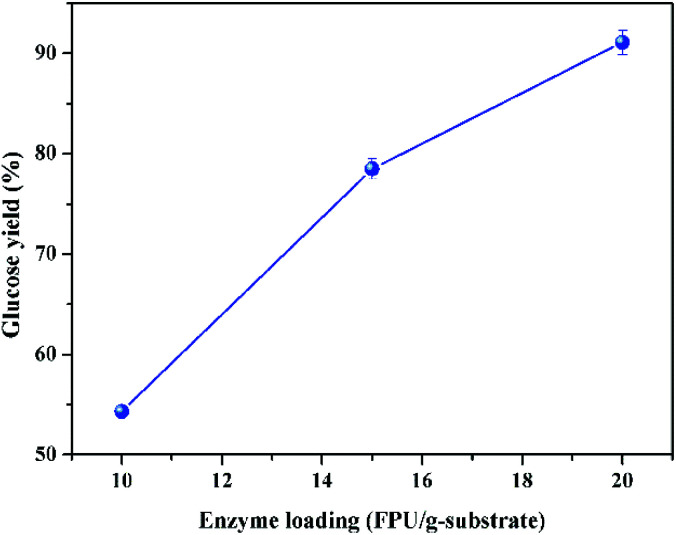
Corncob residue (CCR) is an economic feedstock with enormous potential for the production of bioethanol. In this work, potassium hydroxide (KOH) pretreatment of CCR was investigated under relatively mild conditions, and the effectiveness of KOH pretreatment was evaluated by enzymatic saccharification at high solid loading. Results showed that after KOH pretreatment (16 wt% KOH dosage at 70 °C for 90 min) and the enzymatic hydrolysis at 20% solids loading and 20 FPU g-substrate of cellulase loading, the glucose yield could reach up to about 91%, which was over 90% higher compared to the raw CCR without KOH pretreatment. Correspondingly, about 89% of lignin and 79% of extractives were removed after KOH pretreatment. In addition, the spent liquor of KOH pretreatment containing sylvite could be used as lignin-based fertilizer based on the concept of biorefinery. In this case, the entire process for the production of fermentable sugars was clean and sustainable, which is very vital for the conversion of lignocelluloses to bioenergy or chemicals.
玉米芯残渣(CCR)是一种具有巨大生物乙醇生产潜力的经济原料。在本研究中,考察了在相对温和条件下对CCR进行氢氧化钾(KOH)预处理,并通过高固含量下的酶解糖化来评估KOH预处理的效果。结果表明,经过KOH预处理(70℃下16 wt% KOH用量处理90分钟),并在20%固含量和20 FPU g底物纤维素酶用量下进行酶水解后,葡萄糖产率可达约91%,与未经KOH预处理的原始CCR相比提高了90%以上。相应地,KOH预处理后约89%的木质素和79%的提取物被去除。此外,基于生物炼制的概念,含有钾盐的KOH预处理废液可作为木质素基肥料使用。在这种情况下,生产可发酵糖的整个过程是清洁且可持续的,这对于将木质纤维素转化为生物能源或化学品至关重要。