Department of Health Sciences and Health Policy, University of Lucerne and Swiss Paraplegic Research, Frohburgstrasse 3, 6002, Lucerne, Switzerland.
Unit for High Impact Events Preparedness, Department of Epidemic and Pandemic Preparedness and Prevention, Emergency Preparedness Programme, World Health Organization, Ave Appia 21, 1202, Geneva, Switzerland.
Hum Resour Health. 2022 May 7;20(1):35. doi: 10.1186/s12960-022-00733-0.
In April 2020, the World Health Organization (WHO) Information Network for Epidemics produced an agenda for managing the COVID-19 infodemic. "Infodemic" refers to the overabundance of information-including mis- and disinformation. In this agenda it was pointed out the need to create a competency framework for infodemic management (IM). This framework was released by WHO on 20th September 2021. This paper presents the WHO framework for IM by highlighting the different investigative steps behind its development.
The framework was built through three steps. Step 1 included the preparatory work following the guidelines in the Guide to writing Competency Framework for WHO Academy courses. Step 2 was based on a qualitative study with participants (N = 25), identified worldwide on the basis of their academic background in relevant fields of IM or of their professional experience in IM activities at the institutional level. The interviews were conducted online between December 2020 and January 2021, they were video-recorded and analyzed using thematic analysis. In Step 3, two stakeholder panels were conducted to revise the framework.
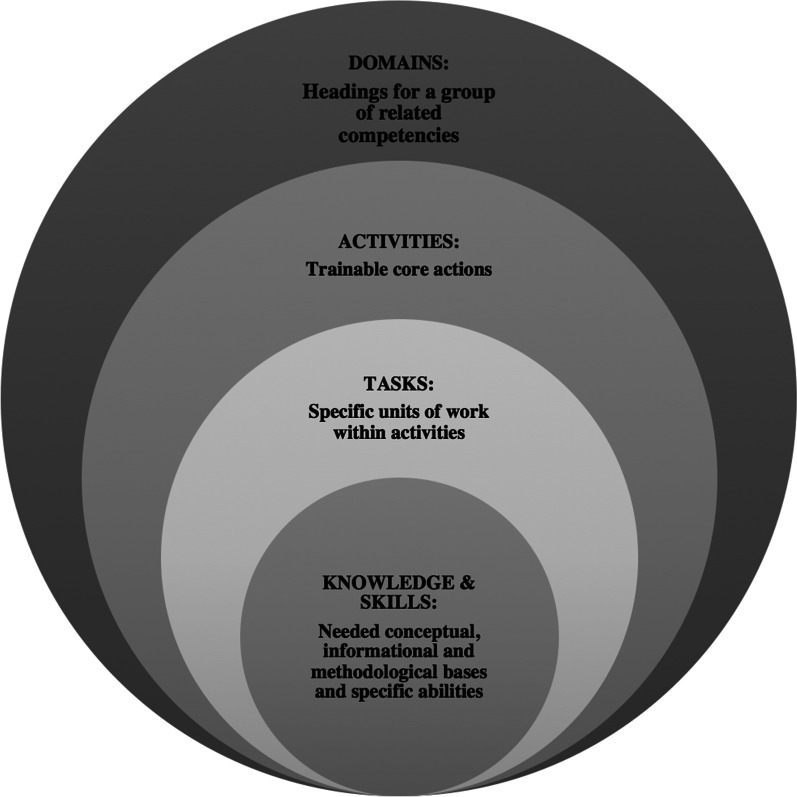
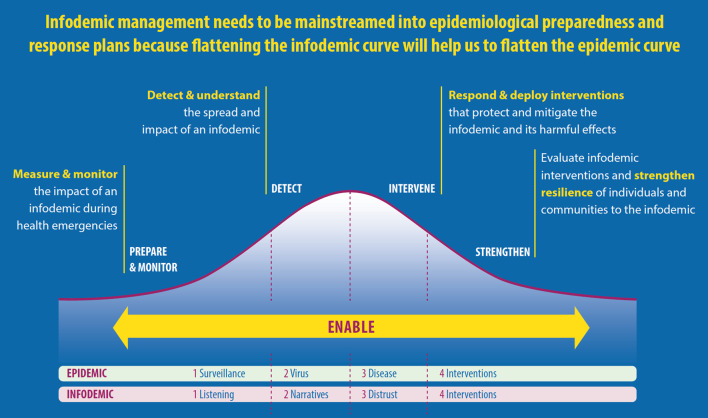
The competency framework contains four primary domains, each of which comprised main activities, related tasks, and knowledge and skills. It identifies competencies to manage and monitor infodemics, to design, conduct and evaluate appropriate interventions, as well as to strengthen health systems. Its main purpose is to assist institutions in reinforcing their IM capacities and implementing effective IM processes and actions according to their individual contexts and resources.
The competency framework is not intended to be a regulatory document nor a training curriculum. As a WHO initiative, it serves as a reference tool to be applied according to local priorities and needs within the different countries. This framework can assist institutions in strengthening IM capacity by hiring, staff development, and human resources planning.
2020 年 4 月,世界卫生组织(世卫组织)信息网络发布了一份应对 COVID-19 信息疫情的议程。“信息疫情”是指信息过多,包括错误和虚假信息。在该议程中,有人指出有必要为信息疫情管理(IM)制定能力框架。该框架于 2021 年 9 月 20 日由世卫组织发布。本文通过强调其发展背后的不同调查步骤,介绍世卫组织的 IM 能力框架。
该框架通过三个步骤构建。第 1 步是根据《世卫组织学院课程编写能力框架指南》中的准则进行筹备工作。第 2 步基于一项定性研究,研究对象(N=25)是根据他们在 IM 相关领域的学术背景或在机构层面开展 IM 活动的专业经验,在全球范围内确定的。访谈于 2020 年 12 月至 2021 年 1 月期间在线进行,视频记录并使用主题分析进行分析。第 3 步进行了两次利益攸关方小组讨论,以修订该框架。
能力框架包含四个主要领域,每个领域都包含主要活动、相关任务以及知识和技能。它确定了管理和监测信息疫情、设计、开展和评估适当干预措施以及加强卫生系统的能力。其主要目的是协助各机构根据其各自的情况和资源,加强其 IM 能力并实施有效的 IM 流程和行动。
该能力框架不是监管文件,也不是培训课程。作为世卫组织的一项倡议,它是一个参考工具,可根据各国的当地优先事项和需求进行应用。该框架可通过招聘、员工发展和人力资源规划来协助各机构加强 IM 能力。