Yang Yue, Chen Mei, Wu Yajiao, Wang Peng, Zhao Yan, Zhu Wenxiang, Song Zhiling, Zhang Xiao-Bing
State Key Laboratory of Chemo/Biosensing and Chemometrics, College of Chemistry and Chemical Engineering, College of Materials Science and Engineering, Hunan University Changsha 410082 PR China
Key Laboratory of Optic-electric Sensing and Analytical Chemistry for Life Science, MOE, College of Chemistry and Molecular Engineering, Qingdao University of Science and Technology Qingdao 266042 PR China.
RSC Adv. 2019 Sep 10;9(49):28541-28547. doi: 10.1039/c9ra04286e. eCollection 2019 Sep 9.
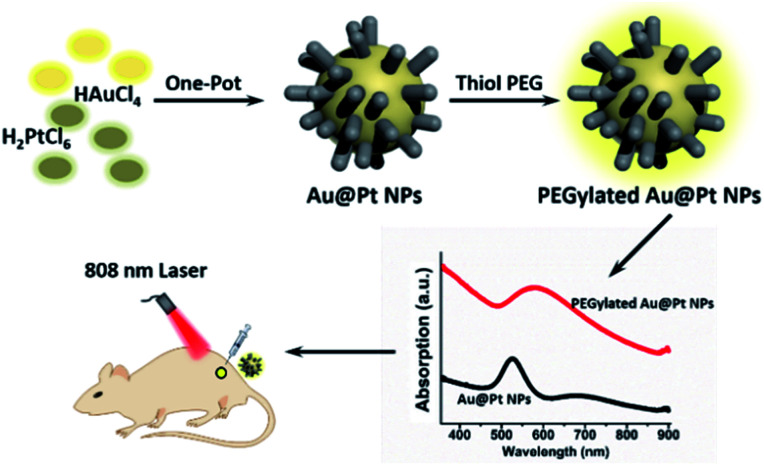
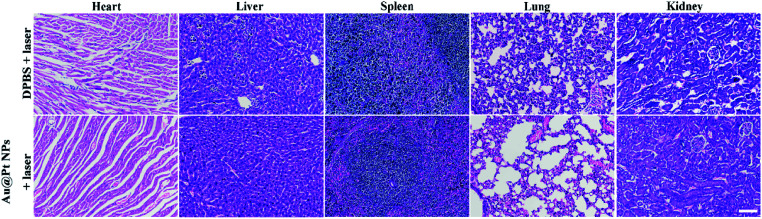
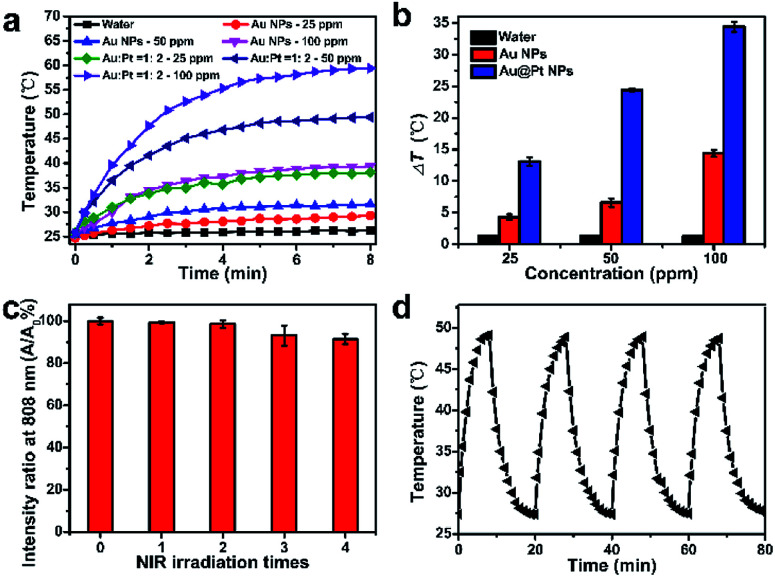
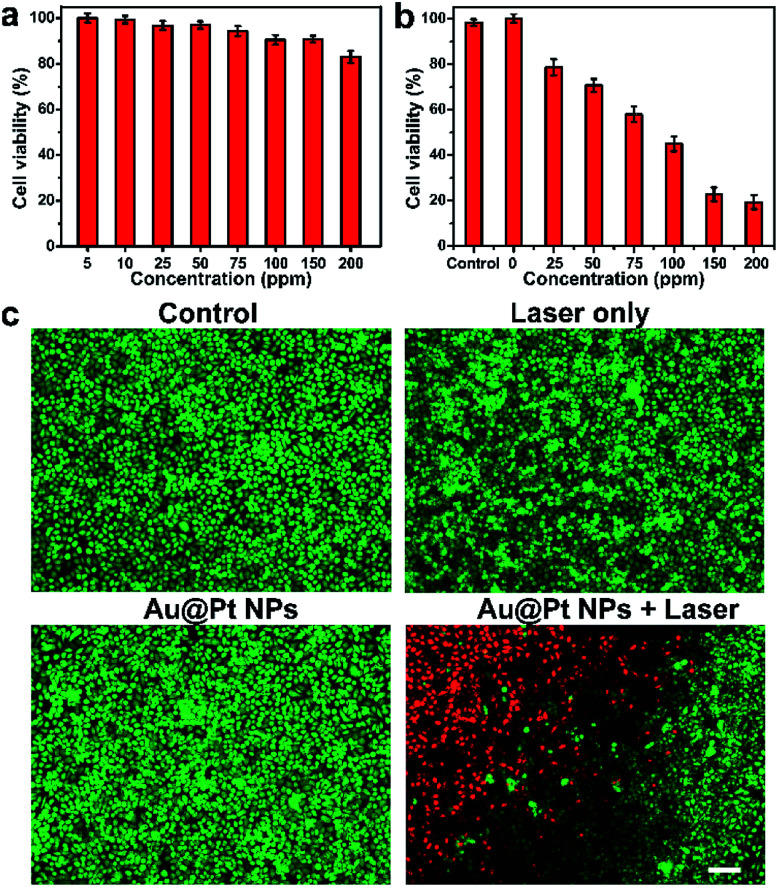
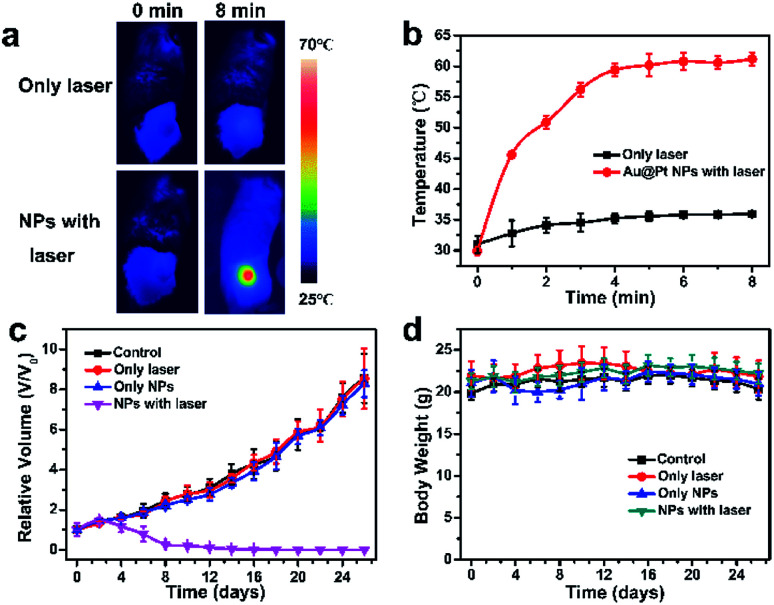
Near-infrared (NIR) light-mediated non-invasive photothermal therapy (PTT) has attracted considerable attention for cancer treatment. Strong optical absorption located in the NIR region and high performance in converting light to heat should be emphasized for the development of ideal photothermal agents. In this report, Au@Pt bimetallic nanoparticles (Au@Pt NPs) with dendritic structure were synthesized through an ultrasound assisted one-step method in aqueous solution. The absorption of Au@Pt NPs at 808 nm was obviously enhanced compared to that of Au NPs and could be easily manipulated the amount of Pt NPs. Au@Pt NPs exhibited excellent photostability with a photothermal conversion efficiency of 44.2%, which is significantly higher than those in most reported studies. Au@Pt NPs with thiol PEG functionalization presented improved cellular killing capacity upon NIR laser irradiation. Moreover, the potential application of Au@Pt NPs was also investigated in xenograft tumor mouse model. Overall, the remarkable therapeutic characteristics of PEGylated Au@Pt NPs provide them with great potential for future cancer treatment.
近红外(NIR)光介导的非侵入性光热疗法(PTT)在癌症治疗方面已引起了广泛关注。对于理想光热剂的开发而言,应着重关注位于近红外区域的强光学吸收以及将光转化为热的高性能。在本报告中,通过超声辅助一步法在水溶液中合成了具有树枝状结构的金@铂双金属纳米颗粒(Au@Pt NPs)。与金纳米颗粒(Au NPs)相比,Au@Pt NPs在808 nm处的吸收明显增强,并且可以通过铂纳米颗粒的量轻松调控。Au@Pt NPs表现出优异的光稳定性,光热转换效率为44.2%,这明显高于大多数已报道研究中的效率。经硫醇聚乙二醇功能化的Au@Pt NPs在近红外激光照射下表现出增强的细胞杀伤能力。此外,还在异种移植肿瘤小鼠模型中研究了Au@Pt NPs的潜在应用。总体而言,聚乙二醇化Au@Pt NPs显著的治疗特性使其在未来癌症治疗中具有巨大潜力。