J Brindha, M M Balamurali, Chanda Kaushik
Department of Chemistry, School of Advanced Science, Vellore Institute of Technology, Chennai Campus Vandalur-Kelambakkam Road Chennai-600 127 Tamil Nadu India
Department of Chemistry, School of Advanced Science, Vellore Institute of Technology Vellore-632014 Tamil Nadu India
RSC Adv. 2019 Oct 29;9(60):34720-34734. doi: 10.1039/c9ra06807d. eCollection 2019 Oct 28.
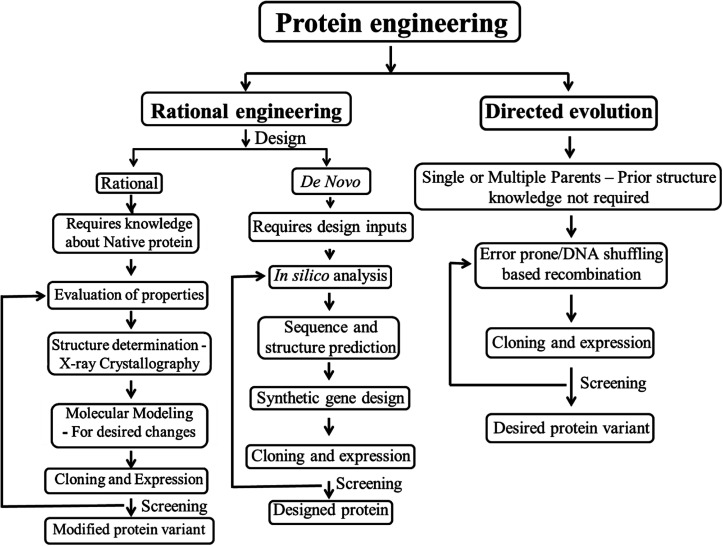
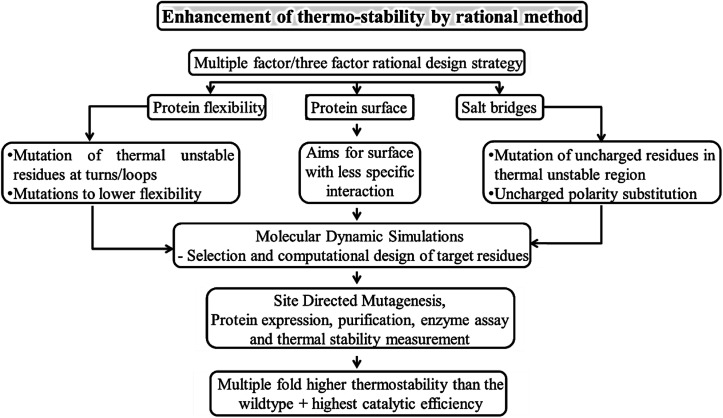
The tailoring of proteins for specific applications by evolutionary methods is a highly active area of research. Rational design and directed evolution are the two main strategies to reengineer proteins or create chimeric structures. Rational engineering is often limited by insufficient knowledge about proteins' structure-function relationships; directed evolution overcomes this restriction but poses challenges in the screening of candidates. A combination of these protein engineering approaches will allow us to create protein variants with a wide range of desired properties. Herein, we focus on the application of these approaches towards the generation of protein biomaterials that are known for biodegradability, biocompatibility and biofunctionality, from combinations of natural, synthetic, or engineered proteins and protein domains. Potential applications depend on the enhancement of biofunctional, mechanical, or other desired properties. Examples include scaffolds for tissue engineering, thermostable enzymes for industrial biocatalysis, and other therapeutic applications.
通过进化方法为特定应用定制蛋白质是一个高度活跃的研究领域。合理设计和定向进化是重新设计蛋白质或创建嵌合结构的两种主要策略。合理工程通常受到对蛋白质结构-功能关系了解不足的限制;定向进化克服了这一限制,但在筛选候选物方面带来了挑战。这些蛋白质工程方法的结合将使我们能够创建具有广泛所需特性的蛋白质变体。在此,我们重点关注这些方法在生成蛋白质生物材料方面的应用,这些生物材料以天然、合成或工程化蛋白质及蛋白质结构域的组合而闻名,具有生物可降解性、生物相容性和生物功能性。潜在应用取决于生物功能、机械性能或其他所需特性的增强。示例包括用于组织工程的支架、用于工业生物催化的热稳定酶以及其他治疗应用。