Gupta Akash, Makabenta Jessa Marie Valenzuela, Schlüter Friederike, Landis Ryan F, Das Riddha, Cuppels Madison, Rotello Vincent M
Department of Chemistry, University of Massachusetts Amherst, 710 North Pleasant Street, Amherst, Massachusetts 01003, United States.
Adv Ther (Weinh). 2020 Jul;3(7). doi: 10.1002/adtp.202000005. Epub 2020 Apr 28.
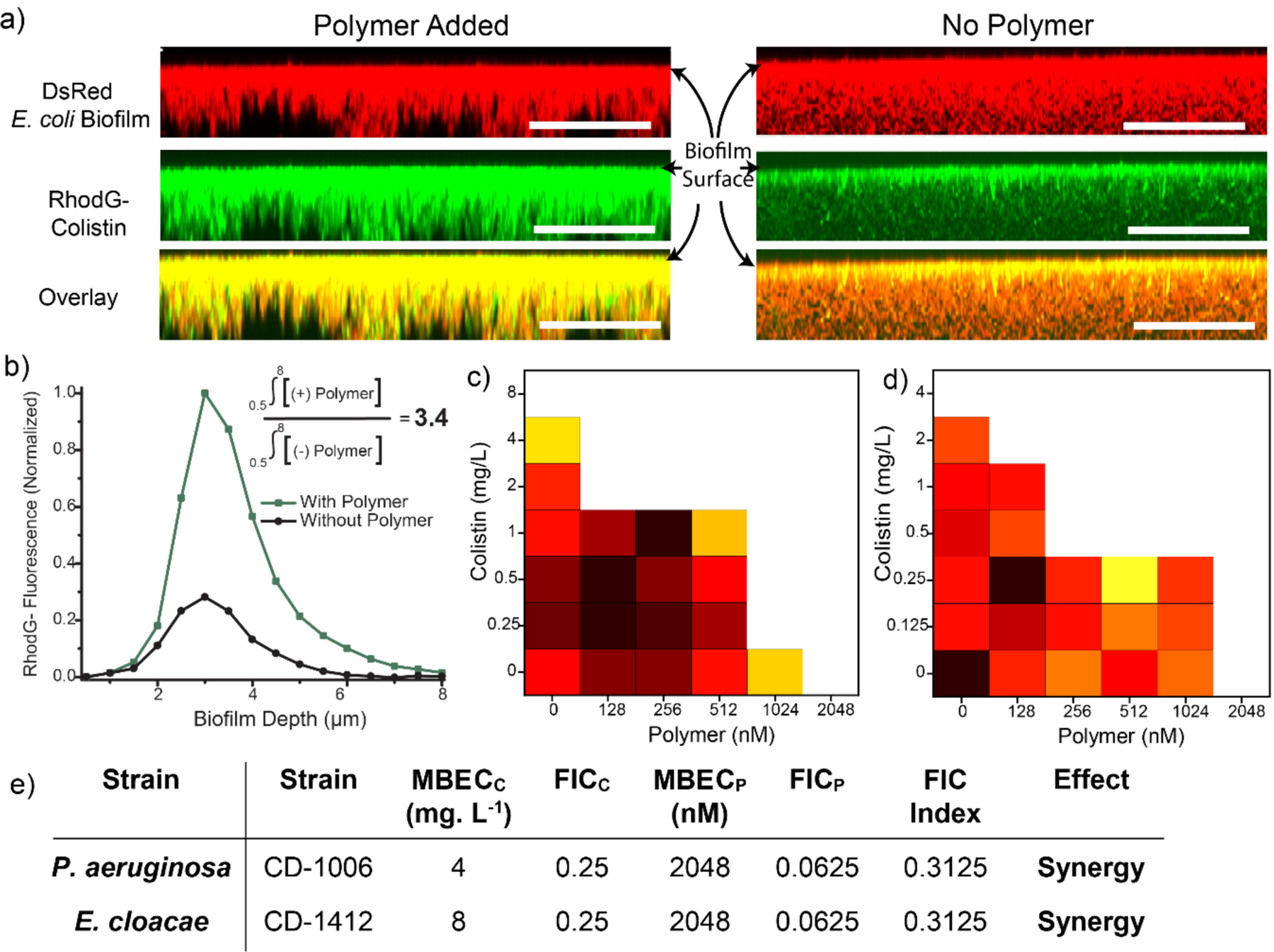
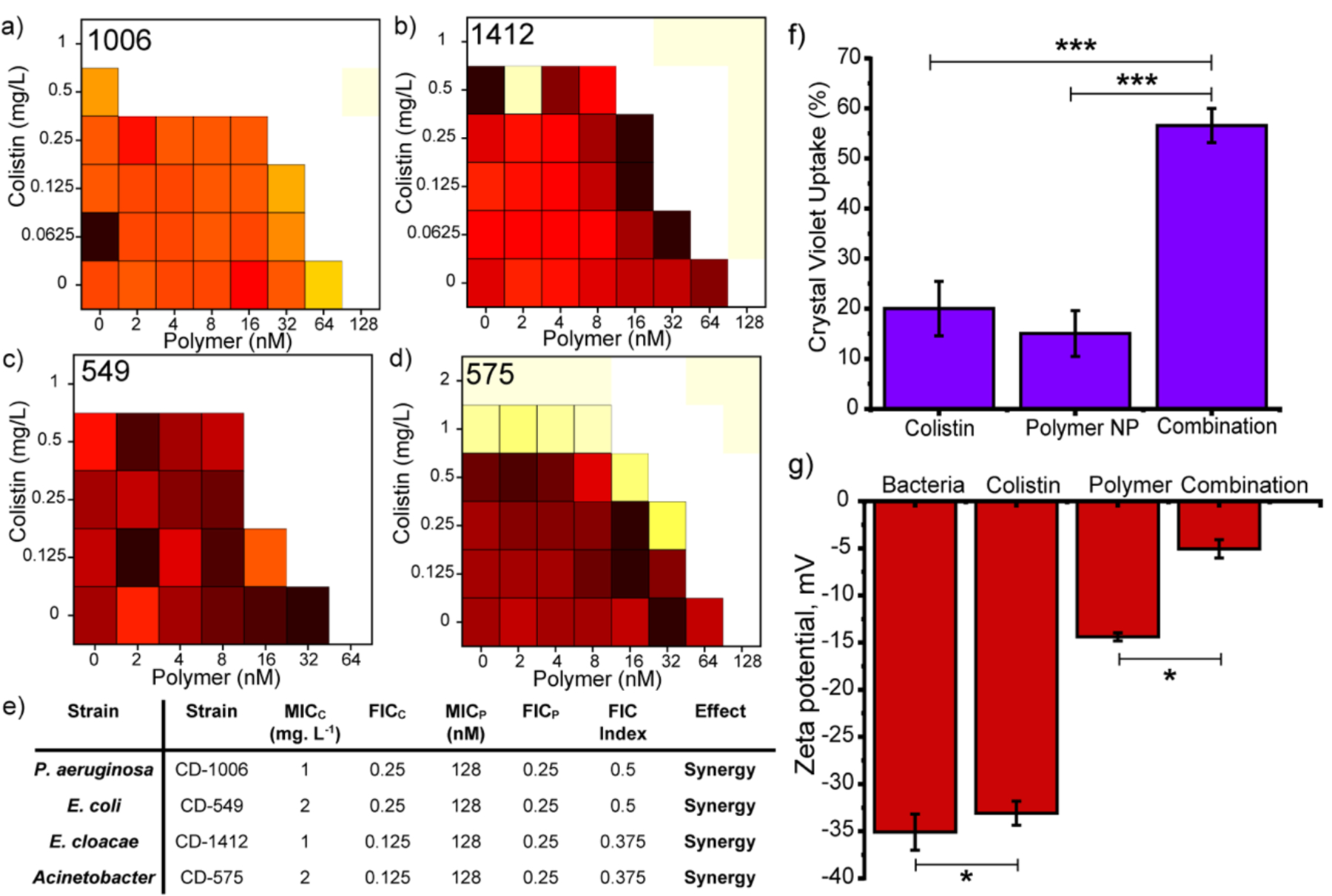
The emergence of multi-drug resistant pathogenic bacteria constitutes a key threat to global health. Infections caused by multi-drug resistant Gram-negative bacteria are particularly challenging to treat due to the ability of pathogens to prevent antibiotic penetration inside the bacterial membrane. Antibiotic therapy is further rendered ineffective due to biofilm formation where the protective Extracellular Polymeric Substance (EPS) matrix limits the diffusion of antibiotics inside the biofilm. We hypothesized that careful engineering of chemical groups on polymer scaffolds could enable polymers to penetrate the barriers of Gram-negative bacterial membrane and biofilm matrix. Here, we present the use of engineered polymeric nanoparticles in combination with antibiotics for synergistic antimicrobial therapy. These polymeric nanoparticles enhance the accumulation of antibiotics inside Gram-negative bacteria and biofilm matrix, resulting in increased potency of antibiotics in combination therapy. Sub-lethal concentrations of engineered polymeric nanoparticles reduce the antibiotic dosage by 32-fold to treat MDR bacteria and biofilms. Tailoring of chemical groups on polymers demonstrate a strong-structure activity relationship in generating additive and synergistic combinations with antibiotics. This study demonstrates the ability of polymeric nanoparticles to 'rejuvenate' antibiotics rendered ineffective by resistant bacteria and provides a rationale to design novel compounds to achieve effective antimicrobial combination therapies.
多重耐药病原菌的出现对全球健康构成了关键威胁。由多重耐药革兰氏阴性菌引起的感染尤其难以治疗,因为病原菌能够阻止抗生素渗透到细菌膜内部。由于生物膜的形成,抗生素治疗进一步失效,其中保护性的胞外聚合物(EPS)基质限制了抗生素在生物膜内的扩散。我们假设,对聚合物支架上的化学基团进行精心设计,可以使聚合物穿透革兰氏阴性菌膜和生物膜基质的屏障。在此,我们展示了工程化聚合物纳米颗粒与抗生素联合用于协同抗菌治疗。这些聚合物纳米颗粒增强了抗生素在革兰氏阴性菌和生物膜基质内的积累,从而提高了联合治疗中抗生素的效力。亚致死浓度的工程化聚合物纳米颗粒可将治疗多重耐药菌和生物膜的抗生素剂量降低32倍。聚合物上化学基团的定制在与抗生素产生相加和协同组合方面表现出很强的结构活性关系。这项研究证明了聚合物纳米颗粒能够“恢复”被耐药菌使失效的抗生素的效力,并为设计新型化合物以实现有效的抗菌联合治疗提供了理论依据。