Gattas Sandra, Elias Gabriel A, Janecek John, Yassa Michael A, Fortin Norbert J
Department of Electrical Engineering and Computer Science, University of California, Irvine, United States.
Center for the Neurobiology of Learning and Memory, University of California, Irvine, United States.
Elife. 2022 May 9;11:e55528. doi: 10.7554/eLife.55528.
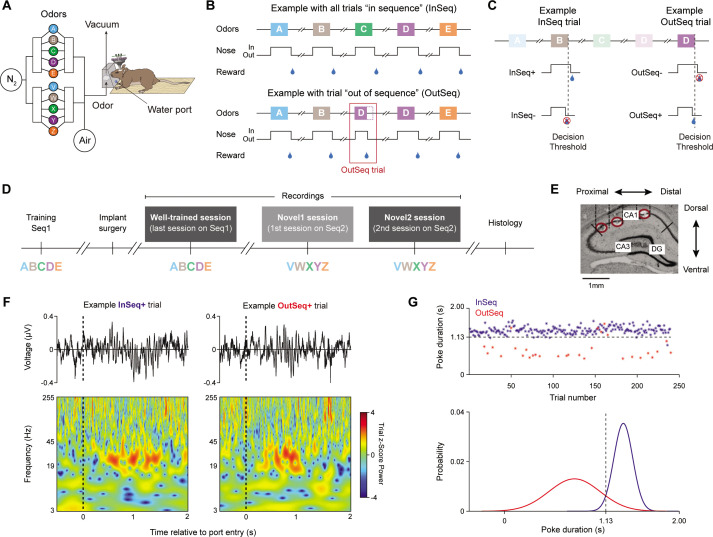
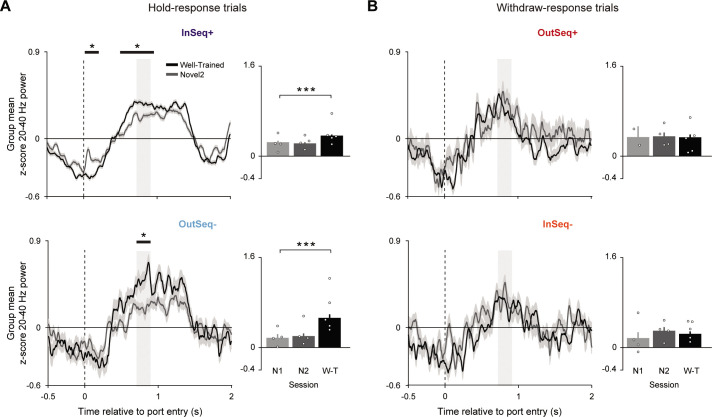
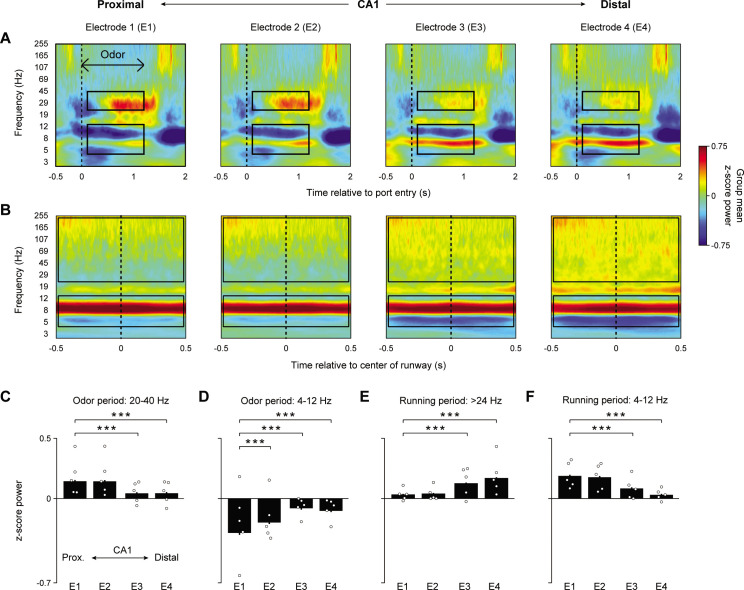
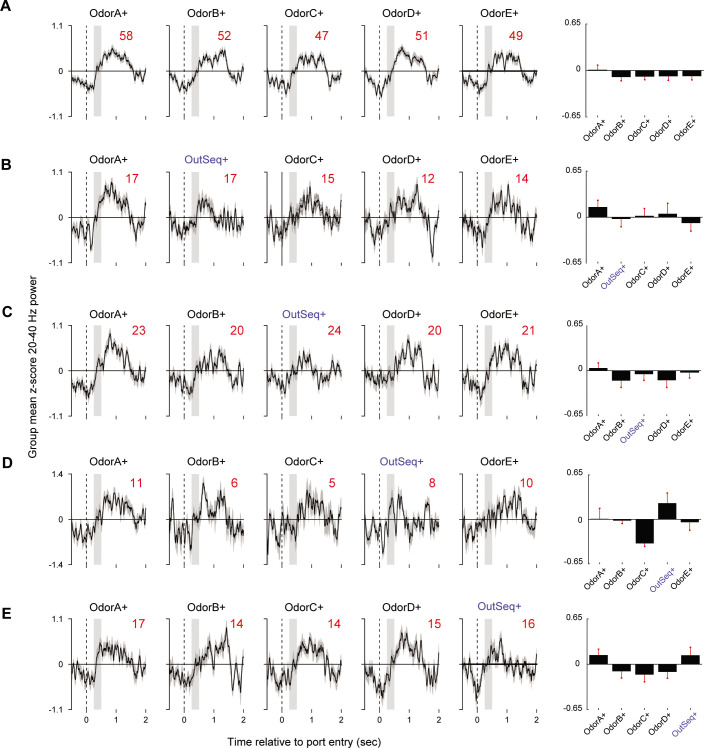
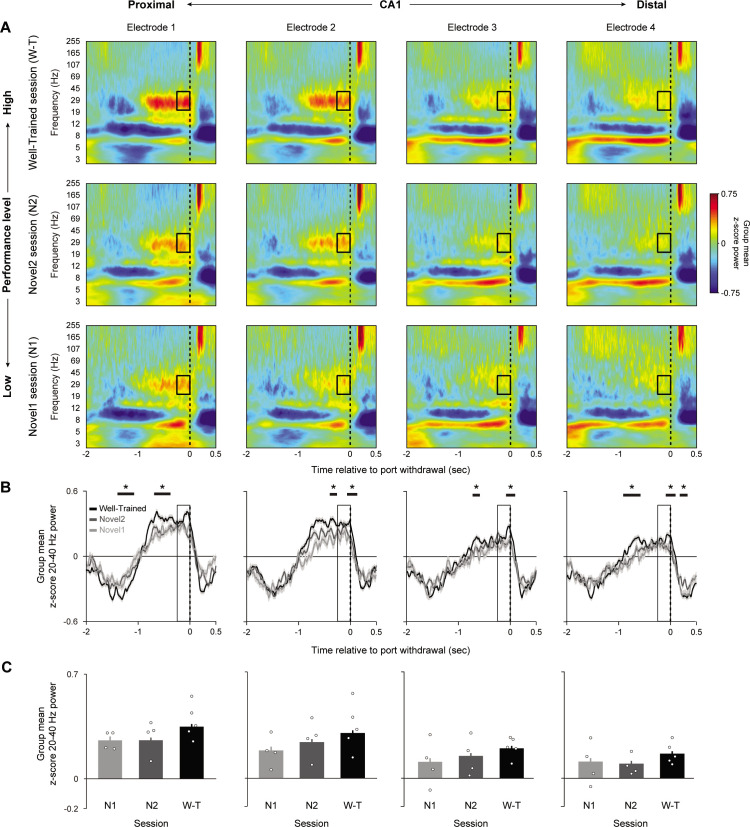
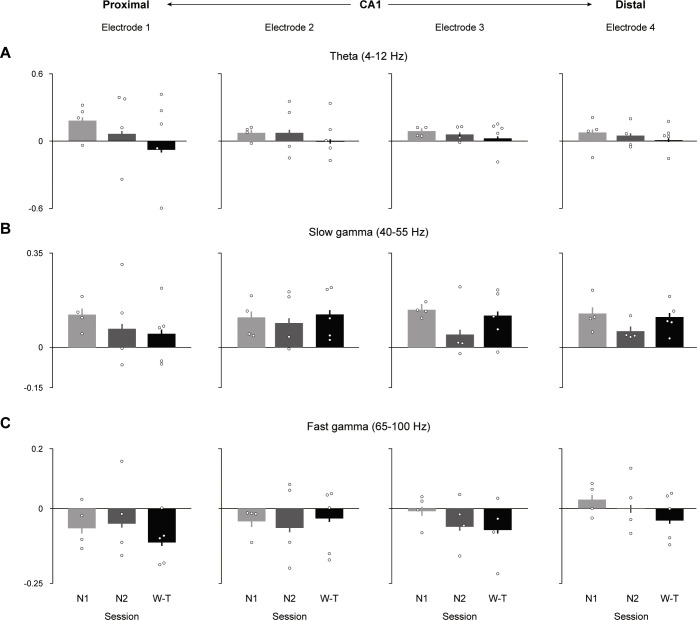
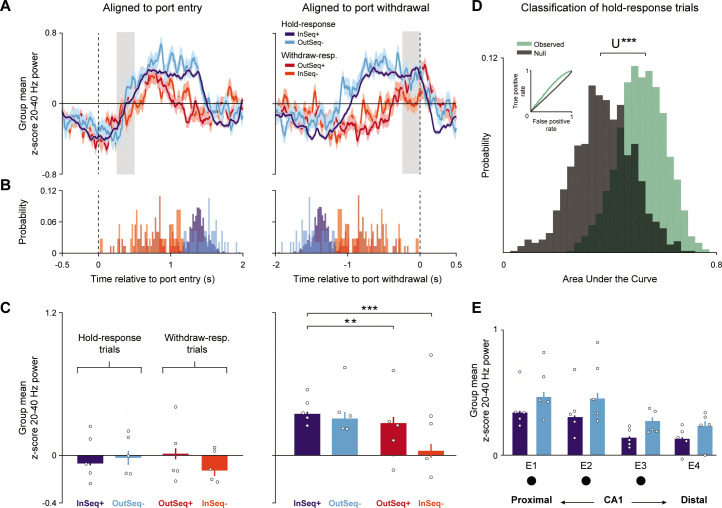
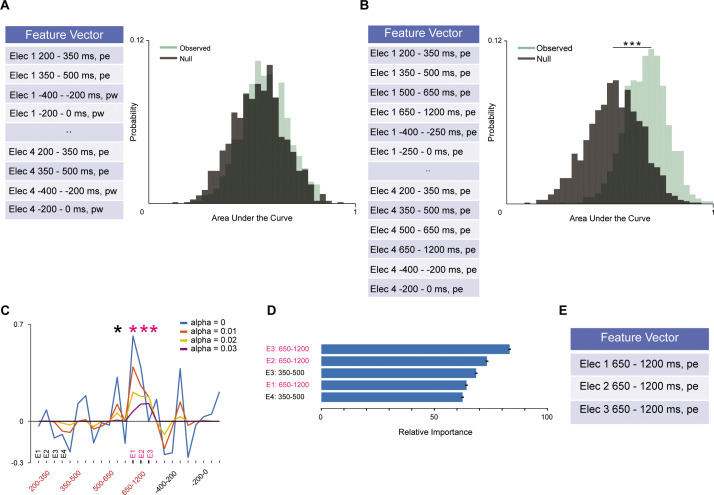
The hippocampus is known to play a critical role in processing information about temporal context. However, it remains unclear how hippocampal oscillations are involved, and how their functional organization is influenced by connectivity gradients. We examined local field potential activity in CA1 as rats performed a nonspatial odor sequence memory task. We found that odor sequence processing epochs were characterized by distinct spectral profiles and proximodistal CA1 gradients of theta and 20-40 Hz power than track running epochs. We also discovered that 20-40 Hz power was predictive of sequence memory performance, particularly in proximal CA1 and during the plateau of high power observed in trials in which animals had to maintain their decision until instructed to respond. Altogether, these results provide evidence that dynamics of 20-40 Hz power along the CA1 axis are linked to trial-specific processing of nonspatial information critical to order judgments and are consistent with a role for 20-40 Hz power in gating information processing.
已知海马体在处理有关时间背景的信息方面发挥着关键作用。然而,目前尚不清楚海马体振荡是如何参与其中的,以及它们的功能组织是如何受到连接梯度影响的。我们在大鼠执行非空间气味序列记忆任务时,检测了CA1区的局部场电位活动。我们发现,与跑步时段相比,气味序列处理时段的特征在于不同的频谱分布以及CA1区从近端到远端的θ波和20 - 40赫兹功率梯度。我们还发现,20 - 40赫兹功率可预测序列记忆表现,特别是在近端CA1区以及在动物必须维持其决策直至接到指示做出反应的试验中观察到的高功率平台期。总之,这些结果提供了证据,表明沿CA1轴的20 - 40赫兹功率动态与对顺序判断至关重要的非空间信息的特定试验处理相关联,并且与20 - 40赫兹功率在门控信息处理中的作用一致。