Department of Genetics, University of North Carolina at Chapel Hill, Chapel Hill, North Carolina, United States of America.
The Jackson Laboratory, Bar Harbor, Maine, United States of America.
PLoS Genet. 2022 May 9;18(5):e1010184. doi: 10.1371/journal.pgen.1010184. eCollection 2022 May.
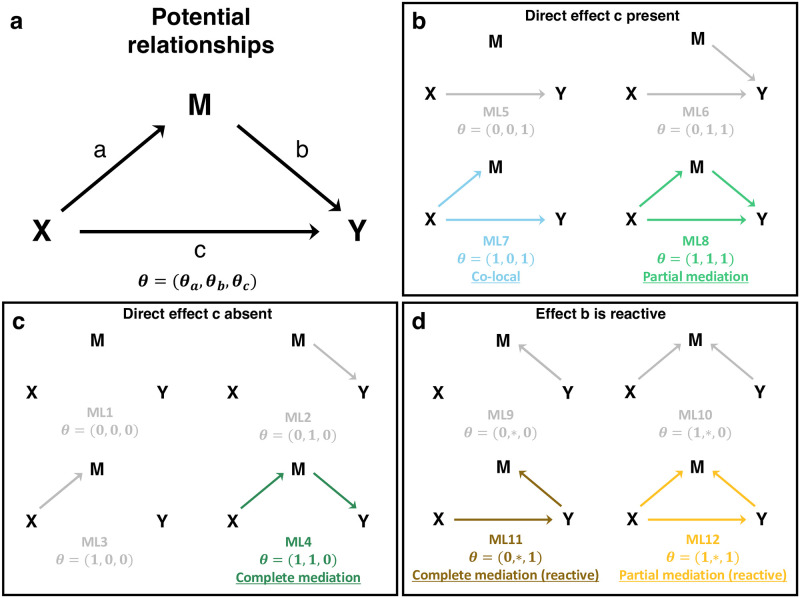
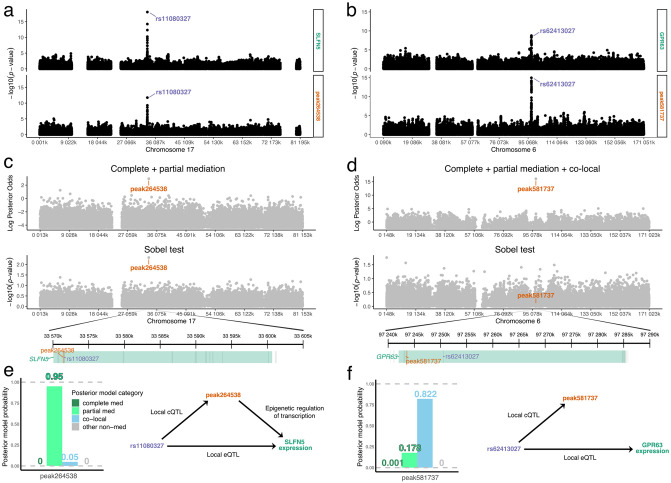
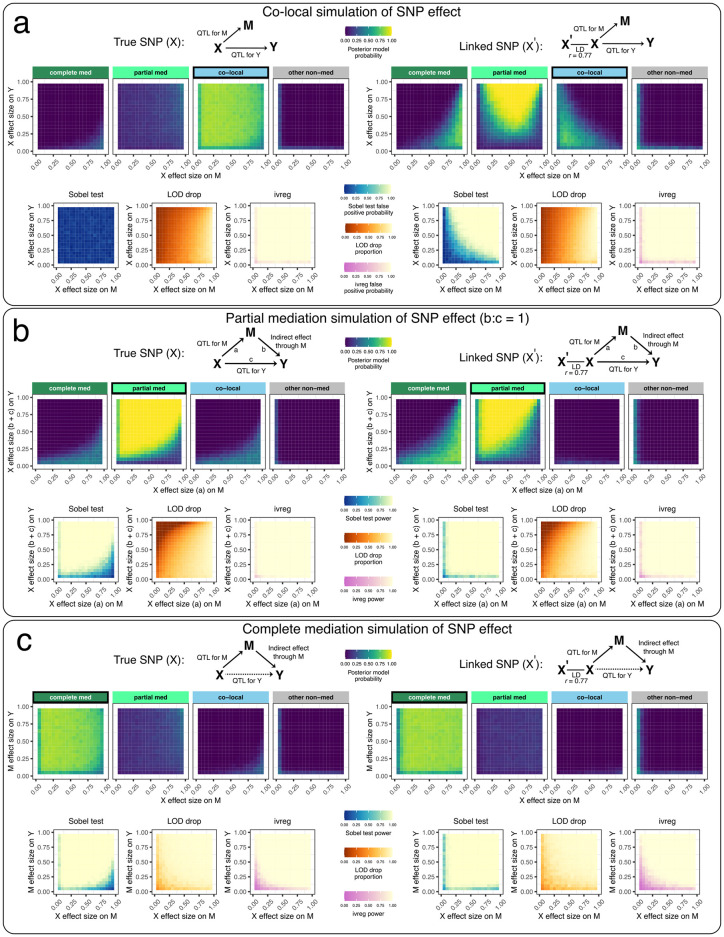
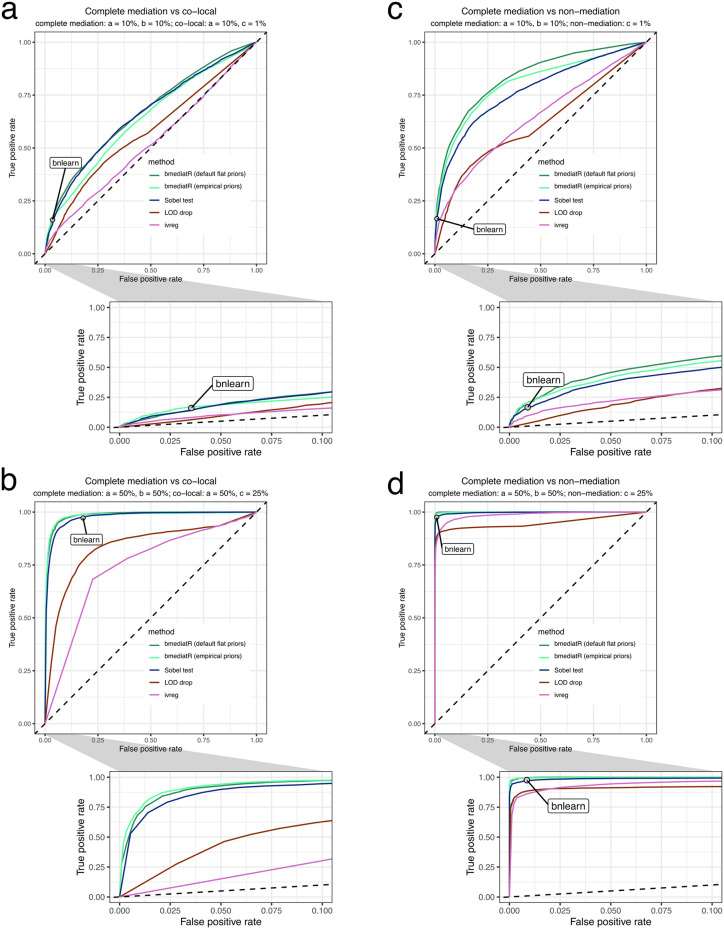
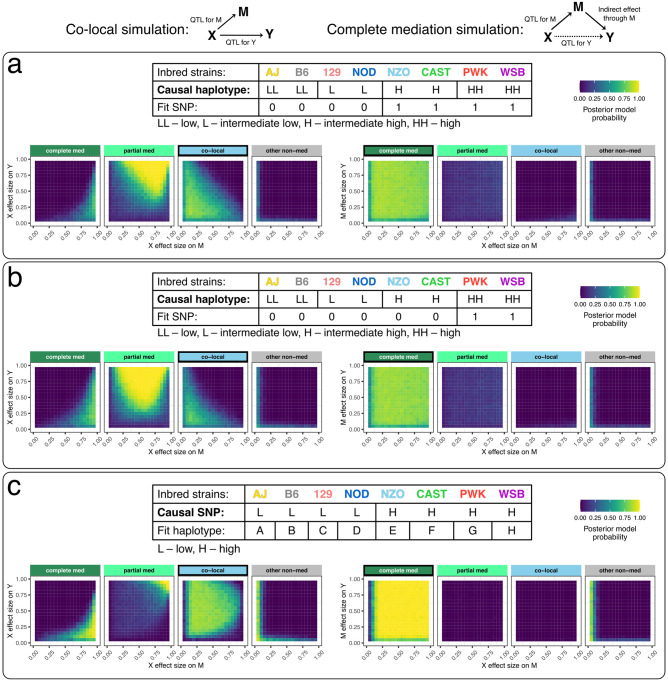
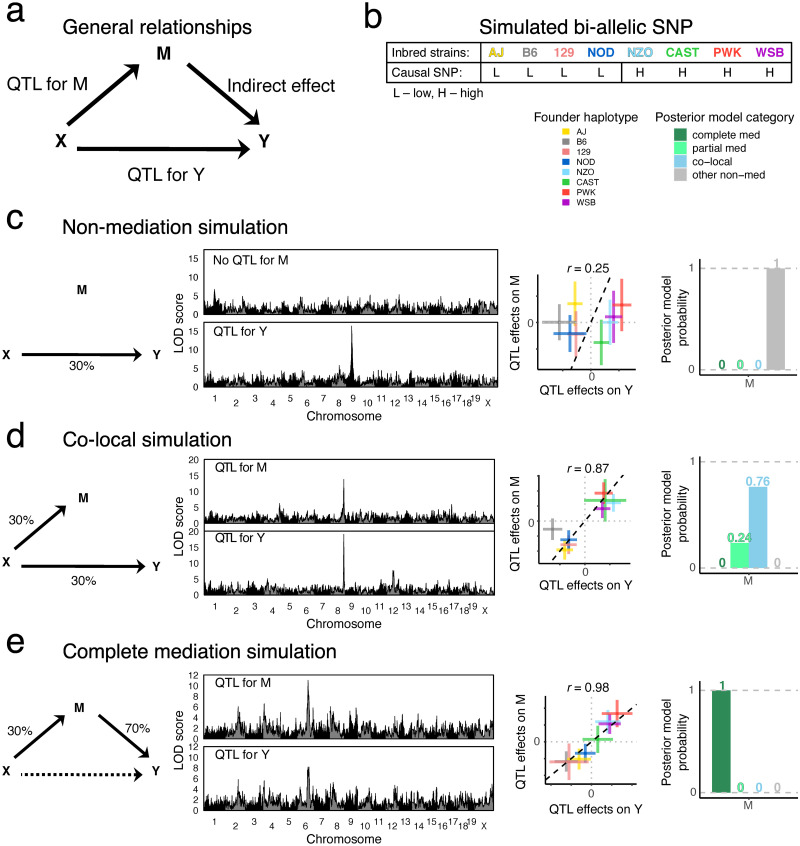
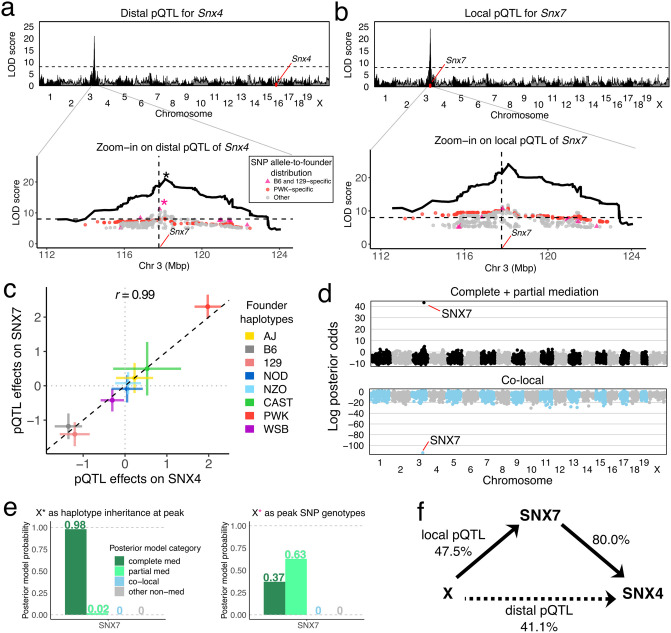
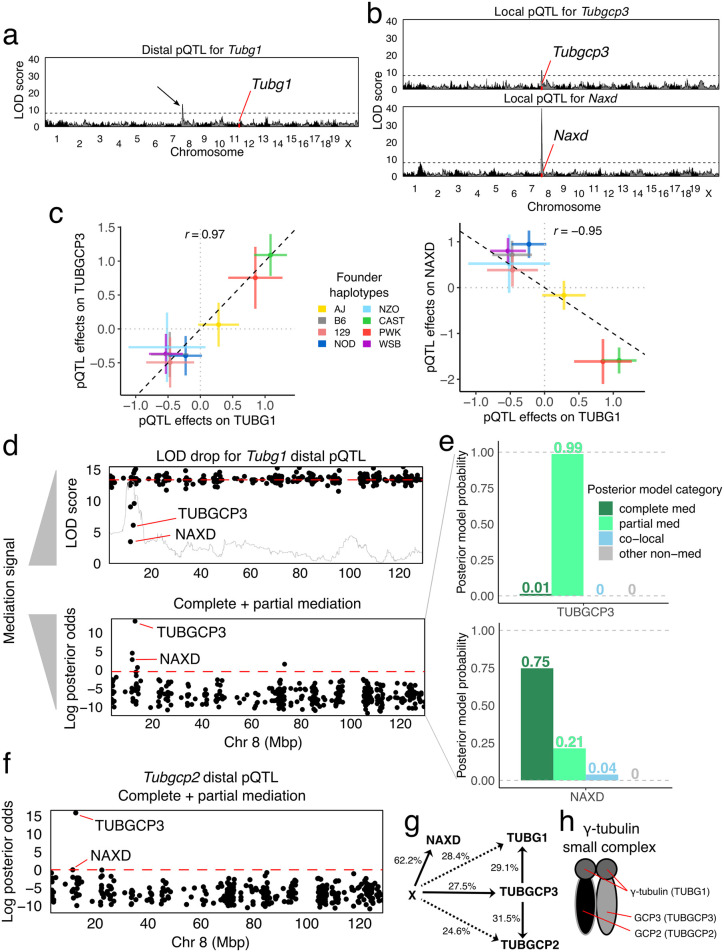
Genetic studies often seek to establish a causal chain of events originating from genetic variation through to molecular and clinical phenotypes. When multiple phenotypes share a common genetic association, one phenotype may act as an intermediate for the genetic effects on the other. Alternatively, the phenotypes may be causally unrelated but share genetic loci. Mediation analysis represents a class of causal inference approaches used to determine which of these scenarios is most plausible. We have developed a general approach to mediation analysis based on Bayesian model selection and have implemented it in an R package, bmediatR. Bayesian model selection provides a flexible framework that can be tailored to different analyses. Our approach can incorporate prior information about the likelihood of models and the strength of causal effects. It can also accommodate multiple genetic variants or multi-state haplotypes. Our approach reports posterior probabilities that can be useful in interpreting uncertainty among competing models. We compared bmediatR with other popular methods, including the Sobel test, Mendelian randomization, and Bayesian network analysis using simulated data. We found that bmediatR performed as well or better than these alternatives in most scenarios. We applied bmediatR to proteome data from Diversity Outbred (DO) mice, a multi-parent population, and demonstrate the power of mediation with multi-state haplotypes. We also applied bmediatR to data from human cell lines to identify transcripts that are mediated through or are expressed independently from local chromatin accessibility. We demonstrate that Bayesian model selection provides a powerful and versatile approach to identify causal relationships in genetic studies using model organism or human data.
遗传研究通常试图建立一个从遗传变异到分子和临床表型的因果事件链。当多个表型具有共同的遗传关联时,一个表型可能是遗传效应对另一个表型影响的中间因素。或者,这些表型可能没有因果关系,但具有遗传位点。中介分析是一种因果推理方法,用于确定这些情况中哪种最合理。我们已经开发了一种基于贝叶斯模型选择的中介分析通用方法,并在 R 包 bmediatR 中实现了它。贝叶斯模型选择提供了一个灵活的框架,可以根据不同的分析进行定制。我们的方法可以包含关于模型可能性和因果效应强度的先验信息。它还可以容纳多个遗传变异或多态性单倍型。我们的方法报告了后验概率,这在解释竞争模型之间的不确定性方面非常有用。我们将 bmediatR 与其他流行的方法进行了比较,包括 Sobel 检验、孟德尔随机化和基于贝叶斯网络的分析,使用模拟数据。我们发现,在大多数情况下,bmediatR 的表现与这些替代方法一样好或更好。我们将 bmediatR 应用于多亲种群 Diversity Outbred (DO) 小鼠的蛋白质组数据,并展示了多态性单倍型的中介作用的强大功能。我们还将 bmediatR 应用于人类细胞系的数据,以确定通过局部染色质可及性介导或独立表达的转录本。我们证明了贝叶斯模型选择为使用模式生物或人类数据识别遗传研究中的因果关系提供了一种强大而通用的方法。