Infettare, Facultad de Medicina, Universidad Cooperativa de Colombia, Medellín, Colombia.
Unidad Académica de Ciencias Químico Biológicas y Farmacéuticas, Universidad Autónoma de Nayarit, Tepic, Nayarit, México.
Sci Rep. 2022 May 9;12(1):7581. doi: 10.1038/s41598-022-11553-6.
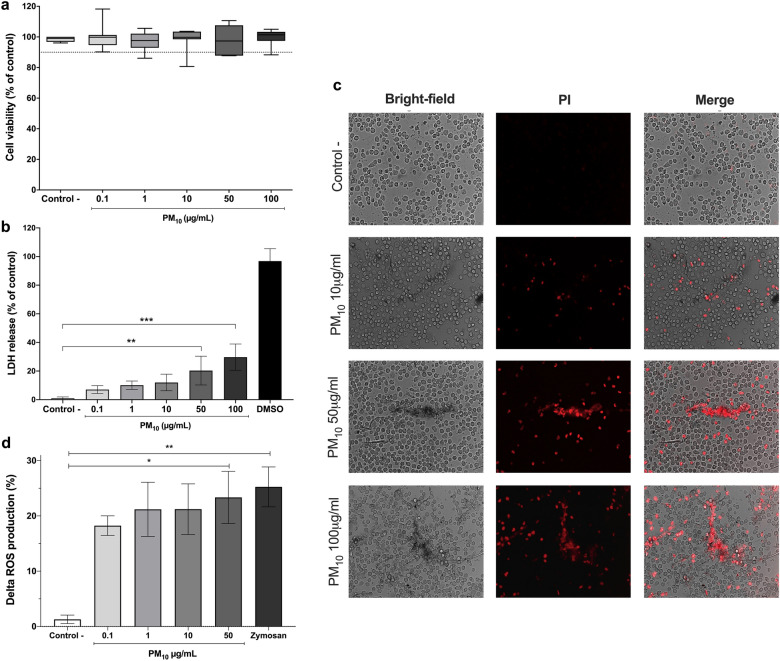
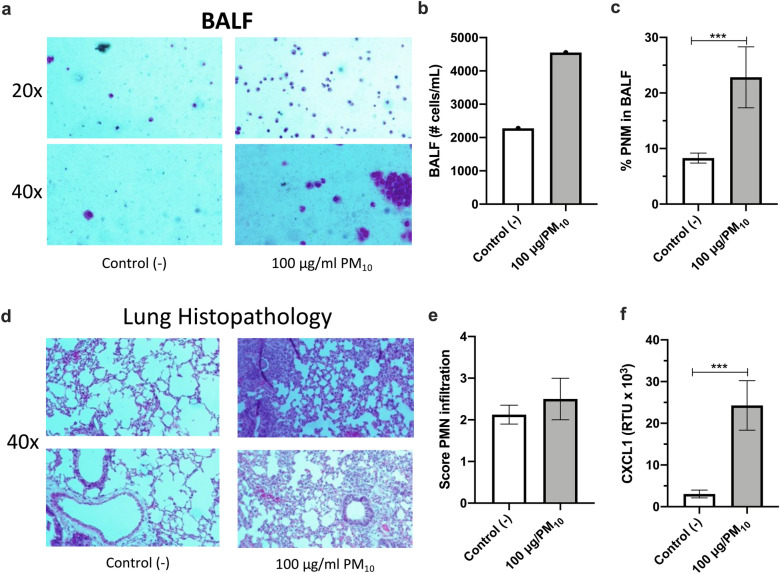
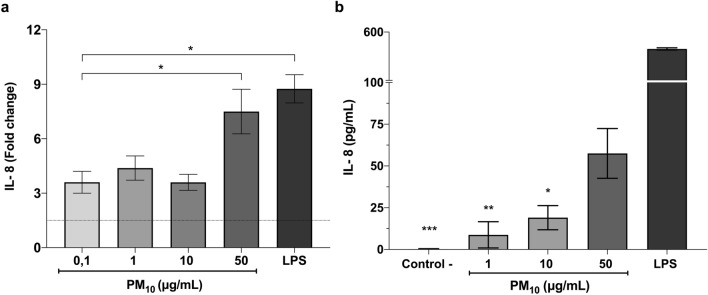
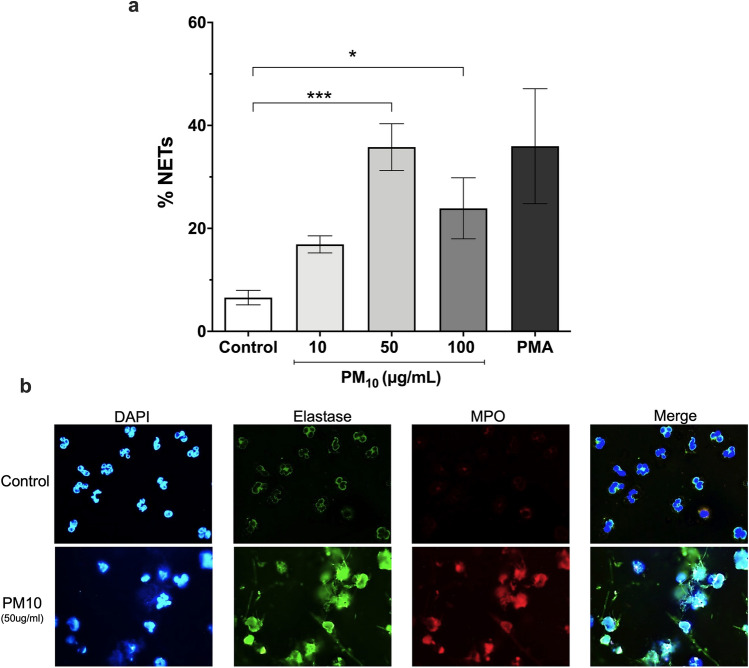
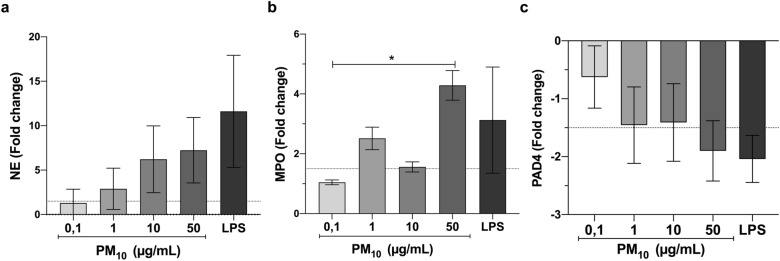
The epidemiological association between exposure to particulate matter (PM) and various respiratory and cardiovascular problems is well known, but the mechanisms driving these effects remain unclear. Neutrophils play an essential role in immune defense against foreign agents and also participate in the development of inflammatory responses. However, the role of these cells in the PM induced inflammatory response is not yet fully established. Thus, this study aims to evaluate the effect of PM on the neutrophil-mediated inflammatory response. For this, neutrophils from healthy adult human donors were in vitro exposed to different concentrations of PM. The cell viability and cytotoxic activity were evaluated by MTT. LDH, propidium iodide and reactive oxygen species (ROS) were quantified by flow cytometry. Interleukin 8 (IL-8) expression, peptidyl arginine deiminase 4 (PAD), myeloperoxidase (MPO), and neutrophil elastase (NE) expression were measured by RT-PCR. IL-8 was also quantified by ELISA. Fluorescence microscopy was used to evaluate neutrophil extracellular traps (NETs) release. The in vivo inflammatory responses were assessed in BALB/c mice exposed to PM by histopathology and RT-PCR. The analysis shows that PM exposure induced a cytotoxic effect on neutrophils, evidenced by necrosis and LDH release at high PM concentrations. ROS production, IL-8, MPO, NE expression, and NETs release were increased at all PM concentrations assessed. Neutrophil infiltration in bronchoalveolar lavage fluid (BALF), histopathological changes with inflammatory cell infiltration, and CXCL1 expression were observed in PM-treated mice. The results suggest that lung inflammation in response to PM could be mediated by neutrophils activation. In this case, these cells migrate to the lungs and release pro-inflamatory mediators, including ROS, IL-8, and NETs. Thus, contributing to the exacerbation of respiratory pathologies, such as allergies, infectious and obstructive diseases.
颗粒物(PM)暴露与各种呼吸道和心血管问题之间的流行病学关联是众所周知的,但驱动这些效应的机制仍不清楚。中性粒细胞在针对外来物的免疫防御中发挥着重要作用,也参与了炎症反应的发展。然而,这些细胞在 PM 诱导的炎症反应中的作用尚未完全确定。因此,本研究旨在评估 PM 对中性粒细胞介导的炎症反应的影响。为此,从健康成年人类供体中体外暴露于不同浓度的 PM 下的中性粒细胞。通过 MTT 评估细胞活力和细胞毒性活性。通过流式细胞术定量测定乳酸脱氢酶(LDH)、碘化丙啶和活性氧(ROS)。通过 RT-PCR 测量白细胞介素 8(IL-8)表达、肽基精氨酸脱亚氨酶 4(PAD)、髓过氧化物酶(MPO)和中性粒细胞弹性蛋白酶(NE)表达。通过 ELISA 定量测定 IL-8。荧光显微镜用于评估中性粒细胞胞外诱捕网(NETs)的释放。通过组织病理学和 RT-PCR 评估 PM 暴露的 BALB/c 小鼠体内炎症反应。分析表明,PM 暴露对中性粒细胞具有细胞毒性作用,这表现在高 PM 浓度下的坏死和 LDH 释放。在评估的所有 PM 浓度下,ROS 产生、IL-8、MPO、NE 表达和 NETs 释放均增加。在 PM 处理的小鼠中观察到支气管肺泡灌洗液(BALF)中中性粒细胞浸润、有炎症细胞浸润的组织病理学变化和 CXCL1 表达。结果表明,PM 引起的肺部炎症可能是由中性粒细胞激活介导的。在这种情况下,这些细胞迁移到肺部并释放促炎介质,包括 ROS、IL-8 和 NETs。因此,有助于加剧过敏、感染和阻塞性疾病等呼吸道疾病。