Martinez Bridget, Peplow Philip V
Department of Pharmacology; Department of Medicine, University of Nevada-Reno, Reno, NV, USA.
Department of Anatomy, University of Otago, Dunedin, New Zealand.
Neural Regen Res. 2022 Nov;17(11):2368-2375. doi: 10.4103/1673-5374.338989.
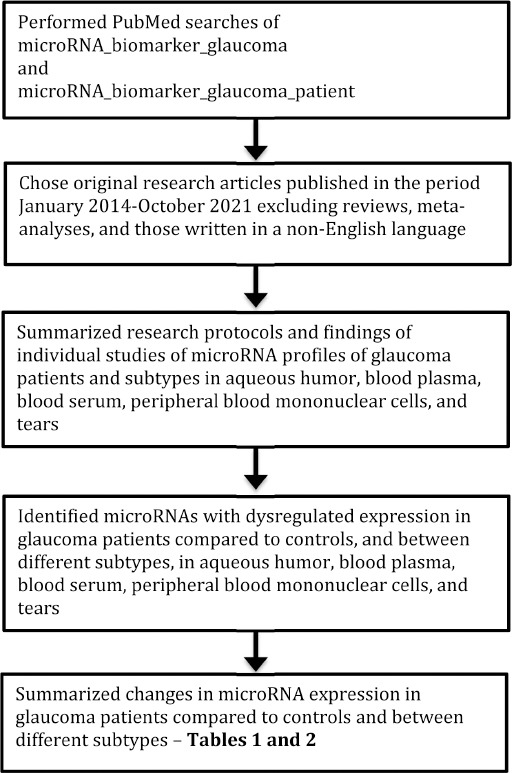
Glaucoma is a neurodegenerative disease in which optic nerve damage and visual field defects occur. It is a leading cause of irreversible blindness. Its pathogenesis is largely unknown although several risk factors have been identified, with an increase in intraocular pressure being the main one. Lowering of intraocular pressure is the only treatment available. Open-angle glaucoma is the most common form of the condition, accounting for ~90% of all cases of glaucoma, with primary open-angle glaucoma and exfoliation glaucoma being the most frequent types. There are strong indications that microRNAs play important roles in the pathogenesis of primary open-angle glaucoma. Most of the recent studies reviewed had performed microRNA profiling in aqueous humor from glaucoma patients compared to controls who were chiefly cataract patients. A very large number of microRNAs were dysregulated but with limited overlap between individual studies. MiRNAs in aqueous humor that could be possible targets for therapeutic intervention are miR-143-3p, miR-125b-5p, and miR-1260b. No overlap of findings occurred within the dysregulated miRNAs for blood plasma, blood serum, peripheral blood mononuclear cells, and tears of primary open-angle glaucoma patients. Several important limitations were identified in these studies. Further studies are warranted of microRNA expression in aqueous humor and blood samples of primary open-angle glaucoma patients in the early stages of the disease so that validated biomarkers can be identified and treatment initiated. In addition, whether modifying the levels of specific microRNAs in aqueous humor or tears has a beneficial effect on intraocular pressure and ophthalmic examination of the eyes should be investigated using suitable animal models of glaucoma.
青光眼是一种会导致视神经损伤和视野缺损的神经退行性疾病。它是不可逆失明的主要原因。尽管已确定了几个风险因素,但其发病机制在很大程度上仍不清楚,其中眼压升高是主要因素。降低眼压是唯一可用的治疗方法。开角型青光眼是该病症最常见的形式,约占所有青光眼病例的90%,原发性开角型青光眼和剥脱性青光眼是最常见的类型。有充分迹象表明,微小RNA在原发性开角型青光眼的发病机制中起重要作用。最近综述的大多数研究都对青光眼患者房水中的微小RNA进行了分析,并与主要为白内障患者的对照组进行了比较。大量微小RNA表达失调,但各研究之间的重叠有限。房水中可能成为治疗干预靶点的微小RNA有miR-143-3p、miR-125b-5p和miR-1260b。原发性开角型青光眼患者血浆、血清、外周血单核细胞和泪液中表达失调的微小RNA之间没有发现重叠。这些研究发现了几个重要的局限性。有必要对原发性开角型青光眼患者疾病早期房水和血液样本中的微小RNA表达进行进一步研究,以便确定经过验证的生物标志物并开始治疗。此外,应使用合适的青光眼动物模型研究改变房水或泪液中特定微小RNA的水平是否对眼压和眼部检查有有益影响。