Cardiothoracovascular Department, Azienda Sanitaria Universitaria Giuliano Isontina (ASUGI), University of Trieste, Trieste, Italy.
Cardiology, Department of Cardiac Thoracic Vascular Sciences and Public Health, University of Padova, Padova, Italy.
Heart Fail Rev. 2023 Jan;28(1):77-95. doi: 10.1007/s10741-022-10235-9. Epub 2022 May 10.
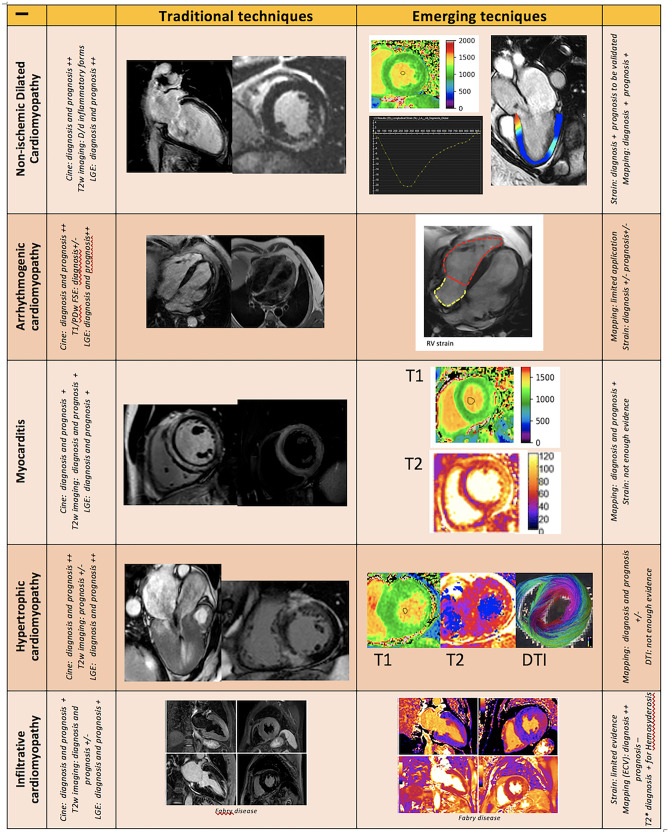
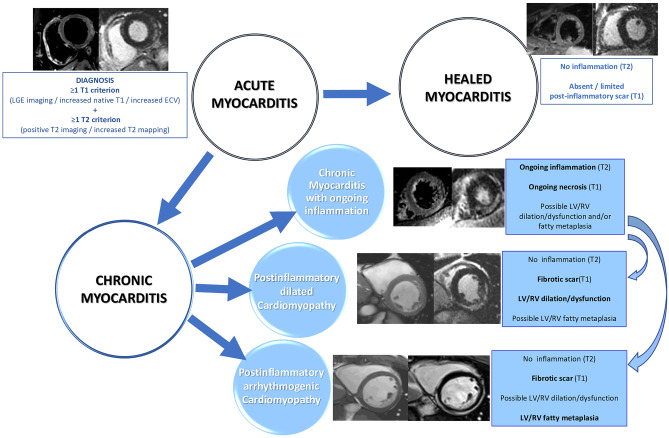
Cardiac magnetic resonance (CMR) has become an essential tool for the evaluation of patients affected or at risk of developing cardiomyopathies (CMPs). In fact, CMR not only provides precise data on cardiac volumes, wall thickness, mass and systolic function but it also a non-invasive characterization of myocardial tissue, thus helping the early diagnosis and the precise phenotyping of the different CMPs, which is essential for early and individualized treatment of patients. Furthermore, several CMR characteristics, such as the presence of extensive LGE or abnormal mapping values, are emerging as prognostic markers, therefore helping to define patients' risk. Lastly new experimental CMR techniques are under investigation and might contribute to widen our knowledge in the field of CMPs. In this perspective, CMR appears an essential tool to be systematically applied in the diagnostic and prognostic work-up of CMPs in clinical practice. This review provides a deep overview of clinical applicability of standard and emerging CMR techniques in the management of CMPs.
心脏磁共振(CMR)已成为评估患有或有发展为心肌病(CMP)风险的患者的重要工具。事实上,CMR 不仅提供了关于心脏容积、壁厚度、质量和收缩功能的精确数据,还对心肌组织进行了非侵入性特征描述,从而有助于早期诊断和对不同 CMP 的精确表型分析,这对于患者的早期和个体化治疗至关重要。此外,CMR 的一些特征,如广泛的 LGE 或异常的映射值的存在,正在成为预后标志物,因此有助于确定患者的风险。最后,新的实验性 CMR 技术正在研究中,可能有助于拓宽我们在 CMP 领域的知识。从这个角度来看,CMR 似乎是一种在临床实践中系统地应用于 CMP 诊断和预后评估的重要工具。这篇综述深入概述了标准和新兴 CMR 技术在 CMP 管理中的临床应用。