
三维生物打印人体中空器官。
3D Bioprinting of Human Hollow Organs.
机构信息
Department of Pharmaceutical Technology, Maulana Abul Kalam Azad University of Technology, Haringhata, Nadia-741249, West Bengal, India.
出版信息
AAPS PharmSciTech. 2022 May 10;23(5):139. doi: 10.1208/s12249-022-02279-9.
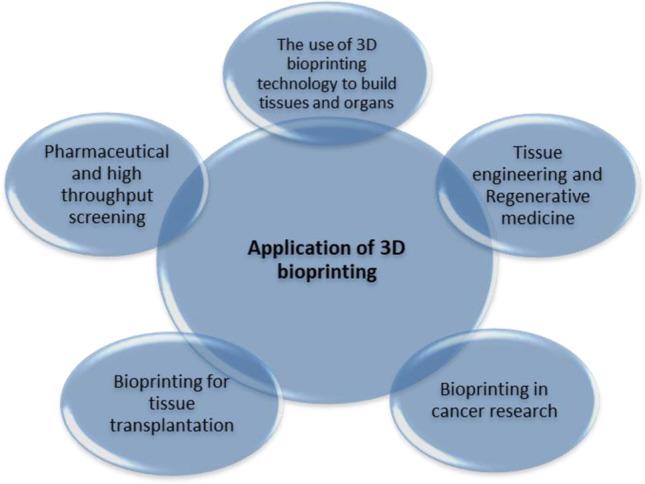
3D bioprinting is a rapidly evolving technique that has been found to have extensive applications in disease research, tissue engineering, and regenerative medicine. 3D bioprinting might be a solution to global organ shortages and the growing aversion to testing cell patterning for novel tissue fabrication and building superior disease models. It has the unrivaled capability of layer-by-layer deposition using different types of biomaterials, stem cells, and biomolecules with a perfectly regulated spatial distribution. The tissue regeneration of hollow organs has always been a challenge for medical science because of the complexities of their cell structures. In this mini review, we will address the status of the science behind tissue engineering and 3D bioprinting of epithelialized tubular hollow organs. This review will also cover the current challenges and prospects, as well as the application of these complicated 3D-printed organs.
3D 生物打印是一种快速发展的技术,已被发现广泛应用于疾病研究、组织工程和再生医学。3D 生物打印可能是解决全球器官短缺问题和日益增长的对新型组织制造中细胞模式检测以及构建更优疾病模型的厌恶情绪的一种方法。它具有无与伦比的使用不同类型生物材料、干细胞和生物分子逐层沉积的能力,并且具有完美调控的空间分布。由于其细胞结构的复杂性,中空器官的组织再生一直是医学科学的挑战。在这篇迷你综述中,我们将讨论组织工程和上皮化管状中空器官的 3D 生物打印背后的科学现状。本综述还将涵盖当前的挑战和前景,以及这些复杂的 3D 打印器官的应用。





 Zotero 插件