Department of Statistics, Texas A & M University, College Station, TX, USA.
School of Computing, University of Nebraska, Lincoln, USA.
Sci Rep. 2022 May 10;12(1):7666. doi: 10.1038/s41598-022-11816-2.
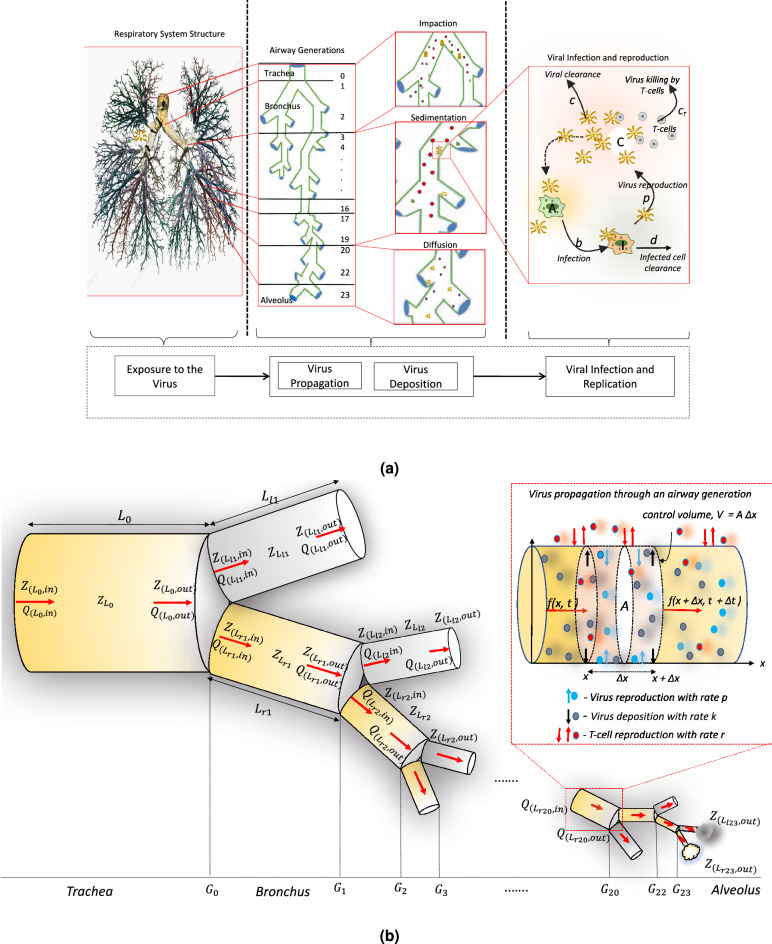
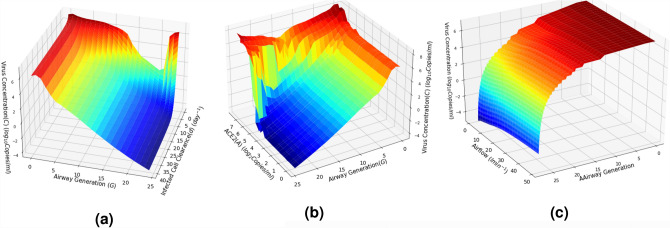
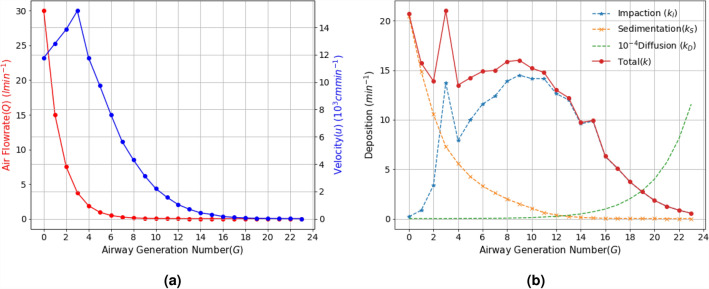
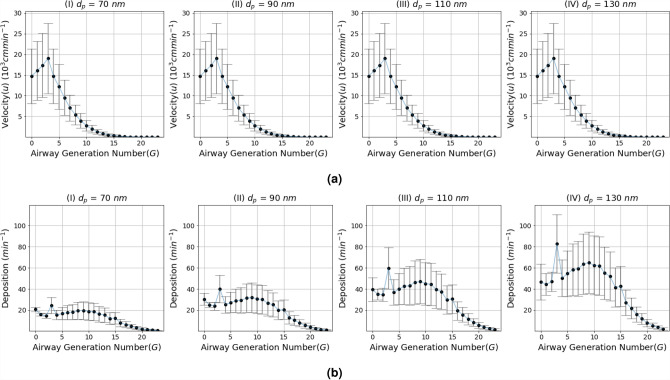
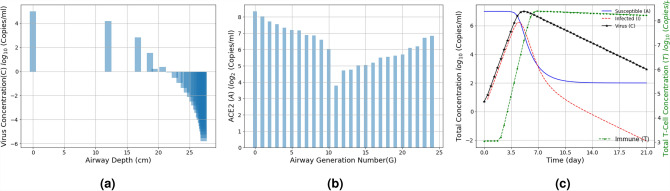
Respiratory viruses including Respiratory Syncytial Virus, influenza virus and severe acute respiratory syndrome coronavirus 2 (SARS-CoV-2) cause serious and sometimes fatal disease in thousands of people annually. Understanding virus propagation dynamics within the respiratory system is critical because new insights will increase our understanding of virus pathogenesis and enable infection patterns to be more predictable in vivo, which will enhance our ability to target vaccine and drug delivery. This study presents a computational model of virus propagation within the respiratory tract network. The model includes the generation network branch structure of the respiratory tract, biophysical and infectivity properties of the virus, as well as air flow models that aid the circulation of the virus particles. As a proof of principle, the model was applied to SARS-CoV-2 by integrating data about its replication-cycle, as well as the density of Angiotensin Converting Enzyme expressing cells along the respiratory tract network. Using real-world physiological data associated with factors such as the respiratory rate, the immune response and virus load that is inhaled, the model can improve our understanding of the concentration and spatiotemporal dynamics of the virus. We collected experimental data from a number of studies and integrated them with the model in order to show in silico how the virus load propagates along the respiratory network branches.
呼吸道病毒包括呼吸道合胞病毒、流感病毒和严重急性呼吸综合征冠状病毒 2(SARS-CoV-2),每年都会导致数千人患上严重甚至致命的疾病。了解病毒在呼吸系统内的传播动力学至关重要,因为新的见解将增加我们对病毒发病机制的理解,并使感染模式在体内更具可预测性,从而增强我们针对疫苗和药物输送的靶向能力。本研究提出了一种呼吸道网络内病毒传播的计算模型。该模型包括呼吸道生成网络分支结构、病毒的生物物理和感染性特性以及有助于病毒颗粒循环的气流模型。作为原理验证,该模型通过整合有关 SARS-CoV-2 复制周期以及呼吸道网络中表达血管紧张素转换酶细胞密度的数据来应用于 SARS-CoV-2。使用与呼吸频率、免疫反应和吸入的病毒载量等因素相关的真实世界生理数据,该模型可以提高我们对病毒浓度和时空动力学的理解。我们收集了多项研究的实验数据,并将其与模型整合,以在计算机上展示病毒载量如何沿着呼吸道网络分支传播。