Liu Jingzhu, Shu Tong, Su Lei, Zhang Xueji, Serpe Michael J
Department of Chemistry, University of Alberta Edmonton Alberta T6G 2G2 Canada
Beijing Key Laboratory for Bioengineering and Sensing Technology, Research Center for Bioengineering and Sensing Technology, School of Chemistry and Biological Engineering, University of Science and Technology Beijing Beijing 100083 P. R. China.
RSC Adv. 2018 May 9;8(30):16850-16857. doi: 10.1039/c8ra01855c. eCollection 2018 May 3.
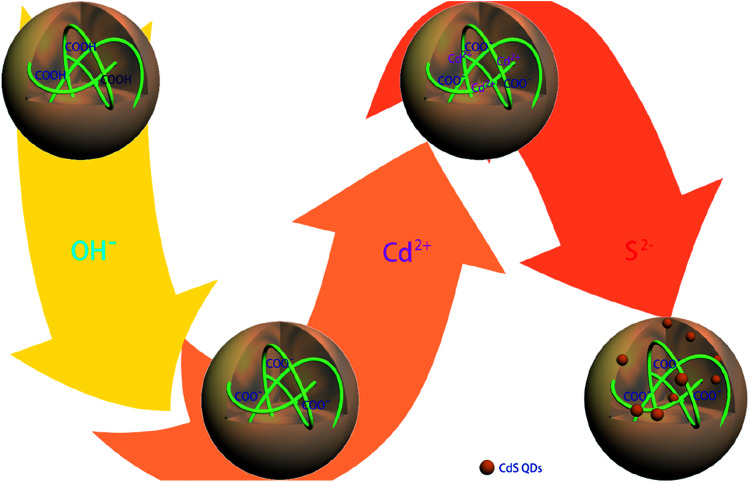
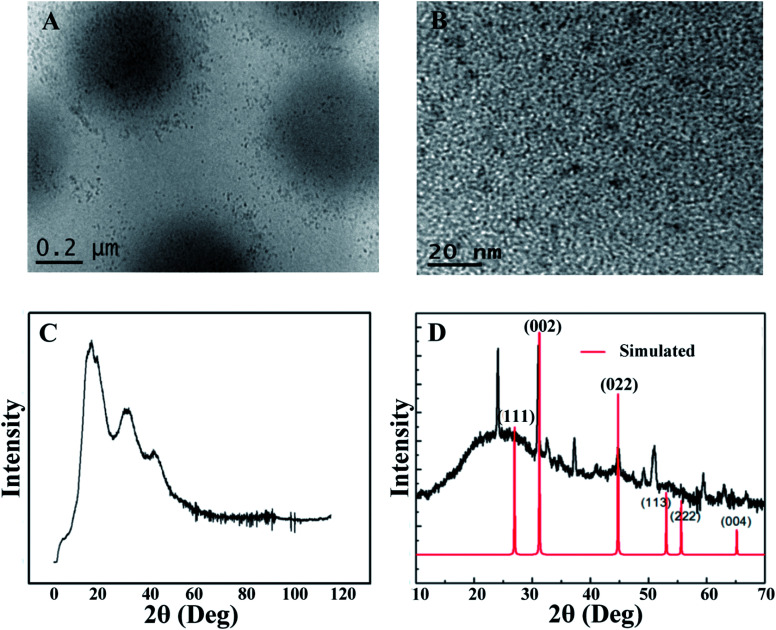
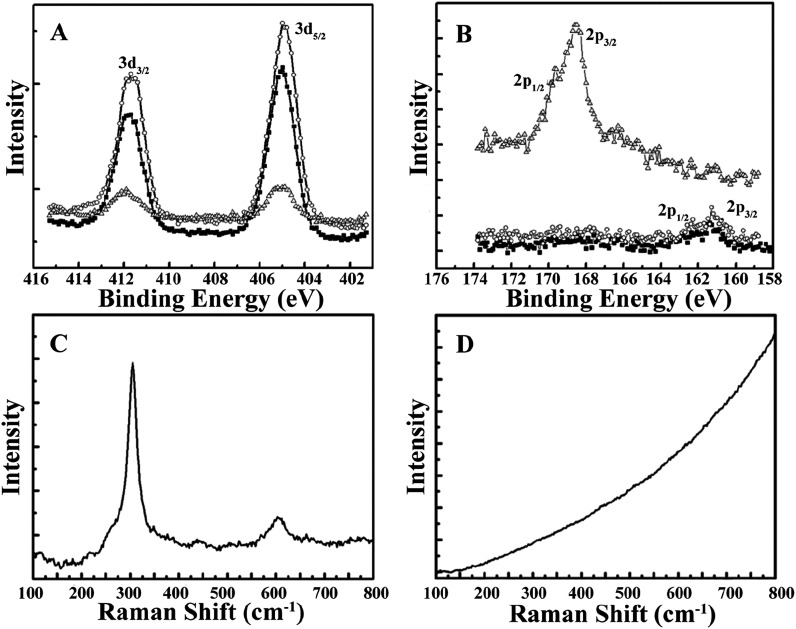
CdS quantum dots (CdSQDs) were generated inside the network structure of poly (-isopropylacrylamide)--(acrylic acid) (pNIPAm--AAc) microgels and their ability to photocatalytically degrade organic dyes was evaluated using rhodamine B (RhB). The microgel-stabilized CdSQDs were generated by first enriching the microgels with Cd followed by their reaction with NaS. The resultant microgels were characterized, and the CdSQDs were found to be distributed throughout the microgels. We went on to show that the hybrid microgels exhibited photocatalytic properties by exposing them to a solution of RhB followed by exposure to UV irradiation. We found that the hybrid microgels were able to degrade the RhB, while native microgels without CdSQDs present were not capable of the same behavior. Due to the thermo- and pH-responsivity of pNIPAm--AAc-based microgels their ability to degrade RhB was also evaluated as a function of environmental temperature and solution pH. We showed that the removal efficiency was highest when the microgels were in their swollen state, which we attribute to more effective mass transfer of the RhB inside the microgels when their porous structure is expanded. Finally, we show that the hybrid microgels can be reused multiple times, although their photocatalytic degradation ability decreases the more they are used, which may be a result of the aggregation and decomposition of the CdSQDs. We conclude that this approach is an effective means of removing RhB from water, which may be modified to photodegrade a variety of other organic compounds.
硫化镉量子点(CdSQDs)在聚(N-异丙基丙烯酰胺)-(丙烯酸)(pNIPAm-AAc)微凝胶的网络结构内生成,并使用罗丹明B(RhB)评估其光催化降解有机染料的能力。通过首先用镉富集微凝胶,然后使其与硫化钠反应,生成了微凝胶稳定的CdSQDs。对所得微凝胶进行了表征,发现CdSQDs分布在整个微凝胶中。接着,我们通过将混合微凝胶暴露于RhB溶液中,然后进行紫外线照射,表明混合微凝胶具有光催化性能。我们发现混合微凝胶能够降解RhB,而不存在CdSQDs的天然微凝胶则没有这种能力。由于基于pNIPAm-AAc的微凝胶具有热响应性和pH响应性,因此还评估了它们降解RhB的能力与环境温度和溶液pH的关系。我们表明,当微凝胶处于溶胀状态时,去除效率最高,我们将其归因于当微凝胶的多孔结构扩展时,RhB在微凝胶内的传质更有效。最后,我们表明混合微凝胶可以多次重复使用,尽管它们的光催化降解能力随着使用次数的增加而降低,这可能是CdSQDs聚集和分解的结果。我们得出结论,这种方法是从水中去除RhB的有效手段,并且可以进行改进以光降解多种其他有机化合物。