Nam Sunghyun, Park Bosoon, Condon Brian D
United States Department of Agriculture, Agricultural Research Service, Southern Regional Research Center 1100 Robert E. Lee Blvd. New Orleans LA 70124 USA
United States Department of Agriculture, Agricultural Research Service, U.S. National Poultry Research Center, 950 College Station Rd. Athens GA 30605 USA.
RSC Adv. 2018 Jun 14;8(39):21937-21947. doi: 10.1039/c8ra01823e. eCollection 2018 Jun 13.
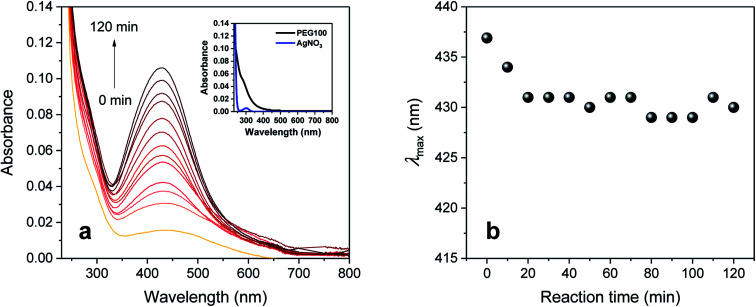
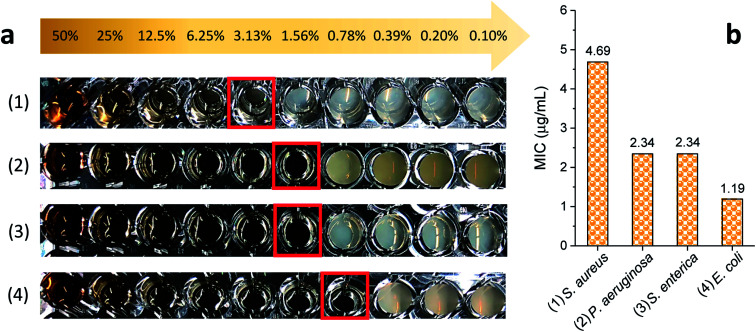
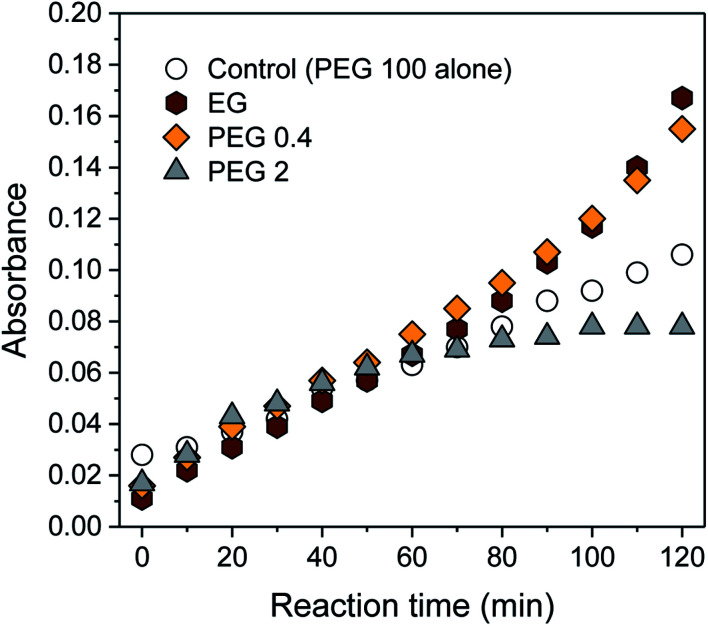
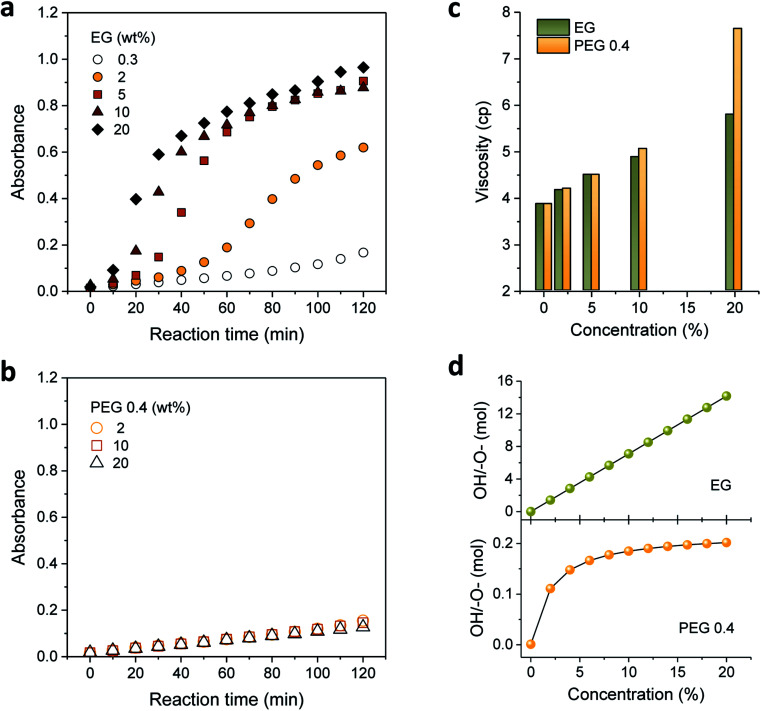
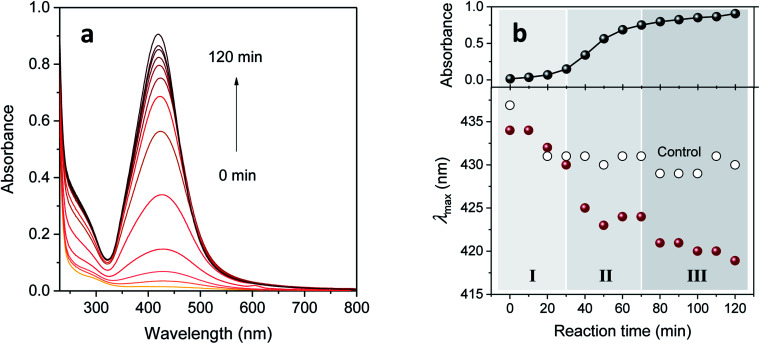
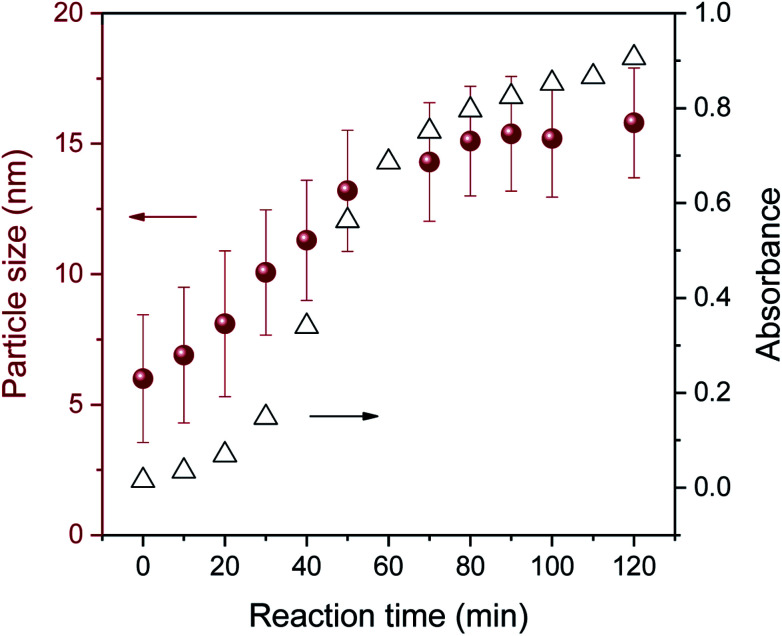
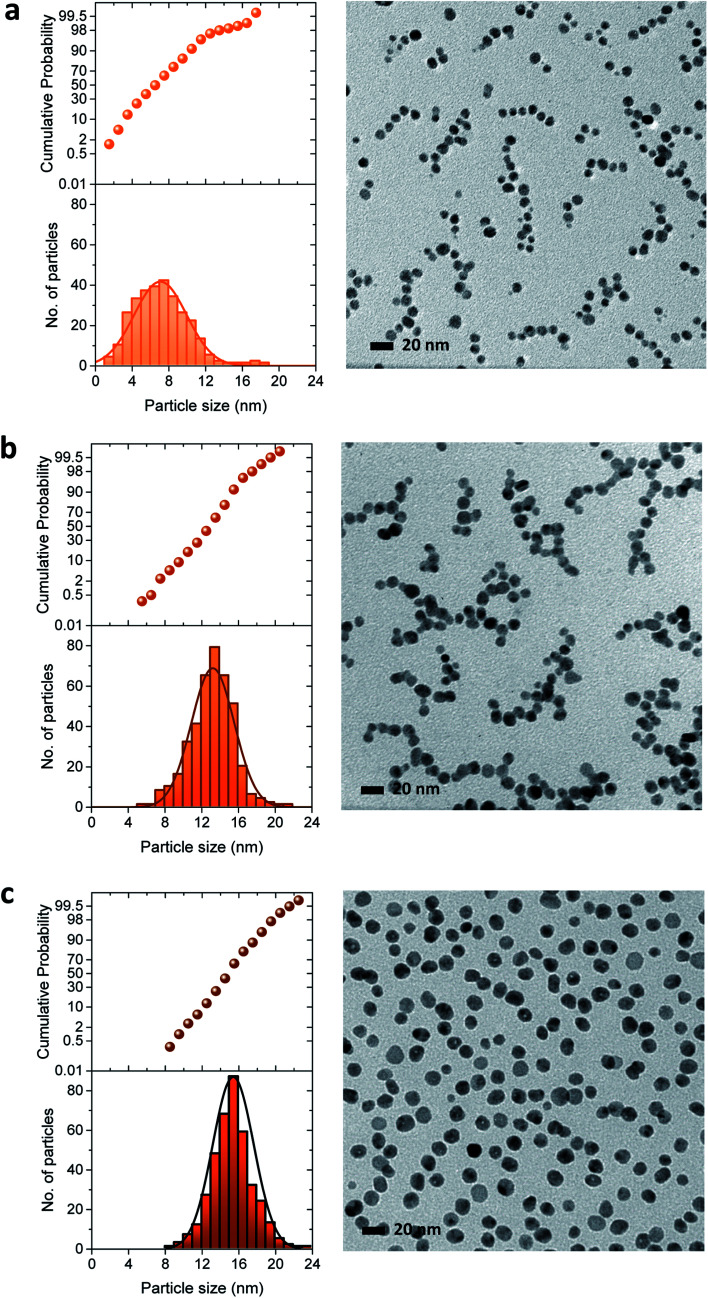
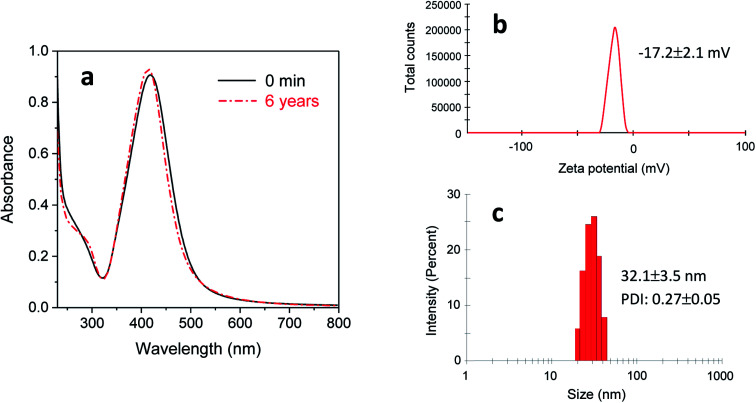
The polyol process is a widely used strategy for producing nanoparticles from various reducible metallic precursors; however, it requires a bulk polyol liquid reaction with additional protective agents at high temperatures. Here, we report a water-based binary polyol process using low concentrations of high-molecular-weight polyethylene glycol (100 000 g mol, 2 wt%) and ethylene glycol (5 wt%). The entangled conformation of the polyethylene glycol in water and the increased number of reducing sites by the ethylene glycol cooperatively contributed to the stability and effectiveness of reduction reaction and particle growth, producing uniformly sized silver nanoparticles (15.8 ± 2.2 nm) with no additional protective agents at a mild temperature of 80 °C. The measurement of particle size throughout the reaction and the dependence of the optical density of a silver colloidal solution on the concentration of ethylene glycol revealed three stages of particle growth. The minimum inhibitory concentrations of the purified silver nanoparticles against four representative human and foodborne pathogenic bacteria-, , , and -were 4.7, 2.3, 2.3, and 1.2 μg mL, respectively.
多元醇法是一种广泛应用的从各种可还原金属前驱体制备纳米颗粒的策略;然而,它需要在高温下与额外的保护剂进行大量多元醇液体反应。在此,我们报道了一种基于水的二元多元醇法,该方法使用低浓度的高分子量聚乙二醇(100 000 g/mol,2 wt%)和乙二醇(5 wt%)。聚乙二醇在水中的缠结构象以及乙二醇增加的还原位点数量协同促进了还原反应和颗粒生长的稳定性与有效性,在80°C的温和温度下无需额外保护剂即可制备出尺寸均匀的银纳米颗粒(15.8±2.2 nm)。对整个反应过程中颗粒尺寸的测量以及银胶体溶液的光密度对乙二醇浓度的依赖性揭示了颗粒生长的三个阶段。纯化后的银纳米颗粒对四种代表性人类和食源性病原体( 、 、 和 )的最低抑菌浓度分别为4.7、2.3、2.3和1.2 μg/mL。